
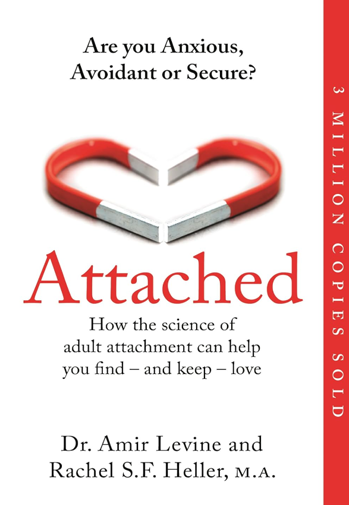
Attached by Amir Levine and Rachel Heller: A Therapist's Review and Key Takeaways for Couples in 2026
Listen to this review on a podcast

As a practicing relationship therapist, I've seen countless clients arrive in my consulting room exhausted by the same painful cycles - one partner constantly seeking reassurance while the other pulls away, leaving both feeling misunderstood and alone. These patterns are not random or a sign of failing love; they often stem from deeply rooted ways of connecting that we learned early in life.
The book delivers a straightforward explanation of the three main adult attachment styles and shows exactly how they play out in everyday relationships. In my sessions I have repeatedly drawn on these insights to help anxious clients feel less panicked and avoidant partners feel safer opening up. The result is often a rapid shift from conflict to collaboration, giving couples the emotional safety they need to rebuild trust and intimacy. The approach aligns beautifully with the attachment-informed techniques I use in therapy, offering clients a practical language they can take home and apply between sessions.
Affiliate Disclosure: As an Amazon Associate, I earn from qualifying purchases. The links below are affiliate links, meaning if you click and make a purchase, I may receive a small commission at no extra cost to you. This helps keep my counselling session costs affordable for my clients.
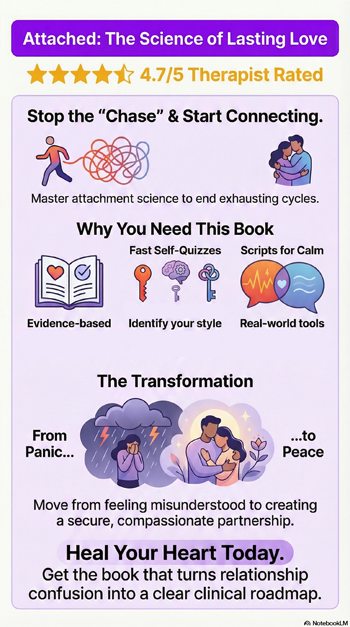
Therapist's Quick Verdict: This is one of the best evidence-based book for understanding attachment styles in romantic relationships. It is specifically designed for anyone who has ever wondered why they or their partner seem to react so differently to closeness and conflict. It provides a clear clinical roadmap to the biological and evolutionary roots of anxious, avoidant and secure patterns, helping couples move beyond surface arguments to genuine understanding and repair. The framework offers a number of practical solutions to the common problem of repeated pursuit-withdrawal cycles.
| Author | Amir Levine and Rachel Heller |
| Publication Year | 2019 |
| Key Themes | Adult attachment styles, anxious-avoidant dynamics, secure relationships, self-assessment quizzes, effective communication |
| Who is this book best for | In my clinical experience, this book is best for singles and couples who repeatedly experience pursuit-withdrawal cycles or feel chronically misunderstood in love. If you have ever felt that no matter how much you try, your partner seems distant or that your need for reassurance drives them further away, this book maps your experience directly onto the three core attachment styles. The self-assessment tools and real-life examples fit perfectly into busy lives, offering quick insights without requiring hours of abstract theory. It is especially valuable for those in the early stages of dating or in established relationships where the same arguments keep resurfacing. I rate it so highly because it consistently helps my clients replace confusion and self-doubt with compassion and practical next steps. |
Key Features & Chapter Breakdown
The book is structured around the science of adult attachment with built-in self-assessment quizzes that allow readers to identify their own style and that of their partner in minutes. Clear explanations of anxious, avoidant and secure patterns are supported by memorable case studies that feel instantly recognisable to anyone who has struggled in relationships. The authors avoid jargon while still grounding every recommendation in established research, making the material accessible yet authoritative.
Early chapters introduce the evolutionary basis of attachment and why we are biologically wired to seek closeness with a partner. Readers learn how these ancient survival mechanisms still shape modern romance and why some people feel overwhelming anxiety when their partner is late home while others feel trapped by too much togetherness. In my practice these explanations alone have helped many clients stop personalising their partner's behaviour and start seeing it as a style difference rather than rejection.
The middle section dedicates focused chapters to each attachment style, complete with detailed descriptions, common triggers and real-world examples. Anxious readers discover why they scan for signs of withdrawal; avoidant readers understand the protective function of their independence; secure readers gain language to support partners who struggle with closeness. I frequently recommend these sections to clients as homework because the insights translate immediately into more compassionate conversations at home.
Later chapters address the anxious-avoidant trap that traps so many couples and provide clear communication principles and conflict-resolution strategies. Readers learn specific phrases and behaviours that help an avoidant partner feel safe enough to move closer and an anxious partner feel reassured without overwhelming their loved one. The final sections explore how to recognise secure partners and how to cultivate security within an existing relationship, offering hope even to those who have felt stuck for years.
Review & Analysis
This evidence-based guide stands out for its approachable explanation of personality traits in relationships:
- Strengths: The book's greatest strength lies in its balanced, compassionate presentation of all three styles without pathologising any of them. Every position on the attachment spectrum is shown to have both strengths and challenges, which mirrors the acceptance-based approach I use in couples therapy. The integration of research, quizzes and vivid case studies makes complex ideas immediately usable, and the writing remains warm and engaging throughout.
- Weaknesses: Some of the original research cited has been expanded by more recent studies on neuroplasticity and adult change, yet the core framework remains robust. The book focuses more on individual understanding than on joint couple exercises, so readers wanting structured weekly activities may wish to pair it with a workbook. A few cultural references feel slightly dated, but the fundamental principles apply universally.
- Practical Applications: The self-assessment tools and style descriptions translate directly into daily life. An anxious partner who learns to recognise deactivation strategies in their avoidant loved one can respond with calm curiosity instead of panic. An avoidant partner who understands their partner's protest behaviour can offer small reassurances that prevent escalation. Couples often report using the book's suggested scripts during arguments with immediate positive results.
- Current Relevance: In 2026 the book remains highly relevant amid increased awareness of emotional wellbeing and neurodiversity. Modern dating apps and remote work have intensified attachment triggers, making the framework even more useful. It complements contemporary approaches such as Emotionally Focused Therapy by giving couples a shared vocabulary that accelerates progress both inside and outside the therapy room.
Pros and Cons
| Pros | Cons |
|---|---|
| Clear, research-backed explanation of attachment styles with practical quizzes | Original research predates some newer findings on adult change |
| Memorable case studies that help readers instantly recognise their own patterns | Less emphasis on joint couple exercises than some newer workbooks |
| Actionable strategies that reduce blame and foster emotional safety quickly | Brief coverage of disorganized attachment |
Comparisons & Alternatives
For readers wanting a broad foundational understanding of all three attachment styles, Attached remains the clearest starting point. Avoidant Attachment Detox by A.J. Brooks is ideal if your primary goal is personal work on deactivating avoidant patterns through targeted exercises and emotional-intimacy building. Loving an Avoidant Partner by Krista Cantell shines when you are already in a relationship with someone who leans avoidant and need specific strategies to bridge the emotional gap without losing yourself. Attached gives the complete picture; the other two offer deeper dives into particular challenges.
| Book | Focus | Best For |
|---|---|---|
| Attached by Amir Levine and Rachel Heller Check price ❯❯ | Full overview of anxious, avoidant and secure styles in adult relationships | Couples and singles seeking scientific understanding of recurring patterns |
| Avoidant Attachment Detox by A.J. Brooks Check price ❯❯ | Targeted strategies to reduce deactivation and build intimacy | Individuals with avoidant tendencies wanting personal growth |
| Loving an Avoidant Partner by Krista Cantell Check price ❯❯ | Practical tools for partners of avoidant individuals | Those in relationships with avoidant partners seeking connection |
Therapist's Buying Guide
When choosing books on attachment for relationship work, look first for a strong grounding in the original research while still offering practical self-assessment tools that couples can use together. Prioritise titles that cover all three styles rather than focusing on only one, because real-life relationships usually involve a combination. The most helpful books explain how styles interact in daily life and provide scripts or behaviours that de-escalate conflict without requiring professional training. Readability is key - the science should be presented clearly without overwhelming the reader. Finally, choose resources that emphasise building security through small, consistent actions rather than promising instant transformation, because sustainable change in relationships happens gradually and with compassion.
FAQs
Is this book suitable for people who are currently single?
Yes. The self-assessment tools and guidance on recognising secure partners make it especially valuable for anyone preparing for a new relationship or healing from past ones.
Can attachment styles actually change over time?
They can become more secure with awareness and consistent practice, although core tendencies tend to remain stable. The book offers realistic steps rather than promising complete personality overhaul.
How does the book compare to attending couples therapy?
It is an excellent complement that can accelerate progress between sessions by giving couples a shared language and concrete strategies they can practise at home.
Is the science too technical for the average reader?
The writing is accessible and story-driven. Research is explained through everyday examples and the technical sections are clearly marked so readers can move at their own pace.
Does it address cultural or gender differences in attachment?
It notes broad patterns across cultures while emphasising that individual variation within any group is far greater than average differences between groups.
Will it help with high-conflict relationships or repeated break-ups?
Yes. By identifying the anxious-avoidant trap and providing communication tools, many readers report fewer escalations and greater stability even in previously turbulent relationships.
How long does it take to read and apply the ideas?
Most clients finish the 300 pages in one to two weeks reading a chapter each evening, and many begin noticing positive shifts in their interactions within days of applying the first exercises.
Conclusion
From a therapeutic perspective this book provides a robust clinical roadmap for understanding the biological underpinnings of relational patterns. The three-style framework aligns closely with attachment-informed and emotionally focused work by offering a non-pathologising language for differences in emotional regulation, proximity seeking and independence needs. Couples who grasp these dimensions often experience rapid shifts from blame to curiosity, creating the safety needed for deeper emotional repair that lasts far beyond the therapy room.
This book is especially well suited for couples or individuals who have accumulated years of unspoken assumptions about each other's behaviour. It directly addresses the pain point of feeling repeatedly misunderstood or emotionally distant. The concise chapters, quizzes and real-life examples fit the lifestyle of busy professionals and parents who need insight without lengthy workbooks or abstract theory.
The core outcome is greater compassion and more effective communication. If recurring misunderstandings or emotional distance have left you feeling disconnected from your partner, this book offers a scientifically sound path toward acceptance and collaboration. I recommend it to clients as a foundational resource that continues to inform their progress long after the final page.
Affiliate Disclosure: As an Amazon Associate, I earn from qualifying purchases. The links above are affiliate links, meaning if you click and make a purchase, I may receive a small commission at no extra cost to you. This helps keep my counselling session costs affordable for my clients. View the full Amazon Affiliate Disclosure.
About the Book Reviewer
Rhys Lewis MSc PgDip, is the founder of The Relationship Clinic Wales and a professionally qualified couples therapist.
He is the author of 300 Ways To Improve Your Relationship and Infidelity: A Survival Guide.
Rhys provides these reviews to help clients and readers find the most effective, evidence-based tools for relationship health. View his list of best relationship advice books for couples in 2026 here.
Connect with Rhys: