
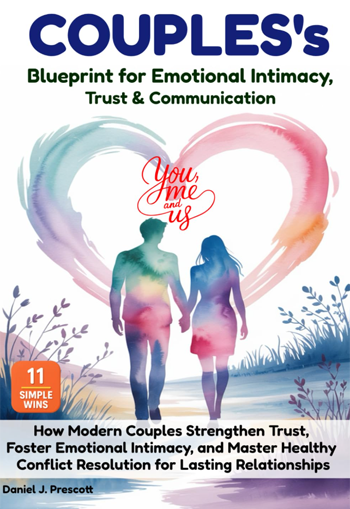
‘Couple’s Blueprint for Emotional Intimacy, Trust & Communication’ by Daniel J. Prescott: A Therapist's Review and Key Takeaways for Couples in 2026
Listen to this review on a podcast

As a relationship therapist with years of experience working with couples, I frequently encounter partners who feel emotionally distant - living like roommates rather than lovers, struggling with silent resentment, repeated misunderstandings, or a gradual erosion of trust and intimacy. Many of these couples long for deeper connection but feel overwhelmed by the idea of intensive therapy or complex programmes. Daniel J. Prescott’s book offers accessible, bite-sized rituals and communication strategies that align well with the small, consistent changes I often recommend in sessions to rebuild emotional safety and closeness.
Affiliate Disclosure: As an Amazon Associate, I earn from qualifying purchases. The links below are affiliate links, meaning if you click and make a purchase, I may receive a small commission at no extra cost to you. This helps keep my counselling session costs affordable for my clients.
Therapist's Quick Verdict: This is the best book for couples who want practical, therapy-free tools to rebuild intimacy and trust through short daily rituals. It is specifically designed for partners experiencing emotional distance who need straightforward phrasing and strategies to express feelings safely and foster secure attachment without overwhelming their schedules.
| Author | Daniel J. Prescott |
| Publication Year | 2025 |
| Key Themes | Emotional intimacy, trust building, healthy communication, conflict resolution, daily connection rituals |
| Who is this book best for | In my clinical experience, this book is best for established couples who feel emotionally distant where intimacy has faded - despite them still caring deeply for each other. Where there is silent resentment, misunderstanding, or the gradual loss of closeness due to demanding schedules - this book is ideal. If you are looking for short, realistic 5–15 minute daily practices that rebuild emotional safety and trust without requiring therapy, this is my top recommendation. |
Key Features & Chapter Breakdown
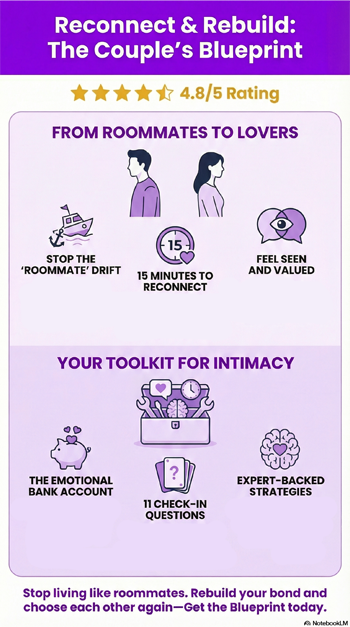
The book systematically guides readers through foundational concepts and practical tools for reconnection. It introduces the “Emotional Bank Account” concept - similar to ideas I use in sessions - to prevent resentment buildup, explores three types of emotional distance that erode bonds, and provides seven de-escalating phrases plus one word to avoid during conflict.
Later sections focus on a five-minute evening ritual for feeling seen and safe, eleven powerful check-in questions to replace tense conversations, four common intimacy roadblocks, six habits of emotionally safe couples, and a 'Love Language Plan' template. Real-life examples illustrate how couples have rebuilt trust after burnout or drift, and a counterintuitive listening technique helps partners feel valued rather than attacked. In my practice, I have adapted similar short rituals and check-in questions to help clients shift from surface-level interactions to genuine vulnerability and understanding.
Review & Analysis
This book provides practical steps to reconnect and achieve intimacy on all levels:
- Strengths: The book’s greatest strength is its accessibility and realism for modern life. My clients consistently praise the short, doable exercises and compassionate, non-judgmental tone that avoids blame. The focus on small daily habits - such as phone-free evening check-ins or mindful presence - makes meaningful change feel achievable rather than overwhelming. Many couples report reduced arguments and renewed closeness after implementing the tools, which align with evidence-based principles like emotional regulation and secure attachment building that I incorporate in my therapy.
- Weaknesses: While highly practical, the book is not written by a licensed clinician and therefore lacks the depth of theoretical grounding found in clinical texts. Some readers note that certain concepts feel familiar or slightly repetitive, and the guidance may feel surface-level for couples facing severe betrayal, trauma, or entrenched patterns requiring professional intervention.
- Practical Applications: I particularly value the five-minute evening ritual and check-in questions, which I have recommended to busy parent clients who struggle to find time for deeper conversation. The “Emotional Bank Account” framework helps partners recognise small deposits of appreciation that prevent withdrawal into resentment - a concept I use regularly. The de-escalation phrases and listening techniques support emotional regulation and empathy, enabling couples to move from reactivity to understanding in everyday conflicts.
Pros and Cons
| Pros | Cons |
|---|---|
| Short, realistic exercises that fit busy schedules | Not written by a licensed therapist; limited clinical depth |
| Compassionate, non-judgmental tone with real-life examples | May feel basic or familiar for readers already versed in self-help |
| Actionable tools for immediate emotional safety and trust | Not suitable as a standalone solution for severe issues or abuse |
Comparisons & Alternatives
If you prefer quick, daily actionable rituals without deep theory, choose Prescott; for emotion-focused attachment healing, Sue Johnson’s work is superior; for understanding intimacy, Emily Nagoski provides transformative insights.
| Book | Focus | Best For |
|---|---|---|
| Couple’s Blueprint for Emotional Intimacy, Trust & Communication by Daniel J. Prescott Check price ❯❯ | Practical daily rituals and communication tools | Busy couples wanting quick, therapy-free steps |
| Hold Me Tight by Sue Johnson Check price ❯❯ | Emotionally Focused Therapy and attachment bonds | Couples healing deep disconnection or past hurts |
| Come As You Are by Emily Nagoski Check price ❯❯ | Intimacy and desire science | Individuals or couples exploring physical closeness |
Therapist's Buying Guide
When selecting relationship books focused on intimacy, prioritise titles with clear, actionable exercises that can be integrated into daily life, especially for busy clients. Look for compassionate tone and realistic expectations rather than promises of quick fixes. Practical tools backed by recognisable psychological principles - such as emotional regulation, active listening, and secure attachment behaviours - tend to offer the most lasting value. Readability and inclusivity matter; the best books speak to diverse couples without jargon while respecting traditional relationship structures. Evidence-based foundations are ideal, but well-structured practical guides can serve as excellent supplements to therapy when deeper clinical support is not immediately accessible.
FAQs
Do both partners need to read the book for it to work?
No - many of my clients report positive shifts when only one partner begins applying the tools, as small changes in communication and presence often inspire reciprocal effort.
Is this book suitable for couples in severe crisis or with trauma?
It is best suited for mild to moderate disconnection. Couples facing abuse, infidelity recovery, or significant trauma should seek professional therapy alongside or instead of self-help resources.
How does it compare to therapy sessions?
It offers valuable supplementary tools and daily practices but cannot replace the personalised guidance, accountability, and deeper exploration provided in professional couples therapy.
Is the advice evidence-based?
The book draws on widely recognised concepts such as love languages, emotional bank accounts, and mindfulness practices commonly used in clinical settings, though it is not a formal academic text.
Can this help long-term marriages that feel stagnant?
Yes - many of my clients in long-term relationships appreciate the gentle rekindling rituals that help partners feel seen and valued again without overwhelming change.
Is the book suitable for newlyweds or younger couples?
Absolutely - the preventive habits and communication skills are excellent for building strong foundations early, though the primary audience appears to be mid-life couples.
Conclusion
From a therapeutic perspective, this book succeeds by promoting emotional safety, vulnerability, and mindful presence - core elements of secure attachment and healthy relational dynamics. The emphasis on short rituals and intentional communication mirrors techniques I use to help couples regulate emotions and turn towards each other rather than away, offering a gentle bridge from disconnection to renewed closeness that complements rather than replaces clinical work.
It is particularly well-suited for those quietly longing for the intimacy they once shared. The format of brief, realistic exercises fits seamlessly into demanding schedules, enabling partners to make small daily deposits into their emotional connection and gradually rebuild deep trust and affection without overwhelming lifestyle changes.
For couples ready to choose each other again through consistent, compassionate effort, this guide provides an accessible starting point that can spark genuine transformation. If emotional distance has quietly eroded your bond, these practical tools offer a clear path back to feeling truly seen, safe, and cherished by your partner.
Affiliate Disclosure: As an Amazon Associate, I earn from qualifying purchases. The links above are affiliate links, meaning if you click and make a purchase, I may receive a small commission at no extra cost to you. This helps keep my counselling session costs affordable for my clients. View the full Amazon Affiliate Disclosure.
About the Book Reviewer
Rhys Lewis MSc PgDip, is the founder of The Relationship Clinic Wales and a professionally qualified couples therapist.
He is the author of 300 Ways To Improve Your Relationship and Infidelity: A Survival Guide.
Rhys provides these reviews to help clients and readers find the most effective, evidence-based tools for relationship health. View his list of best relationship advice books for couples in 2026 here.
Connect with Rhys: