
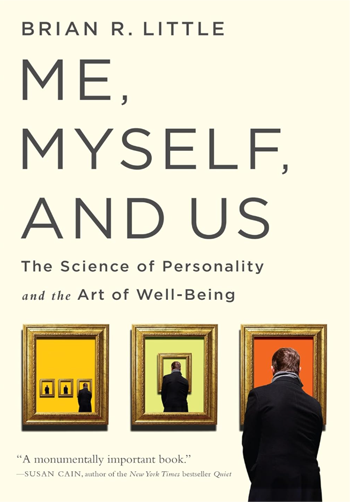
’Me, Myself, and Us: The Science of Personality and the Art of Well-Being’ by Brian R. Little: A Therapist's Review and Key Takeaways for Couples in 2026
Listen to this review on a podcast

Many of my clients wonder how their innate personality traits influence their partnerships. Personality differences often lead to misunderstandings in emotional expression or conflict resolution. This book offers profound insights into personality science - I've often used these insights with my clients to help them understand how they 'tick'. In my sessions, I've drawn from Little's concepts to help couples recognize their personality differences, fostering empathy and understanding that strengthen relationship bonds.
Affiliate Disclosure: As an Amazon Associate, I earn from qualifying purchases. The links below are affiliate links, meaning if you click and make a purchase, I may receive a small commission at no extra cost to you. This helps keep my counselling session costs affordable for my clients.
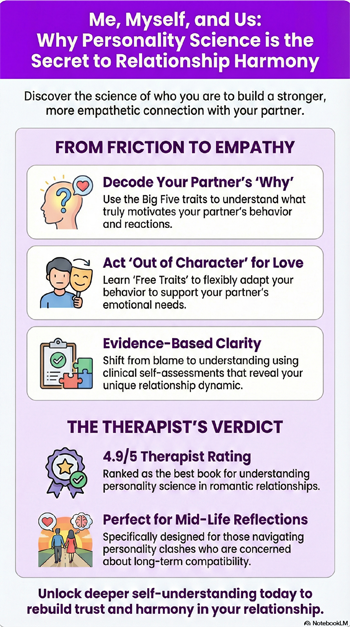
Therapist's Quick Verdict: This is the best book for understanding personality science in romantic relationships. It provides a clinical roadmap for exploring attachment styles and emotional regulation through the lens of personality traits. It has helped my clients to understand what motivates their partner and explains their behaviour. The book has practical self-reflection tools based on extensive research.
| Author | Brian R. Little |
| Publication Year | 2014 |
| Key Themes | Personality traits, relationships, well-being, self-reflection |
| Who is this book best for | In my clinical experience, this book is best for couples navigating personality clashes who are concerned about compatibility. If you are looking for evidence-based insights into personality dynamics with interactive assessments, this is my top recommendation. |
Key Features & Chapter Breakdown
Chapter 1, "First Blushes and Second Thoughts," examines how initial impressions of personality can be misleading and introduces the foundations of personality science with tools for self-assessment. Chapter 2, "Stable Traits and Well-Being: Set Like Plaster?," discusses the Big Five traits - openness, conscientiousness, extraversion, agreeableness, and neuroticism - and their stability over time, offering ways to enhance well-being.
Chapter 3, "Free Traits: On Acting Out of Character," explores how individuals can adopt behaviors outside their natural traits for personal projects, promoting flexibility. Chapter 4, "Mutable Selves: Personality and Situations," looks at how environments influence personality expression. Chapter 5, "Control, Agency, and the Shape of a Life," focuses on locus of control and its impact on life satisfaction. Chapter 6, "Hale and Hardy: Personality and Health," connects traits to physical and mental health outcomes.
In my practice, I've used these concepts to help clients shift from blame to understanding, adapting free traits to improve relational harmony.
Review & Analysis
This evidence-based guide stands out for its approachable explanation of personality traits in relationships:
- Strengths: The book excels in its evidence-based research drawn from decades of personality psychology, enriched with real-life examples and humorous anecdotes that make complex concepts accessible. It promotes self-reflection through interactive assessments, it has helped my clients understand how traits like extraversion or neuroticism play out in daily interactions, ultimately fostering greater empathy in relationships.
- Weaknesses: While insightful, the book occasionally meanders in its delivery, with some chapters feeling extended without fully delivering on the 'art of well-being' promised in the title, potentially overwhelming readers seeking concise advice.
- Practical Applications: Little's free traits concept has been invaluable in my sessions, allowing couples to act out of character for mutual benefit - such as an introverted partner engaging more socially to support their extraverted spouse. Some of my clients have adapted this approach by incorporating short self-assessments into weekly check-ins to deepen intimacy and address common issues like emotional disconnection.
Pros and Cons
| Pros | Cons |
|---|---|
| Evidence-based insights into personality science | Some sections may feel lengthy or academic |
| Humorous and engaging writing style | Less emphasis on diverse cultural contexts |
| Practical assessments for self-reflection | Not ideal for those needing quick, step-by-step fixes |
Comparisons & Alternatives
If you're research-oriented and seeking flexibility in personality, choose Little; for more biological or puzzle-like approaches, opt for the alternatives.
| Book | Focus | Best For |
|---|---|---|
| Me, Myself, and Us: The Science of Personality and the Art of Well-Being by Brian R. LittleCheck price ❯❯ | Personality traits and well-being flexibility | Middle-aged couples exploring self in relationships |
| Personality: What makes you the way you are by Daniel NettleCheck price ❯❯ | Evolutionary and biological roots of personality | Those interested in scientific origins |
| The Personality Puzzle by David C. FunderCheck price ❯❯ | Comprehensive personality theories | Students or deep dives into puzzles of self |
Therapist's Buying Guide
When selecting personality books for enhancing relationship therapy, prioritize those grounded in evidence-based research, such as studies on the Big Five traits, to ensure reliability. Look for readability with accessible language, humorous anecdotes, and practical assessments that facilitate self-application without overwhelming technical jargon. Inclusivity is key, seeking books that address diverse relational dynamics, while applicability to real-life scenarios - like adapting traits for better communication - adds therapeutic value.
FAQs
Is this book suitable for singles?
While focused on personality science, its principles on self-understanding can benefit singles preparing for relationships, though it's most impactful for those in partnerships.
How does it compare to therapy sessions?
It serves as an excellent supplement, offering insights into traits that align with cognitive-behavioral techniques, but cannot replace personalized professional guidance.
Does it address relationship-specific issues?
Yes, by exploring how personality traits influence relational dynamics, such as emotional regulation in conflicts.
Is it evidence-based?
Absolutely, drawing from extensive research in personality psychology.
How does it differ from other personality books?
It uniquely emphasizes free traits and well-being, making it more adaptable for therapeutic use.
Suitable for middle-aged readers?
Yes, its focus on life-long trait stability and flexibility resonates with mid-life reflections.
Can it help with intimacy issues?
Indirectly, by fostering understanding of personality differences that affect emotional bonds.
Conclusion
From a therapeutic perspective, this book aligns with cognitive reframing and attachment theory by illustrating how personality influences emotional regulation. It bridges self-awareness with practicality, offering a complement to therapy that empowers individuals to navigate personality-driven challenges effectively.
It particularly helps couples who feel that they have matured or changed over time and now feel mismatched. Little addresses pain points like emotional misalignment in long-term relationships. The format, with short assessments and reflective exercises, suits busy professionals seeking gradual improvements without intensive commitment.
This book has helped my clients to cultivate empathy and adaptability, transforming relationship tensions into opportunities for growth. Unlock deeper self-understanding to rebuild trust and harmony.
Affiliate Disclosure: As an Amazon Associate, I earn from qualifying purchases. The links above are affiliate links, meaning if you click and make a purchase, I may receive a small commission at no extra cost to you. This helps keep my counselling session costs affordable for my clients. View the full Amazon Affiliate Disclosure.
About the Book Reviewer
Rhys Lewis MSc PgDip, is the founder of The Relationship Clinic Wales and a professionally qualified couples therapist.
He is the author of 300 Ways To Improve Your Relationship and Infidelity: A Survival Guide.
Rhys provides these reviews to help clients and readers find the most effective, evidence-based tools for relationship health. View his list of best relationship advice books for couples in 2026 here.
Connect with Rhys: