
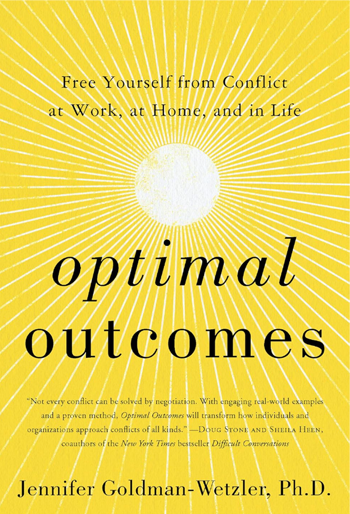
’Optimal Outcomes’ by Jennifer Goldman-Wetzler: A Therapist's Review and Key Takeaways for Couples in 2026
Listen to this review on a podcast

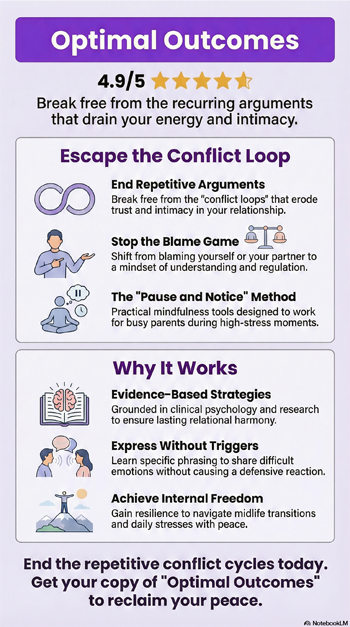
In my couples therapy practice this is the main conflict resolution method that I've used for years to help couples stuck recurring conflicts that erode trust and intimacy. This book offers practical, evidence-based strategies to break free from these destructive patterns, fostering emotional regulation and healthier relational dynamics. In my sessions, I talk about the four conflict habits in this book to help guide clients toward more constructive interactions, allowing them to achieve greater harmony and satisfaction in their relationships.
Affiliate Disclosure: As an Amazon Associate, I earn from qualifying purchases. The links below are affiliate links, meaning if you click and make a purchase, I may receive a small commission at no extra cost to you. This helps keep my counselling session costs affordable for my clients.
Therapist's Quick Verdict: This is the best book for breaking free from recurring conflict cycles in relationships. It is specifically designed for partners in high-conflict relationships who need specific phrasing and strategies to express difficult emotions without triggering a defensive reaction.
| Author | Jennifer Goldman-Wetzler |
| Publication Year | 2020 |
| Key Themes | Conflict resolution, mindfulness, breaking conflict loops, emotional regulation |
| Who is this book best for | In my clinical experience, this book is best for any couple seeking to escape repetitive conflict cycles. It addresses common conflict habits like feeling trapped in blame and avoidance, offering practical exercises and mindfulness techniques that fit busy lifestyles, making it ideal for those preferring structured, evidence-based approaches to rebuild connection and achieve lasting relational harmony. |
Key Features & Chapter Breakdown
The book is divided into two main parts. Part I focuses on understanding the conflict loop, with chapters exploring the four habits that trap us: problem solving leading to relentless collaboration, blaming others, blaming ourselves, and avoiding or shutting down. It includes exercises to identify these patterns in your own life.
Part II introduces the eight practices for achieving optimal outcomes, such as pausing to notice emotions, mapping the conflict with all parties' perspectives, and imagining an ideal future. These build a clinical roadmap for resolution.
In my practice, I've used these concepts to help clients shift from blame to understanding, aligning with cognitive-behavioral techniques to foster emotional regulation and healthier dynamics.
Review & Analysis
This book provides a balanced, innovative approach to conflict, drawing from psychology and real-world applications.
- Strengths: The evidence-based research and real couple examples make it relatable and effective. Its blend of mindfulness and practical steps empowers readers to break free from loops, offering tools superior to traditional collaboration-focused methods.
- Weaknesses: It may feel theoretical at times and lacks deep coverage of cultural diversity or severe issues like abuse, requiring supplemental professional help.
- Practical Applications: The 'pause and notice' exercise has helped my clients with busy lives, like middle-aged parents, to quickly regulate emotions during arguments. Adapt it by setting daily check-ins to map conflicts, promoting attachment security and reducing defensiveness in sessions.
- Relevance to Modern Relationships: In today's fast-paced world, its focus on internal freedom aligns with current therapy trends, helping couples navigate hybrid work stresses or midlife transitions with greater resilience.
Pros and Cons
| Pros | Cons |
|---|---|
| Backed by years of conflict consulting research | Some sections may feel lengthy for quick readers |
| Actionable exercises for immediate use in daily life | Quite technical in psychological explanations |
| Affordable and accessible for most readers | Not ideal for severe issues like abuse |
Comparisons & Alternatives
If you're seeking practical, self-directed tools for conflict, Optimal Outcomes stands out for its psychological depth; for more communication-focused alternatives, consider the comparisons below.
| Book | Focus | Best For |
|---|---|---|
| Optimal Outcomes by Jennifer Goldman-WetzlerCheck price ❯❯ | Breaking conflict loops with mindfulness | Middle-aged couples in repetitive cycles |
| Conflict to Closeness: Communication for Satisfaction in Your RelationshipCheck price ❯❯ | Communication strategies for satisfaction | Couples focusing on daily interactions |
| Relationship Conflict Resolution: Achieve Trust and Intimacy Without Endless Arguments by Evelyn A. StonebridgeCheck price ❯❯ | Building trust through argument resolution | Those healing from disconnection |
Therapist's Buying Guide
When selecting conflict resolution books, prioritize evidence-based content grounded in research, ensuring practical applicability to real-life scenarios. Look for readability with clear language and exercises that suit diverse learning styles, avoiding overly academic texts. Inclusivity is key, with books addressing various cultural contexts and relationship stages for broader relevance. Finally, seek those emphasizing emotional intelligence and long-term strategies over quick fixes, as they provide sustainable tools for relational growth.
FAQs
Is this book suitable for singles?
While primarily aimed at interpersonal conflicts, its principles on self-awareness and emotional regulation can benefit singles preparing for future relationships or managing internal conflicts.
How does it compare to therapy sessions?
It serves as an excellent supplement, offering self-help tools that align with cognitive-behavioral approaches, but it's not a substitute for personalized professional guidance in complex cases.
Is it only for relationship conflicts?
No, it applies to work and personal life, with examples adaptable to couple dynamics and family issues.
Does it address cultural differences?
It touches on diverse contexts but focuses more on universal patterns; pair it with culturally specific resources if needed.
How long does it take to see results?
Many of my clients report insights within weeks through consistent practice of the eight steps.
Is it evidence-based?
Yes, drawn from the author's extensive research and consulting experience.
Can it help with severe conflicts?
It's useful for recurring issues but recommends professional help for abuse or trauma.
Conclusion
From a therapeutic perspective, this book excels in promoting emotional regulation and attachment repair through its structured practices, mirroring techniques like cognitive reframing used in sessions. It empowers individuals to address relational dynamics independently, often leading to breakthroughs comparable to guided therapy.
I regularly add a conflict habits session to the counselling plans I put together for my clients. I use the four conflict habits from this book in those session. The format, with short exercises and mindfulness tools, suits any couple stuck in a conflict loop where there is repetition of the same difficult issues. This approach offers my clients ways to break out of their conflict cycles.
Embrace these methods to rebuild trust and reduce fights, transforming your relationship into one of empathy and peace. Consider adding this resource to your journey toward deeper connection.
Affiliate Disclosure: As an Amazon Associate, I earn from qualifying purchases. The links above are affiliate links, meaning if you click and make a purchase, I may receive a small commission at no extra cost to you. This helps keep my counselling session costs affordable for my clients. View the full Amazon Affiliate Disclosure.
About the Book Reviewer
Rhys Lewis MSc PgDip, is the founder of The Relationship Clinic Wales and a professionally qualified couples therapist.
He is the author of 300 Ways To Improve Your Relationship and Infidelity: A Survival Guide.
Rhys provides these reviews to help clients and readers find the most effective, evidence-based tools for relationship health. View his list of best relationship advice books for couples in 2026 here.
Connect with Rhys: