
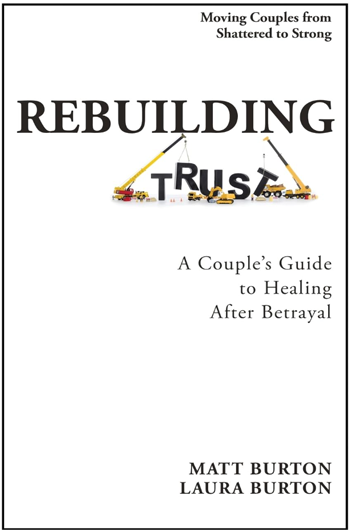
Rebuilding Trust: A Couple's Guide to Healing After Betrayal by Matt and Laura Burton: A Therapist's Review and Key Takeaways for Couples in 2026
Listen to this review on a podcast

So much deep pain and confusion follows a betrayal, whether through infidelity, hidden financial issues or emotional secrecy. As a couples therapist I've seen how the trust that once felt solid suddenly crumbles, leaving partners unsure how to move forward without constant suspicion or resentment.
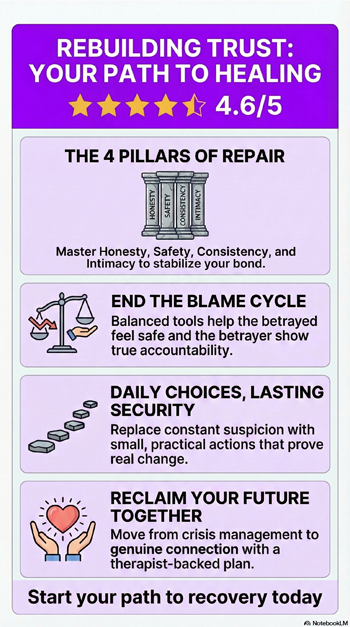
Matt and Laura Burton draw on years of working with hundreds of couples to lay out a clear path that focuses on four essential pillars: honesty and transparency, creating safety, maintaining consistency, and rebuilding intimacy. In my sessions I've seen these same principles transform relationships that seemed irreparable.
The authors never sugar-coat the hard work involved, yet they offer realistic hope and practical steps that align perfectly with the attachment-focused techniques I use every week. Couples leave my therapy sessions feeling empowered when they apply these ideas because the book shows how small daily choices build lasting security.
Affiliate Disclosure: As an Amazon Associate, I earn from qualifying purchases. The links below are affiliate links, meaning if you click and make a purchase, I may receive a small commission at no extra cost to you. This helps keep my counselling session costs affordable for my clients.
Therapist's Quick Verdict: This is a great practical roadmap for couples rebuilding trust after betrayal. It is specifically designed for partners who want a structured, non-judgemental plan to move beyond the initial shock of discovery. The book addresses both the betrayed partner's need for safety and the betraying partner's need for accountability, providing a clinical roadmap that helps couples replace secrecy with transparency and pain with renewed connection. This approach solves the common problem of couples feeling lost in the aftermath by offering concrete tools rather than abstract theory.
| Author | Matt and Laura Burton |
| Publication Year | 2023 |
| Key Themes | honesty and transparency after betrayal, building emotional safety, consistency in actions, rebuilding intimacy and connection |
| Who is this book best for | In my clinical experience, this book is best for couples who have experienced betrayal and want to stay together but feel lost without a clear plan. If you are the betrayed partner struggling with hypervigilance or the partner who broke trust and wants to show genuine change, this guide maps directly onto your situation. The practical format works well for busy couples who need structured steps they can discuss together rather than lengthy theory. It targets any stage after discovery, whether weeks or years later, and explains why I rate it so highly for real-world application in therapy. |
Key Features & Chapter Breakdown
Matt and Laura Burton have created a book that feels like sitting down with experienced counsellors who truly understand the chaos betrayal brings. The writing is warm yet direct, avoiding jargon while still respecting the depth of the pain involved. What makes this guide stand out is its balanced attention to both partners: the wounded person learning to feel safe again and the person who caused the hurt learning how to rebuild credibility through consistent behaviour. This dual focus prevents the common trap where one partner feels solely responsible or solely victimised.
The opening chapters validate the intense emotions that follow betrayal, helping readers understand that shock, anger and grief are normal responses rather than signs the relationship is doomed. The authors then move into the core work of transparency and disclosure, providing thoughtful guidance on how to share information without causing further harm. In my practice I often recommend these sections because they mirror the safety-building exercises I use in early sessions, helping couples establish boundaries that reduce anxiety and create a new baseline of honesty.
Middle sections focus on the four pillars of recovery: creating safety through reliable actions, maintaining consistency even when it feels uncomfortable, rebuilding emotional and physical intimacy at a healthy pace, and addressing any underlying issues that contributed to the betrayal. The authors include real-life examples drawn from their work with hundreds of couples, which makes the strategies feel achievable rather than idealistic. The concluding chapters look at long-term maintenance, showing how couples can create a stronger relationship than before by turning the experience into shared wisdom rather than a source of ongoing resentment.
Review & Analysis
This evidence-based guide stands out for its approachable explanation of personality traits in relationships:
- Strengths: The book's greatest strength lies in its realistic, step-by-step framework that acknowledges the long timeline of healing. The authors emphasise that trust is rebuilt through daily choices rather than grand gestures, which aligns closely with the practical, common-sense approach I take in couples therapy. Their focus on consistency as the foundation of safety resonates deeply with clients who have heard empty apologies before. The integration of both partners' perspectives prevents blame cycles and encourages mutual accountability in a compassionate way.
- Weaknesses: While the strategies are timeless, some readers may wish for more workbook-style exercises in the main text. The book shines as a roadmap but works best when paired with professional support for very complex histories. A few cultural references feel slightly general, though the core principles apply universally. These are minor points that do not detract from the overall usefulness.
- Practical Applications: The strategies translate directly into daily life. A betrayed partner can use the safety-building tools to express needs without accusation, while the other partner learns specific ways to demonstrate reliability. Couples report that the transparency protocols reduce constant checking behaviours, freeing energy for reconnection. In my sessions these applications help partners move from crisis management to genuine collaboration.
- Current Relevance: Relevance remains exceptionally high in 2026. With greater awareness of betrayal trauma and emotional infidelity through social media and digital secrecy, couples need exactly this kind of grounded guidance. The framework complements modern therapeutic approaches by providing a biological and relational lens that normalises the recovery process without pathologising either partner.
Pros and Cons
| Pros | Cons |
|---|---|
| Clear four-pillar structure that both partners can follow together | Best results when combined with professional couples therapy |
| Compassionate tone that validates pain without encouraging endless blame | Some readers may want more structured worksheets in the main text |
| Realistic timeline and expectations drawn from hundreds of real couples | Less emphasis on spiritual elements for those seeking faith-based support |
Comparisons & Alternatives
If you are seeking a structured clinical roadmap with balanced attention to both partners after betrayal, Rebuilding Trust: A Couple's Guide to Healing After Betrayal stands out as the strongest choice. For those who prefer a more hands-on workbook format full of targeted exercises, Rebuilding Trust After Betrayal: A Connected Couple Workbook for Healing and Repair offers practical worksheets that complement the main guide perfectly. When the goal shifts toward rebuilding everyday connection through meaningful dialogue rather than crisis recovery, Questions for Couples: 469 Thought-Provoking Conversation Starters for Connecting, Building Trust, and Rekindling Intimacy by Marcus and Ashley Kusi provides gentle prompts that help couples practise vulnerability once safety is restored. The Burton book sits in the middle as the most comprehensive starting point for couples in active recovery.
| Book | Focus | Best For |
|---|---|---|
| Rebuilding Trust: A Couple's Guide to Healing After Betrayal by Matt and Laura Burton Check price ❯❯ | Four-pillar recovery framework after betrayal | Couples needing a clear clinical roadmap to restore trust and intimacy |
| Rebuilding Trust After Betrayal: A Connected Couple Workbook for Healing and Repair Check price ❯❯ | Targeted exercises and worksheets for daily practice | Couples wanting hands-on tools alongside the main guide |
| Questions for Couples: 469 Thought-Provoking Conversation Starters for Connecting, Building Trust, and Rekindling Intimacy by Marcus and Ashley Kusi Check price ❯❯ | Conversation prompts for ongoing connection | Couples ready to deepen emotional intimacy once safety is restored |
Therapist's Buying Guide
When selecting books on rebuilding trust after betrayal, look first for a strong, experience-based structure that addresses both partners equally and emphasises consistent behaviour over quick fixes. Prioritise titles that include clear stages of recovery with practical tools couples can implement immediately. The most helpful resources also discuss emotional safety, transparency and intimacy restoration without promising unrealistic timelines. Readability is key: the best guides use straightforward language and real examples while respecting the complexity of betrayal trauma. Finally, choose books that encourage professional support alongside self-help, as this approach aligns with effective long-term couples therapy and prevents couples from feeling they must heal in isolation.
FAQs
Is this book suitable if only one partner is willing to read it?
Yes. While both partners benefit most when working together, the betrayed partner can gain tremendous clarity and self-protection tools by reading alone, and the betraying partner can begin personal accountability work that often inspires the other to engage later.
Does the book cover emotional affairs or only sexual infidelity?
The guidance applies to any form of betrayal that breaks trust, including emotional affairs, secret financial activity or repeated boundary violations, because the recovery pillars remain the same.
How long does the rebuilding process typically take according to the authors?
The book is realistic about the timeline, explaining that consistent effort over many months to years is normal and that rushing the process often leads to setbacks.
Is professional therapy still necessary if I use this book?
The authors clearly state the book is not a replacement for therapy. Many couples find it accelerates progress when used alongside sessions, giving them a shared language and concrete homework.
Will this book help if we are considering separation?
Yes. It provides clarity that helps couples make informed decisions, whether that means rebuilding or parting with dignity and mutual understanding.
Are there specific exercises for the betrayed partner to manage triggers?
The safety and consistency sections include practical strategies for handling triggers that many clients find immediately helpful in reducing hypervigilance and anxiety.
How does this book differ from purely faith-based recovery guides?
It offers a secular, evidence-informed approach that focuses on psychological safety and behavioural change, making it accessible regardless of religious background while still honouring personal values.
Conclusion
From a therapeutic perspective this book provides a robust clinical roadmap for understanding the relational patterns that follow betrayal. Its four-pillar framework aligns closely with attachment-informed and cognitive-behavioural work by focussing upon differences in emotional regulation and the need for safety. Couples who grasp these dimensions often experience rapid shifts from blame to curiosity, creating the secure base needed for deeper emotional repair in therapy.
This book is especially well suited for couples who have accumulated years of unspoken assumptions about each other's behaviour after betrayal. It directly addresses the pain point of feeling like the relationship can never be the same. The straightforward chapters and practical strategies fit the lifestyle of busy professionals and parents who need insight without lengthy workbooks or abstract theory.
The core outcome is greater compassion and more effective communication. If recurring mistrust or emotional distance have left you feeling disconnected from your partner after betrayal, this book offers a scientifically sound and experience-tested path toward acceptance and collaboration. I recommend it to clients as a foundational resource that continues to inform their progress long after the final page.
Affiliate Disclosure: As an Amazon Associate, I earn from qualifying purchases. The links above are affiliate links, meaning if you click and make a purchase, I may receive a small commission at no extra cost to you. This helps keep my counselling session costs affordable for my clients. View the full Amazon Affiliate Disclosure.
About the Book Reviewer
Rhys Lewis MSc PgDip, is the founder of The Relationship Clinic Wales and a professionally qualified couples therapist.
He is the author of 300 Ways To Improve Your Relationship and Infidelity: A Survival Guide.
Rhys provides these reviews to help clients and readers find the most effective, evidence-based tools for relationship health. View his list of best relationship advice books for couples in 2026 here.
Connect with Rhys: