
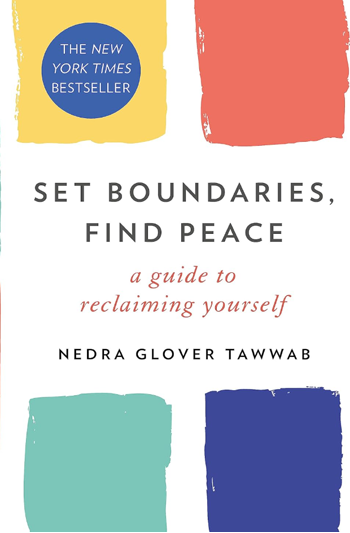
Set Boundaries, Find Peace: A Guide to Reclaiming Yourself by Nedra Glover Tawwab: A Therapist's Review and Key Takeaways for Couples in 2026
Listen to this review on a podcast

As a relationship therapist, I've seen countless couples arrive in my consulting room carrying the quiet weight of unspoken resentment. One partner feels perpetually drained from saying yes when they mean no, while the other senses an emotional distance they cannot quite name. These patterns often stem not from a lack of love, but from the absence of clear personal limits that protect each person's energy and sense of self. In my couples work, I have found that helping couples negotiate healthy boundaries is one of the most reliable ways to restore balance and genuine closeness.
Nedra Glover Tawwab's Set Boundaries, Find Peace offers exactly the kind of straightforward, therapist-led guidance that aligns with the work I do in sessions. The book explains what healthy boundaries look like across physical, emotional, time, and other domains, then provides concrete scripts and reflection exercises that clients can begin using the same day. In my practice I have drawn on these tools to help partners move from chronic over-giving to mutual respect, watching resentment dissolve as each person learns to express needs without apology or accusation. The result is often a noticeable shift toward greater peace and intimacy, the very outcomes my clients seek when they first reach out for support.
Affiliate Disclosure: As an Amazon Associate, I earn from qualifying purchases. The links below are affiliate links, meaning if you click and make a purchase, I may receive a small commission at no extra cost to you. This helps keep my counselling session costs affordable for my clients.
Therapist's Quick Verdict: This is the best practical, therapist-written guide to negotiate healthy boundaries in relationships. It is specifically designed for partners who feel overwhelmed by demands from family, friends or each other and who want a clear, non-judgmental framework to express needs assertively while preserving connection. The approach solves the common clinical problem of codependency and accumulated resentment by offering evidence-based steps that promote self-respect and healthier relational dynamics without requiring years of therapy first.
| Author | Nedra Glover Tawwab |
| Publication Year | 2021 |
| Key Themes | healthy boundaries, self-reclamation, communication scripts, relationship balance, assertiveness without guilt |
| Who is this book best for | In my clinical experience, this book is best for individuals and couples who struggle with people-pleasing and accumulated resentment If you find yourself saying yes when every part of you wants to say no, or if you carry quiet frustration because your partner or family members seem to take your time and energy for granted, this book maps directly onto your experience. The short chapters, real-life therapy examples and end-of-chapter exercises fit the lifestyle of busy professionals and parents who need insight they can apply between sessions or on a quiet evening. I rate it so highly because it translates complex therapeutic concepts into everyday language while still respecting the depth of the work required to change long-standing patterns. |
Key Features & Chapter Breakdown
Nedra Glover Tawwab organises the material into two clear parts that move readers from understanding to action. The first section defines boundaries, explores their different types and explains why so many of us grew up without them. She introduces the six core categories - physical, sexual, intellectual, emotional, material and time - using everyday examples that make the concepts instantly recognisable. Each chapter ends with gentle reflection questions that encourage readers to notice where their own limits have become blurred, a step I often assign to clients before our next session.
The second part shifts to practical application, guiding readers through the most common relationship contexts: family, friendships, romantic partnerships, work and digital interactions. Tawwab supplies ready-to-use scripts for saying no, asking for space or addressing repeated violations. In my couples work these scripts have proved invaluable; one partner might practise phrasing a request for uninterrupted evening time, while the other learns to hear the request without defensiveness. The tone throughout remains compassionate rather than confrontational, which helps reduce the fear many clients feel when first considering change.
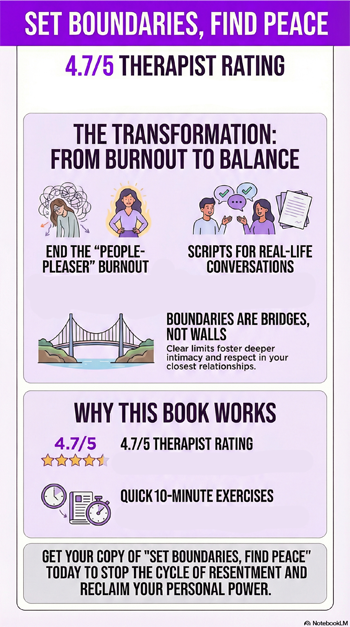
What sets the book apart is its integration of trauma awareness. Tawwab acknowledges that past experiences can make boundary-setting feel unsafe, yet she still offers small, safe steps forward. In therapy I have seen clients with anxious or avoidant attachment patterns gain confidence from these pages because the author never shames the reader for past porous boundaries. The exercises are brief enough to complete in ten minutes yet powerful enough to spark meaningful conversation in the consulting room.
Throughout the text Tawwab emphasises that boundaries are not walls but bridges to healthier connection. This perspective aligns closely with the attachment-informed approach I use with couples. When both partners understand that a clear limit is an act of respect rather than rejection, the emotional climate in the relationship often improves within weeks.
Review & Analysis
This evidence-based guide stands out for its approachable explanation of personality traits in relationships:
- Strengths: The book's greatest strength is its practicality. Tawwab supplies exact wording clients can adapt immediately, whether declining a last-minute family request or negotiating screen-time boundaries with a partner. The real therapy anecdotes illustrate how small changes create large shifts in daily life, and the exercises encourage gentle self-examination without overwhelm. This approach mirrors the acceptance-based techniques I use in sessions and consistently helps couples replace blame with curiosity.
- Weaknesses: Some core ideas are reinforced across chapters, which can feel repetitive on a single reading. Readers already familiar with basic assertiveness training may wish for deeper exploration of complex trauma responses. The book focuses more on the individual setting boundaries than on joint exercises for couples, so partners may benefit from discussing the material together or supplementing with a short workbook.
- Practical Applications: The scripts translate directly into everyday couple scenarios. A partner who feels overwhelmed by weekend plans can practise saying, "I need one quiet evening at home this week," and the other learns to respond with understanding rather than guilt. Time boundaries around work emails or family visits become concrete agreements rather than sources of silent resentment. Clients often report that these small, consistent actions restore a sense of personal agency and mutual respect.
- Current Relevance: In 2026 the emphasis on digital and time boundaries feels especially timely. With constant connectivity and blurred work-life lines, many couples struggle to protect shared evenings or personal downtime. Tawwab's guidance on these modern challenges complements the attachment and emotion-focused work I do, helping partners create the emotional safety that allows deeper intimacy to flourish.
Pros and Cons
| Pros | Cons |
|---|---|
| Clear, ready-to-use communication scripts for real-life situations | Some repetition of fundamental concepts for reinforcement |
| Practical exercises at the end of every chapter | Less emphasis on joint couple exercises than on individual work |
| Compassionate tone that reduces shame around past boundary struggles | May benefit from additional support for severe trauma histories |
Comparisons & Alternatives
For readers seeking a secular, therapist-written guide filled with relatable examples and immediate scripts, Set Boundaries, Find Peace remains my strongest recommendation. If your primary need is focused phrasing for difficult conversations, The Essentials of Setting Boundaries: Communication Skills for Healthy Relationships offers targeted dialogue techniques that can complement Tawwab's broader framework. Those who prefer a structured, faith-informed approach with journaling prompts and biblical references will find the Boundaries Workbook by Henry Cloud and John Townsend an excellent companion for daily practice and reflection. Each book serves a slightly different reader: Tawwab excels at gentle education and real-life application, the Essentials title at precise language, and the Workbook at consistent, guided implementation.
| Book | Focus | Best For |
|---|---|---|
| Set Boundaries, Find Peace: A Guide to Reclaiming Yourself by Nedra Glover Tawwab Check price ❯❯ | Understanding all six boundary types and applying them across relationships | Individuals and couples seeking practical, compassionate guidance to reduce resentment |
| Essentials of Setting Boundaries: Communication Skills for Healthy Relationships Check price ❯❯ | Targeted phrasing and dialogue techniques for expressing limits | Readers wanting specific language tools to navigate challenging conversations |
| Boundaries Workbook: When to Say Yes, How to Say No to Take Control of Your Life by Henry Cloud and John Townsend Check price ❯❯ | Structured exercises, reflection questions and faith-based support | Readers who benefit from daily journaling and biblical integration |
Therapist's Buying Guide
When selecting books on boundaries to support relationship work, look first for authors with clinical experience who ground their advice in observable patterns rather than abstract theory. Prioritise titles that include concrete scripts and reflection exercises couples can complete together or separately. The most useful resources explain the six main boundary types and show how they appear in family, friendship and romantic contexts. Readability matters: the best books use everyday language while still respecting the emotional work involved. Finally, choose resources that frame boundaries as acts of self-respect and mutual care rather than punishment, because this perspective fosters the safety and trust essential to long-term relational repair.
FAQs
Is this book suitable for couples who are already in therapy?
Yes. Many of my clients use the scripts and exercises to accelerate progress between sessions and bring clearer examples to discuss in the room.
How does the book help with boundaries in romantic relationships?
It provides specific guidance on emotional and time boundaries that reduce resentment and help partners feel both supported and autonomous.
Are the exercises difficult or time-consuming?
Most take ten to fifteen minutes and are designed to fit into busy lives, making them practical for working couples and parents.
Does the book address boundaries with extended family or in-laws?
Yes, a dedicated section helps readers navigate common pressures from parents and relatives while protecting the couple relationship.
Is it appropriate for someone with a history of trauma?
It includes a thoughtful chapter on trauma and boundaries and encourages small, safe steps, though severe trauma benefits from professional support alongside reading.
Will this book replace the need for couples counselling?
It is an excellent complement that can speed up therapy, but many couples still benefit from guided conversations with a neutral professional.
How quickly can readers expect to see changes?
Many clients notice reduced tension within two to four weeks of consistently practising one or two small boundaries.
Conclusion
From a therapeutic perspective this book provides a robust clinical roadmap for understanding the biological and learned patterns that lead to porous boundaries. The framework aligns closely with cognitive-behavioural and attachment-informed work by offering a non-pathologising language for differences in emotional regulation and social expectations. Couples who grasp these distinctions often move quickly from blame to curiosity, creating the safety needed for deeper emotional repair.
This book is especially well suited for couples who have accumulated years of unspoken assumptions about each other's availability and needs. It directly addresses the pain point of feeling taken for granted or losing oneself in the relationship. The concise chapters and practical exercises fit the lifestyle of busy professionals and parents who need insight without lengthy workbooks or abstract theory.
The core outcome is greater self-respect and more authentic connection. If recurring boundary violations or guilt around saying no have left you feeling drained in your partnership, this book offers a compassionate, effective path toward balance and fulfilment. I recommend it to clients as a foundational resource that continues to inform their progress long after the final page.
Affiliate Disclosure: As an Amazon Associate, I earn from qualifying purchases. The links above are affiliate links, meaning if you click and make a purchase, I may receive a small commission at no extra cost to you. This helps keep my counselling session costs affordable for my clients. View the full Amazon Affiliate Disclosure.
About the Book Reviewer
Rhys Lewis MSc PgDip, is the founder of The Relationship Clinic Wales and a professionally qualified couples therapist.
He is the author of 300 Ways To Improve Your Relationship and Infidelity: A Survival Guide.
Rhys provides these reviews to help clients and readers find the most effective, evidence-based tools for relationship health. View his list of best relationship advice books for couples in 2026 here.
Connect with Rhys: