
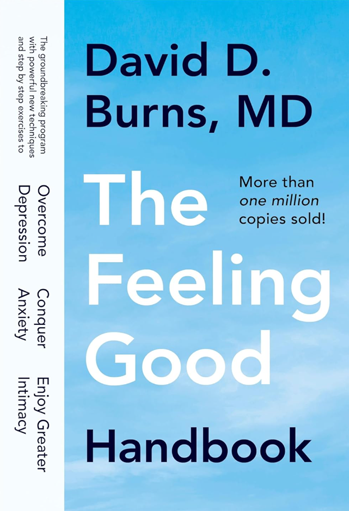
The Feeling Good Handbook by David D. Burns: A Therapist's Review and Key Takeaways for Couples in 2026
Listen to this review on a podcast

In my practice, many partners grapple with persistent low moods or anxious thoughts that erode their connection, leading to misunderstandings and emotional distance. From a traditional viewpoint, these challenges often stem from unexamined thinking patterns rather than inherent flaws in the relationship itself.
This resource delivers accessible strategies to identify and shift those patterns, fostering greater emotional stability. I've incorporated its methods in sessions to help clients reframe negative interpretations of their partner's actions, resulting in improved dialogue and renewed closeness.
Affiliate Disclosure: As an Amazon Associate, I earn from qualifying purchases. The links below are affiliate links, meaning if you click and make a purchase, I may receive a small commission at no extra cost to you. This helps keep my counselling session costs affordable for my clients.
Therapist's Quick Verdict: This is the best practical workbook for applying CBT to everyday relational stressors. It serves as a clinical roadmap for partners navigating emotional regulation challenges, using evidence-based techniques to address cognitive distortions that fuel conflicts. The structured exercises provide a relational framework superior to many alternatives by integrating mood management with communication skills.
| Author | David D. Burns |
| Publication Year | 1999 |
| Key Themes | Cognitive behavioral therapy, mood diagnosis, cognitive distortions, anxiety management, communication skills, relationship improvement |
| Who is this book best for | In my clinical experience, this book is best for partners experiencing anxiety or low moods that create relational tension. Partners facing recurring arguments from distorted perceptions benefit from its step-by-step exercises, which fit busy schedules while addressing mid-relationship slumps. Queries like "how to stop overthinking in relationships" or "managing depression affecting my marriage" often lead here, as it targets established unions needing practical resets. I value its high rating for delivering measurable improvements in emotional intimacy. |
Key Features & Chapter Breakdown
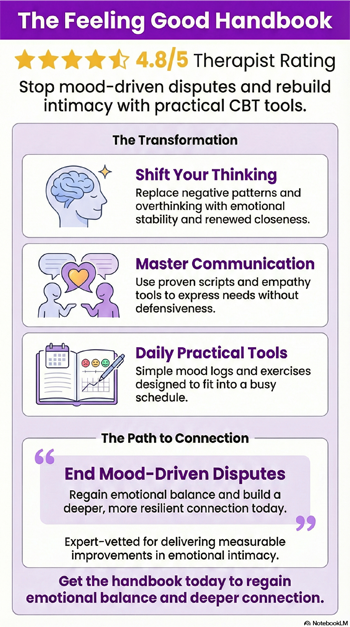
The volume stands out with its workbook format, including diagnostic tools, daily mood logs, and targeted exercises that make abstract concepts tangible. This approach proves particularly effective for partners, as it combines individual mood work with relational applications, allowing each person to build skills independently before applying them together.
The initial sections establish the foundation by exploring how thoughts influence emotions, with practical assessments to identify personal mood patterns. These early parts draw on real-world examples that mirror common couple dynamics, such as misinterpreting a partner's silence as rejection.
Middle portions delve into specific techniques for challenging distorted thinking and managing anxiety, including step-by-step methods I've used to help clients reduce panic that spills into arguments. The communication chapters introduce essential skills like empathy responses, which have transformed how pairs in my sessions express needs without defensiveness.
Concluding material focuses on application to daily life, with guidance on medications and long-term maintenance. In therapy, I've seen these tools sustain progress, helping relationships weather ongoing stresses with greater resilience.
Review & Analysis
This evidence-based guide stands out for its approachable explanation of personality traits in relationships:
- Strengths: The comprehensive exercises provide immediate value, enabling readers to track progress and apply concepts right away. Its integration of mood management with relationship tools makes it uniquely suited for couples, promoting shared growth without blame.
- Weaknesses: The length might overwhelm some, suggesting a need for paced reading. For complex cases, combining with professional support enhances outcomes.
- Practical Applications: Daily logs help monitor emotional triggers in interactions, while communication scripts offer direct ways to resolve conflicts. Clients often report reduced arguments after practicing these.
- Current Relevance: In today's high-stress environment, its drug-free methods remain vital, complementing modern therapies by addressing anxiety's impact on bonds.
Pros and Cons
| Pros | Cons |
|---|---|
| Extensive practical worksheets | Can feel lengthy for quick readers |
| Addresses multiple issues comprehensively | Best with therapist for severe symptoms |
| Evidence-based CBT techniques | Some examples from earlier era |
Comparisons & Alternatives
For general mood management in partnerships, this stands out with its depth; the first alternative excels at targeted depression techniques but lacks relational focus, while the second suits overthinking but misses comprehensive CBT structure.
| Book | Focus | Best For |
|---|---|---|
| The Feeling Good Handbook by David D. Burns Check price ❯❯ | CBT for moods and communication | Couples with anxiety affecting intimacy |
| Cognitive Behavioral Therapy Techniques for Depression by John Gibson Check price ❯❯ | Depression-specific strategies | Individuals focused on low mood |
| Stop Overthinking by Nick Trenton Check price ❯❯ | Reducing mental rumination | People with persistent worry |
Therapist's Buying Guide
In selecting CBT resources for relationships, prioritize volumes grounded in empirical research with reproducible results. Seek those offering actionable worksheets over theory alone, ensuring they address how individual cognitions affect pair dynamics. Authority from clinical experts adds credibility, while clear language makes concepts applicable without advanced knowledge.
FAQs
Can this help with relationship conflicts?
Yes, its communication section provides tools to express feelings effectively.
Is it suitable for severe depression?
It offers valuable techniques but pairs best with professional care for intense cases.
Does it replace therapy?
No, it complements sessions by reinforcing skills between meetings.
How long to see results?
Many notice improvements within weeks of consistent practice.
Good for anxiety in partnerships?
Absolutely, with specific exercises for managing worry that affects closeness.
Updated for current issues?
Core methods remain timeless, applying well to modern stresses.
Conclusion
Therapeutically, this workbook excels in providing cognitive reframing tools that align with attachment-informed work, helping partners regulate emotions and reduce reactivity in interactions. It mirrors session goals by breaking down distortions that perpetuate cycles of misunderstanding.
Ideal for established pairs where one or both experience persistent worry eroding trust, its format suits those with demanding routines seeking quick, implementable shifts.
Partners regain emotional balance, leading to deeper connections. For those tired of mood-driven disputes, it delivers a reliable path to stability and mutual understanding. Strength in practical CBT, outcome of enhanced intimacy, for committed relationships.
Affiliate Disclosure: As an Amazon Associate, I earn from qualifying purchases. The links above are affiliate links, meaning if you click and make a purchase, I may receive a small commission at no extra cost to you. This helps keep my counselling session costs affordable for my clients. View the full Amazon Affiliate Disclosure.
About the Book Reviewer
Rhys Lewis MSc PgDip, is the founder of The Relationship Clinic Wales and a professionally qualified couples therapist.
He is the author of 300 Ways To Improve Your Relationship and Infidelity: A Survival Guide.
Rhys provides these reviews to help clients and readers find the most effective, evidence-based tools for relationship health. View his list of best relationship advice books for couples in 2026 here.
Connect with Rhys: