
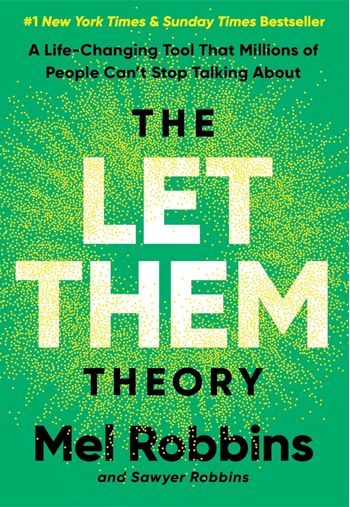
’The Let Them Theory: A Life-Changing Tool That Millions of People Can't Stop Talking About’ by Mel Robbins: A Therapist's Review and Key Takeaways for Couples in 2026
Listen to this review on a podcast

As a relationship therapist, I've seen countless couples and individuals wrestle with the exhaustion of trying to control or change their partners, family members, or friends, often leading to resentment and emotional burnout. This book offers practical strategies for releasing that control, fostering healthier relational dynamics through acceptance and self-focus that I've recommended in sessions for years. It provides a roadmap to reclaiming personal power, which can transform how partners interact by prioritizing emotional regulation and boundaries.
Affiliate Disclosure: As an Amazon Associate, I earn from qualifying purchases. The links below are affiliate links, meaning if you click and make a purchase, I may receive a small commission at no extra cost to you. This helps keep my counselling session costs affordable for my clients.
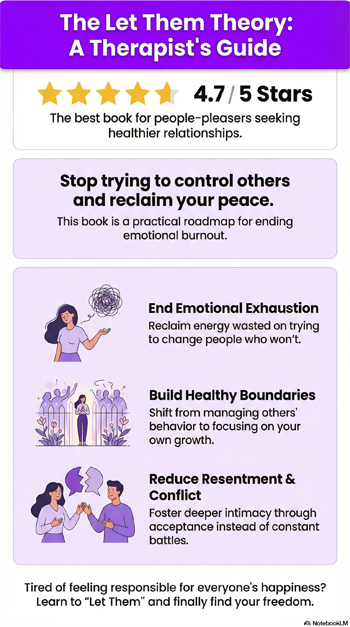
Therapist's Quick Verdict: This is the best book for people-pleasers seeking healthier relationships. It provides a clinical roadmap for emotional regulation and boundary-setting, addressing relational dynamics where one partner constantly tries to manage the other's behaviors or opinions better than many generic self-help guides by emphasizing acceptance without resignation.
| Author | Mel Robbins |
| Publication Year | 2024 |
| Key Themes | Letting go of control, self-empowerment, boundary-setting, emotional regulation |
| Who is this book best for | In my clinical experience, this book is best for middle-aged partners in long-term relationships seeking to break codependent patterns. This book is best for people-pleasers who struggle with feeling responsible for others' happiness, often walking on eggshells to avoid conflict or recovering from emotional exhaustion in partnerships. If you are looking for simple mindset shifts with real-life examples to foster self-focus and healthier connections, this is my top recommendation. Ideal for busy parents or professionals in their 40s-50s who prefer practical, no-nonsense advice over fluffy theory, suitable for mid-crisis or long-term maintenance stages of relationships. |
Key Features & Chapter Breakdown
The book is structured around applying the "Let Them" principle across various life areas, starting with an introduction to the theory's origins from Robbins' personal experiences. It explores how letting go of control over others' actions leads to personal freedom, with chapters dedicated to specific contexts like family dynamics, friendships, romantic relationships, work environments, and self-perception.
One key section delves into relational conflicts, offering exercises to identify when you're over-investing in changing someone else's behavior, much like recognizing attachment styles in therapy. In my practice, I've used similar concepts to help clients shift from reactive patterns to proactive self-care, reducing resentment in couples.
Later chapters provide strategies for implementation, including mindset shifts backed by psychological insights, and conclude with encouragement to integrate "Let Me" - focusing on your own responses and growth.
Review & Analysis
This book stands out for its straightforward approach to common relational pitfalls, drawing from Robbins' life and expert interviews.
- Strengths: The evidence-based insights, combined with relatable anecdotes from real people, make it accessible and motivating. It empowers readers to reclaim energy wasted on uncontrollable factors, aligning with cognitive-behavioral techniques I employ to address codependency. The emphasis on practical application through mindset reframes helps build resilience in relationships without requiring partner buy-in.
- Weaknesses: Some sections feel repetitive, reiterating the core idea without adding new depth, which might frustrate readers seeking more nuanced psychological analysis. It also lacks extensive coverage of diverse cultural contexts or severe issues like trauma, potentially limiting its appeal for those with complex histories.
- Practical Applications: The "Let Them" exercises are excellent for couples therapy homework, such as journaling about triggers to improve emotional regulation. In my sessions, I've adapted them for busy parents by suggesting quick daily reflections to prevent buildup of unspoken resentments, fostering deeper intimacy through acceptance rather than control.
- Relevance to Modern Relationships: In today's fast-paced world, where social media amplifies comparison and judgment, this book addresses how to navigate external opinions, helping couples maintain connection amid distractions. It complements virtual therapy trends by encouraging self-directed growth.
Pros and Cons
| Pros | Cons |
|---|---|
| Practical mindset shifts with real-life examples for immediate application | Repetitive content that could be condensed |
| Empowers self-focus, reducing relational stress | Limited depth on cultural diversity or severe mental health issues |
| Backed by psychological research and expert insights | May feel overly simplistic for those with trauma backgrounds |
Comparisons & Alternatives
While "The Let Them Theory" excels in broad self-empowerment, the alternatives focus more narrowly on gender dynamics or research-based marriage tools. If you're seeking acceptance and letting go, stick with Robbins; for structured communication, try Gottman.
| Book | Focus | Best For |
|---|---|---|
| The Seven Principles for Making Marriage Work by John GottmanCheck price ❯❯ | Research-driven marriage repair | Long-term couples |
| Men Are from Mars, Women Are from Venus by John GrayCheck price ❯❯ | Gender-based communication differences | Couples navigating misunderstandings |
Therapist's Buying Guide
When selecting relationship self-help books like those on boundary-setting or emotional regulation, prioritize evidence-based content that draws from psychological research for credibility. Look for readability with clear, actionable steps rather than dense theory, ensuring the book includes exercises or examples that fit real-life scenarios. Inclusivity is key - choose titles that address diverse backgrounds, genders, and relationship stages to broaden applicability. Avoid books promising quick fixes; instead, opt for those emphasizing long-term growth and self-reflection.
FAQs
Is this book suitable for singles?
While primarily focused on interactions with others, its principles of self-focus and letting go apply to anyone, including singles preparing for healthier future relationships.
How does it compare to therapy sessions?
It serves as a valuable supplement, offering tools for self-reflection that align with cognitive-behavioral approaches, but it's not a substitute for personalized professional guidance in complex cases.
Is it helpful for couples in crisis?
Yes, for mid-level conflicts involving control issues, but for severe problems like abuse, seek therapy first.
Does it address cultural differences in relationships?
It touches on universal principles but could expand more on diverse contexts; adapt examples to your background.
Can it help with family dynamics beyond romantic partnerships?
Absolutely, chapters on family and friends provide strategies for setting boundaries in various relational spheres.
Is the advice evidence-based?
Yes, it incorporates insights from psychology and neuroscience, though it's more anecdotal than purely academic.
How long does it take to see results from the theory?
Many report immediate mindset shifts, but consistent application over weeks yields lasting changes in relational patterns.
Conclusion
From a therapeutic standpoint, this book excels in promoting emotional regulation and attachment security by encouraging readers to release unproductive control efforts, mirroring techniques like cognitive reframing used in sessions to disrupt negative relational cycles. It bridges self-help with clinical principles, offering a accessible entry point for those hesitant about therapy.
It particularly aids middle-aged couples or individuals feeling like emotional caretakers, addressing pain points such as chronic resentment or feeling undervalued in long-term partnerships. The format's emphasis on quick, reflective exercises suits busy lifestyles, allowing gradual integration without overwhelming schedules.
Embrace this approach to rebuild trust through self-empowerment, transforming dynamics from conflict-prone to collaborative. For those ready to prioritize their well-being, it's a solid step toward fewer escalations and greater empathy.
Affiliate Disclosure: As an Amazon Associate, I earn from qualifying purchases. The links above are affiliate links, meaning if you click and make a purchase, I may receive a small commission at no extra cost to you. This helps keep my counselling session costs affordable for my clients. View the full Amazon Affiliate Disclosure.
About the Book Reviewer
Rhys Lewis MSc PgDip, is the founder of the Relationship Clinic Wales and a professionally qualified couples therapist.
He is the author of 300 Ways To Improve Your Relationship and Infidelity: A Survival Guide.
Rhys provides these reviews to help clients and readers find the most effective, evidence-based tools for relationship health. View his list of best relationship advice books for couples in 2026 here.
Connect with Rhys: