
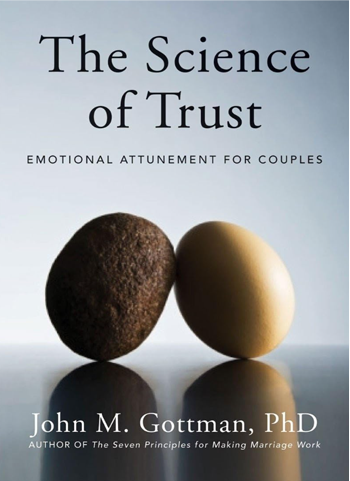
‘The Science of Trust: Emotional Attunement for Couples’ by John Gottman: A Therapist's Review and Key Takeaways for Couples in 2026
Listen to this review on a podcast

As a relationship therapist working in the UK, I've seen many couples struggle with eroded trust and emotional distance - often after years of unresolved conflict, small betrayals, or simply drifting apart into parallel lives. This book offers a rigorous, evidence-based framework for rebuilding trust through emotional attunement that I have drawn upon in my clinical work for years with consistent, positive outcomes.
Affiliate Disclosure: As an Amazon Associate, I earn from qualifying purchases. The links below are affiliate links, meaning if you click and make a purchase, I may receive a small commission at no extra cost to you. This helps keep my counselling session costs affordable for my clients.
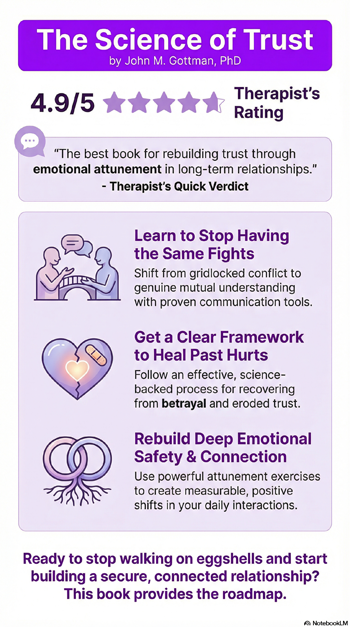
Therapist's Quick Verdict: This is the best book for rebuilding trust through emotional attunement in long-term relationships. It is specifically designed for partners who have fallen into negative sentiment override and need precise, research-backed tools to process difficult emotions without escalating defensiveness or withdrawal.
| Author | John M. Gottman PhD |
| Publication Year | 2011 |
| Key Themes | Trust-building, emotional attunement, game theory in relationships, processing betrayal, managing negative affect |
| Who is this book best for | In my clinical experience, this book is best for established couples experiencing emotional disconnection or eroded trust who appreciate a scientific, in-depth approach rather than light self-help. This book is best for mid-life partners who feel distant, walk on eggshells, or are recovering from betrayal. If you are looking for structured, evidence-based ways to deepen emotional safety and rebuild connection, this is my top recommendation. |
Key Features & Chapter Breakdown
The book opens by establishing why trust is the cornerstone of lasting relationships and introduces game theory as a mathematical lens for understanding cooperation versus betrayal in partnerships.
Later chapters develop a measurable “trust metric” and explore how couples can dampen negative emotions during conflict. The heart of the book is the detailed attunement process (A-T-T-U-N-E): Awareness, Turning toward, Tolerance, Understanding, Non-defensive responding, and Empathy.
Gottman also provides guidance on processing regrettable incidents, healing from betrayal, and building positive sentiment override. In my practice, I frequently adapt the attunement protocol to help clients express vulnerable emotions safely and shift from gridlocked conflict to genuine mutual understanding.
Review & Analysis
- Strengths: Grounded in over four decades of observational research, innovative application of game theory to relational dynamics, detailed clinical interventions that translate directly into therapeutic work, and powerful exercises for emotional attunement that produce measurable shifts in couple interaction.
- Weaknesses: The academic tone and inclusion of mathematical models can feel dense for some readers; it requires commitment and is less “light” than Gottman’s more popular titles.
- Practical Applications: The attunement process is particularly helpful for couples stuck in negative sentiment override. I often guide clients to use short daily attunement conversations to rebuild emotional safety, especially useful for busy middle-aged parents who are struggling with closeness. The betrayal-processing framework also supports recovery after infidelity or major breaches of trust.
- Relevance to Modern Relationships: In an era of high stress and digital distraction, Gottman’s emphasis on turning toward subtle emotional bids remains highly applicable and counters the emotional disconnection many couples report today.
Pros and Cons
| Pros | Cons |
|---|---|
| Backed by decades of rigorous research | Academic and mathematical sections can be dense |
| Powerful attunement exercises for immediate use | Requires sustained effort - no quick fixes |
| Effective framework for healing betrayal | Not ideal for severe trauma or abuse (professional help needed) |
Comparisons & Alternatives
If you prefer deep scientific theory and attunement-based repair, choose Gottman; for structured activities and worksheets, consider the alternatives below.
| Book | Focus | Best For |
|---|---|---|
| The Science of Trust by John Gottman Check price ❯❯ | Scientific analysis of trust and emotional attunement | Couples seeking research-driven depth |
| Rebuilding Trust by Morgan Johnson Check price ❯❯ | Guided therapy techniques and activities | Couples wanting workbook-style exercises |
| How to Build Trust in a Relationship Check price ❯❯ | Practical steps for establishing and maintaining trust | Those preferring straightforward guidance |
Therapist's Buying Guide
When choosing books on rebuilding trust in relationships, look for a strong evidence base from longitudinal research, clear practical applications that can be used independently or in therapy, balanced readability with clinical depth, and relevance across diverse relationship stages. Prioritise authors with proven expertise in couple dynamics and interventions that address both emotional and behavioural components of trust.
FAQs
Is this book suitable after infidelity?
Yes - Gottman includes specific guidance on processing betrayal and rebuilding trust, though severe cases benefit from concurrent professional therapy.
Is the book easy to read?
It is more academic than Gottman’s popular titles, with some mathematical concepts, but motivated couples find it rewarding.
Does it include exercises?
Yes - detailed attunement protocols and processing tools that can be applied immediately.
How does it compare to therapy?
It offers clinical-level insight and tools but is not a substitute for personalised professional support.
Is it only for married couples?
No - the principles apply to any committed long-term partnership.
Conclusion
From a therapeutic standpoint, The Science of Trust stands out for its integration of rigorous observational data with practical interventions, particularly the attunement process that fosters emotional regulation and secure attachment. It aligns closely with evidence-based couple therapies I use in sessions and provides a clear roadmap for shifting from negative sentiment override to positive connection.
This book is especially valuable for middle-aged couples who feel emotionally distant, walk on eggshells around past hurts, or are recovering from eroded trust. The structured yet flexible attunement exercises fit well into busy modern lives and offer incremental progress toward deeper intimacy.
For partners ready to invest in understanding the science of trust, this resource can meaningfully rebuild emotional safety and lasting connection. I encourage you to explore it as a powerful step toward the secure, attuned relationship you both deserve.
Affiliate Disclosure: As an Amazon Associate, I earn from qualifying purchases. The links above are affiliate links, meaning if you click and make a purchase, I may receive a small commission at no extra cost to you. This helps keep my counselling session costs affordable for my clients. View the full Amazon Affiliate Disclosure.
About the Book Reviewer
Rhys Lewis MSc PgDip, is the founder of The Relationship Clinic Wales and a professionally qualified couples therapist.
He is the author of 300 Ways To Improve Your Relationship and Infidelity: A Survival Guide.
Rhys provides these reviews to help clients and readers find the most effective, evidence-based tools for relationship health. View his list of best relationship advice books for couples in 2026 here.
Connect with Rhys: