
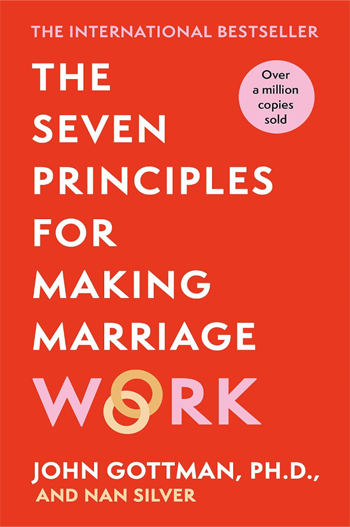
’The Seven Principles for Making Marriage Work’ by John Gottman: A Therapist's Review and Key Takeaways for Couples in 2026
Listen to this review on a podcast

As a relationship therapist, I've seen countless couples struggle with communication breakdowns, unresolved conflicts, and fading emotional bonds that leave them feeling disconnected and frustrated. This book offers evidence-based principles and practical exercises that I've recommended in sessions for years.
Affiliate Disclosure: As an Amazon Associate, I earn from qualifying purchases. The links below are affiliate links, meaning if you click and make a purchase, I may receive a small commission at no extra cost to you. This helps keep my counselling session costs affordable for my clients.
Therapist's Quick Verdict: This is the best book for evidence-based marriage strengthening. It is specifically designed for partners in high-conflict relationships who need specific phrasing and strategies to express difficult emotions without triggering a defensive reaction.
| Author | John Gottman |
| Publication Year | 1999 (updated editions) |
| Key Themes | Communication, conflict resolution, building emotional bonds |
| Who is this book best for | In my clinical experience, this book is best for couples seeking evidence-based marriage advice who feel disconnected or stuck in repetitive conflicts. If you're looking for practical exercises to rebuild trust and intimacy, this is my top recommendation. |
Key Features & Chapter Breakdown
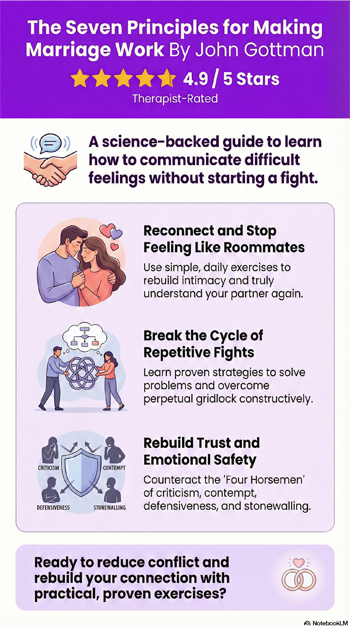
The book begins by debunking common myths about marriage and introducing the research methodology behind the principles. It then explores the 'Four Horsemen' of relationship breakdown - criticism, contempt, defensiveness, and stonewalling - with strategies to counteract them.
Subsequent chapters detail each of the seven principles, starting with enhancing love maps to build intimate knowledge of your partner's world. Nurturing fondness and admiration follows, emphasizing the importance of respect and appreciation.
The book addresses turning toward each other in everyday moments, accepting influence, solving solvable problems through gentle startups and compromise, overcoming gridlock on perpetual issues, and creating shared meaning.
In my practice, I've used these concepts to help clients shift from blame to understanding.
Review & Analysis
This evidence-based guide stands out for its practical approach to common relational dynamics.
- Strengths: Backed by decades of research on real couples, offering actionable exercises and real-world examples that promote emotional regulation and attachment security.
- Weaknesses: Some examples may feel dated in updated editions, and it assumes a certain level of commitment that may not suit all cultural contexts.
- Practical Applications: The 'love maps' exercise has helped my clients deepen intimacy - adapt it for busy parents by scheduling brief daily check-ins to discuss stresses and dreams.
Pros and Cons
| Pros | Cons |
|---|---|
| Backed by 40+ years of research | Some examples feel dated without updates |
| Actionable exercises for immediate use | Quite technical in parts |
| Affordable and accessible for most readers | Not ideal for severe issues like abuse |
Comparisons & Alternatives
If you're data-oriented, go with Gottman; for letting go of control in broader life aspects, choose Robbins; for structured conversations, opt for Eight Dates.
| Book | Focus | Best For |
|---|---|---|
| Seven Principles…Check price ❯❯ | Research-driven marriage repair | Long-term couples |
| Let Them Theory by Mel RobbinsCheck price ❯❯ | Letting go of control for personal growth | Individuals seeking life-changing advice |
| Eight Dates by John GottmanCheck price ❯❯ | Essential conversations for thriving relationships | Couples maintaining long-term bonds |
Therapist's Buying Guide
When selecting relationship self-help books, prioritize evidence-based content grounded in research, such as longitudinal studies on couples. Look for readability that balances clinical insights with accessible language, avoiding overly simplistic advice. Seek inclusivity across diverse backgrounds, genders, and relationship stages. Practical exercises should be included to facilitate application, promoting skills like emotional regulation and conflict resolution.
FAQs
Is this book suitable for singles?
While primarily for couples, the principles on emotional bonds and communication can benefit anyone preparing for relationships.
How does it compare to therapy sessions?
It's a great supplement but not a replacement for professional help, especially in complex cases.
Is the book updated for modern relationships?
Updated editions incorporate recent research, though some examples may feel traditional.
Does it address same-sex couples?
The principles are universal, but examples are mostly heterosexual; apply broadly.
Is it helpful for non-married couples?
Yes, the strategies enhance any committed relationship.
Can it help with severe issues like infidelity?
It addresses symptoms but recommends therapy for deep trauma.
Conclusion
From a therapeutic perspective, this book excels in promoting emotional regulation and secure attachment through its evidence-based principles, akin to cognitive reframing techniques used in sessions to shift relational dynamics.
It particularly aids middle-aged couples navigating long-term maintenance, addressing pain points like feeling like roommates rather that soul-mates by fostering daily bids for connection that fit busy professionals' lifestyles.
For those ready to rebuild trust and reduce fights with practical exercises, I recommend starting today to achieve better empathy and fewer escalations.
Affiliate Disclosure: As an Amazon Associate, I earn from qualifying purchases. The links above are affiliate links, meaning if you click and make a purchase, I may receive a small commission at no extra cost to you. This helps keep my counselling session costs affordable for my clients. View the full Amazon Affiliate Disclosure.
About the Book Reviewer
Rhys Lewis MSc PgDip, is the founder of The Relationship Clinic Wales and a professionally qualified couples therapist.
He is the author of 300 Ways To Improve Your Relationship and Infidelity: A Survival Guide.
Rhys provides these reviews to help clients and readers find the most effective, evidence-based tools for relationship health. View his list of best relationship advice books for couples in 2026 here.
Connect with Rhys: