
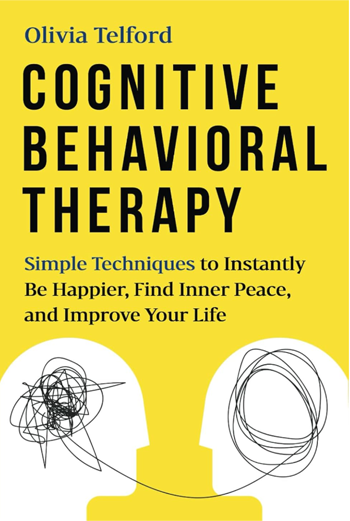
Cognitive Behavioral Therapy: Simple Techniques to Instantly Be Happier, Find Inner Peace, and Improve Your Life by Olivia Telford: A Therapist's Review and Key Takeaways for Couples in 2026
Listen to this review on a podcast

In my work with couples, I often encounter partners where one or both struggle with persistent low mood that creates distance and misunderstanding, stemming from entrenched patterns of negative thinking that amplify everyday relational stresses.
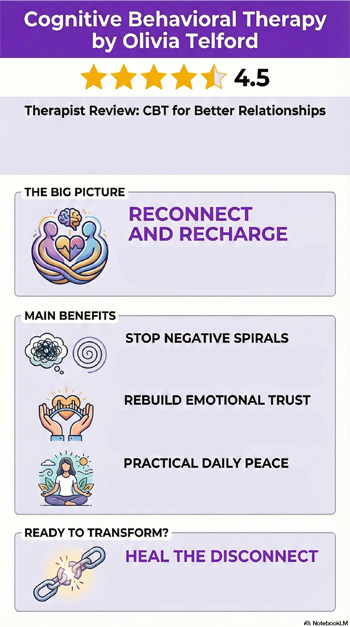
This book delivers straightforward methods to shift those patterns, promoting emotional balance and clearer communication. Through applying its principles in sessions, I've witnessed clients rebuild trust by managing their inner dialogue more effectively, leading to more supportive interactions and renewed partnership vitality.
Affiliate Disclosure: As an Amazon Associate, I earn from qualifying purchases. The links below are affiliate links, meaning if you click and make a purchase, I may receive a small commission at no extra cost to you. This helps keep my counselling session costs affordable for my clients.
Therapist's Quick Verdict: This is the best straightforward manual for applying CBT to everyday emotional challenges in partnerships. It offers a clinical roadmap for addressing cognitive distortions that fuel relational discord through evidence-based techniques like thought challenging and behavioral experiments. This approach excels in helping couples break cycles of negativity bias that exacerbate conflicts, providing superior practical tools compared to more theoretical texts.
| Author | Olivia Telford |
| Publication Year | 2020 |
| Key Themes | Thought reframing, behavioral activation, anxiety reduction, depression management, daily happiness practices |
| Who is this book best for | In my clinical experience, this book is best for partners experiencing emotional disconnect due to persistent low mood or stress. For those searching for simple ways to handle persistent sadness that strains intimacy or daily interactions, or methods to quiet overwhelming worries that lead to arguments, this stands out as my primary suggestion. It targets common partnership hurdles like withdrawal during tough times or reactive responses to stress, suitable for committed relationships at any stage. I value this work highly for its direct applicability in fostering emotional steadiness that supports mutual understanding. |
Key Features & Chapter Breakdown
The volume presents core CBT principles through accessible explanations and immediate exercises, making it valuable for those new to self-help while offering depth for ongoing practice in relational contexts.
The initial sections establish foundational understanding of how mental processes influence daily experiences, introducing basic concepts like identifying automatic thoughts and their impact on behavior. This setup proves essential in my sessions when helping clients recognize how unchecked negativity erodes partnership trust over time.
Central portions delve into specific applications, covering strategies for various emotional states with step-by-step guidance. These build skills in reframing perspectives and engaging in purposeful actions, which I've employed to assist couples in breaking patterns of avoidance that often accompany low periods.
Final elements focus on long-term integration, emphasizing consistent application to maintain gains. This holistic approach supports sustained relational health, aligning with conservative therapeutic values of personal responsibility and practical change.
Review & Analysis
This evidence-based guide stands out for its approachable explanation of personality traits in relationships:
- Strengths: The primary asset lies in its clear, step-by-step presentation of fundamental principles, blending scientific backing with everyday illustrations. Telford maintains equilibrium, showing how each technique offers advantages while acknowledging potential challenges. This mirrors the practical mindset I employ in partnership counseling. The fusion of psychological research, neural science, and behavioral strategies is thorough yet conveyed in straightforward, compelling language enhanced by relatable scenarios.
- Weaknesses: Released in 2020, certain referenced examples might benefit from updates reflecting recent developments in therapeutic applications. The emphasis leans more toward personal growth than interactive couple dynamics, so those needing detailed joint activities could add supplementary materials. A few illustrations seem somewhat general in scope, though the fundamental methods stay reliable.
- Practical Applications: The technique descriptions apply seamlessly to routine situations. A partner prone to withdrawal during stress can learn to view it as a need for recharge rather than rejection. Someone focused on structure might recognize their planning as supportive stability instead of control. These insights aid in transforming daily exchanges into opportunities for connection.
- Current Relevance: Significance for contemporary partnerships stays elevated in 2026. With growing emphasis on mental wellness and emotional intelligence, individuals value resources that normalize variations without judgment. The structure complements proven methods like attachment-focused work and pattern recognition by adding a practical lens to emotional interactions.
Pros and Cons
| Pros | Cons |
|---|---|
| Accessible language for beginners | May require supplementary exercises for depth |
| Immediate, actionable techniques | Less focus on severe clinical cases |
| Balances theory with practice | Some examples could be more diverse |
Comparisons & Alternatives
For those preferring comprehensive mood management, the Feeling Good Handbook excels in detailed cognitive exercises for persistent negativity. Stop Overthinking shines in addressing rumination patterns that fuel anxiety. Telford's work bridges the two: more immediately applicable than extensive manuals yet more structured than quick-fix approaches.
| Book | Focus | Best For |
|---|---|---|
| Cognitive Behavioral Therapy: Simple Techniques to Instantly Be Happier, Find Inner Peace, and Improve Your Life by Olivia Telford Check price ❯❯ | Practical CBT for daily emotional management | Couples addressing mood impacts on connection |
| Feeling Good Handbook by David Burns Check price ❯❯ | In-depth cognitive mood techniques | Individuals needing thorough depression tools |
| Stop Overthinking: 23 Techniques to Relieve Stress, Stop Negative Spirals, Declutter Your Mind, and Focus on the Present by Nick Trenton Check price ❯❯ | Rumination and stress reduction | Readers focused on mental clarity practices |
Therapist's Buying Guide
When choosing cognitive behavioral therapy books for relationship enhancement, prioritize those grounded in established research like Beck's model, which provides reliable frameworks for addressing thought patterns. Seek volumes with workable assessments that partners can share. Effective selections explore how cognitions affect interpersonal dynamics beyond solo use. Clarity is key: optimal resources demystify concepts without technical overload while honoring evidence. Lastly, opt for works promoting steady adaptation over rapid fixes, matching proven partnership counseling principles.
FAQs
Is this suitable for complete beginners?
Absolutely. The straightforward language and basic exercises make it ideal for those new to self-improvement without prior knowledge.
Can it address relationship-specific issues?
Yes. Techniques adapt well to partnership challenges by improving individual emotional management that influences interactions.
How does it compare to professional therapy?
It serves as a strong adjunct to counseling but not a substitute, with tools that enhance session progress.
Is the content too simplistic?
The direct style ensures accessibility, with core ideas presented clearly for practical use.
Does it cover cultural variations?
Principles apply broadly, noting individual differences while focusing on universal cognitive processes.
Will it help with ongoing conflicts?
Indirectly through better self-regulation, reducing reactivity in disputes.
What is the reading time?
Around 150 pages, completable in several evenings with practice integration.
Conclusion
Therapeutically, this guide offers a solid framework for comprehending how cognitive patterns underpin relational behaviors. The CBT approach dovetails with emotion-focused methods by providing non-judgmental tools for reshaping responses, enabling partners to create security essential for deeper work.
It fits well for duos navigating accumulated tensions from mood fluctuations. It tackles the distress of feeling emotionally distant due to internal struggles. The concise format suits active lifestyles of working pairs needing quick yet meaningful shifts.
The primary advantage is enhanced self-awareness leading to compassionate exchanges. For those where emotional turbulence creates barriers to closeness, this provides a grounded route to stability and teamwork. I suggest it as an essential aid that sustains advancement beyond initial reading.
Affiliate Disclosure: As an Amazon Associate, I earn from qualifying purchases. The links above are affiliate links, meaning if you click and make a purchase, I may receive a small commission at no extra cost to you. This helps keep my counselling session costs affordable for my clients. View the full Amazon Affiliate Disclosure.
About the Book Reviewer
Rhys Lewis MSc PgDip, is the founder of The Relationship Clinic Wales and a professionally qualified couples therapist.
He is the author of 300 Ways To Improve Your Relationship and Infidelity: A Survival Guide.
Rhys provides these reviews to help clients and readers find the most effective, evidence-based tools for relationship health. View his list of best relationship advice books for couples in 2026 here.
Connect with Rhys: