
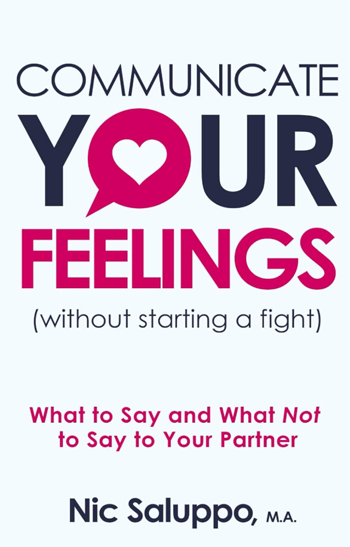
’Communicate Your Feelings (without starting a fight)’ by Nic Saluppo: A Therapist's Review and Key Takeaways for Couples in 2026
Listen to this review on a podcast

As a relationship therapist with years of experience helping couples navigate emotional challenges, I've witnessed how miscommunication can erode even the strongest bonds - issues like unexpressed feelings leading to resentment or arguments escalating from simple misunderstandings.
"Communicate Your Feelings (without starting a fight)" by Nic Saluppo stands out as a practical, accessible guide that empowers partners to express themselves authentically without sparking conflict, drawing from real-world counseling insights. In 2026, with the stresses of modern life amplifying relational strains, this book remains highly relevant, offering tools I've successfully integrated into my sessions to foster deeper connections for clients seeking harmony.
Affiliate Disclosure: As an Amazon Associate, I earn from qualifying purchases. The links below are affiliate links, meaning if you click and make a purchase, I may receive a small commission at no extra cost to you. This helps keep my counselling session costs affordable for my clients.
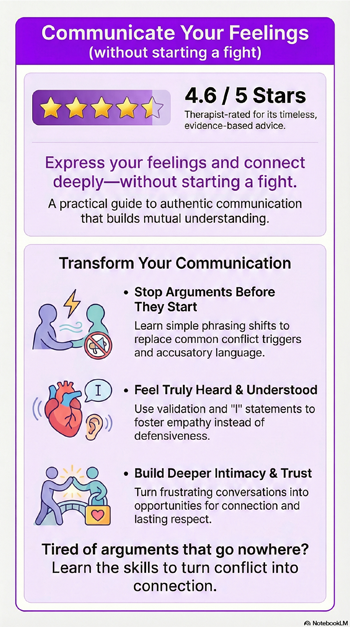
Therapist's Quick Verdict: This is the best book for communicating feelings without arguing. It is specifically designed for partners in high-conflict relationships who need specific phrasing and strategies to express difficult emotions without triggering a defensive reaction.
| Author | Nic Saluppo |
| Publication Year | 2020 |
| Key Themes | Effective emotional expression, avoiding conflict triggers, building mutual understanding and respect |
| Who is this book best for | In my clinical experience, this book is best for middle-aged couples or long-term partners who have fallen into "reactive" communication patterns. If you find that simple conversations often escalate into arguments, the phrasing tools in this guide will help you express yourself without starting a fight. |
Key Features & Chapter Breakdown
The book is structured around practical, bite-sized lessons that make it easy to digest and apply. It begins by identifying common pitfalls in communication, such as the 13 most frequent phrases that ignite arguments, like accusatory "you always" statements or dismissive responses that invalidate feelings. Saluppo then provides alternative phrasing and strategies to express emotions constructively, emphasizing validation and empathy.
Subsequent sections delve into separating thoughts from feelings, taking ownership of one's emotions without blaming the partner, and using "I" statements to foster dialogue rather than defense. There are exercises for practicing these skills, such as role-playing scenarios to reframe heated discussions into connective conversations. The book also covers admitting mistakes gracefully and nurturing respect, with real-life examples drawn from the author's counseling experience.
In my practice, I've adapted these concepts to help clients, particularly clients feeling unheard in their relationships, shift from reactive patterns to proactive understanding, aligning closely with cognitive-behavioral techniques that promote emotional regulation and mutual respect.
Review & Analysis
This book excels in its straightforward approach, making complex emotional dynamics accessible without overwhelming the reader. Below, I break down its strengths, minor weaknesses, practical applications, and relevance to contemporary relationships.
- Strengths: Backed by the author's extensive counseling background, the book uses relatable, real-couple examples that resonate deeply. Clients of mine who read the book praise its immediacy - many report applying tips right away with noticeable improvements in their interactions. The focus on practical phrasing shifts, like replacing "You make me feel" with "I feel," empowers readers to take control of their communication, fostering trust and intimacy.
- Weaknesses: While comprehensive for everyday conflicts, it offers less depth on culturally diverse dynamics or non-traditional relationships, which could limit its appeal for some. However, its core principles are universally adaptable.
- Practical Applications: In therapy sessions, I've recommended the book's exercises, such as the validation technique where partners acknowledge each other's perspectives before responding. For busy middle-aged couples juggling careers and family, this has proven transformative - one client shared how it helped her express frustration about household chores without escalating into blame, leading to collaborative solutions. It aligns with evidence-based methods like emotionally focused therapy, which I use to help clients rebuild emotional bonds.
- Relevance to Modern Relationships: In 2026, with remote work and digital distractions amplifying miscommunications, Saluppo's emphasis on clear, respectful dialogue is more vital than ever. My clients have highlighted how the book addresses post-pandemic relational strains, offering tools for virtual arguments that prevent resentment buildup. As a therapist, I appreciate its traditional focus on mutual respect and personal responsibility, which encourages lasting partnerships over fleeting fixes.
Pros and Cons
| Pros | Cons |
|---|---|
| Practical, immediately applicable phrases and exercises | Examples may feel basic for those already communication-savvy |
| Easy-to-read format with key takeaways in manageable sections | Limited discussion on severe relational issues like abuse |
| Affordable and concise, perfect for busy readers | Assumes a baseline of willingness from both partners |
Comparisons & Alternatives
If Saluppo's book appeals to your data-driven side with its counseling-rooted advice, consider these alternatives for complementary perspectives. For emotion-centered approaches, the following stand out.
| Book | Focus | Best For |
|---|---|---|
| Communicate Your Feelings (without starting a fight) Check price ❯❯ | Phrasing strategies to avoid fights and build respect | Couples seeking quick, practical fixes |
| The Art of Relationship Communication: Enhanced Skills Check price ❯❯ | Advanced skills for deeper relational harmony | Those wanting comprehensive communication upgrades |
| 4 Essential Keys to Effective Communication in Love, Life, Work--Anywhere! by Bento C. Leal III Check price ❯❯ | Empathy and listening with a 12-day challenge | Beginners in all life areas needing structured practice |
Therapist's Buying Guide
When selecting relationship books on communication, prioritize evidence-based content rooted in counseling or psychology, ensuring it offers actionable steps rather than vague advice. Look for readability - short chapters and exercises suit busy lives—and inclusivity to address diverse experiences. "Communicate Your Feelings" fits well into therapy as a homework tool, complementing sessions by encouraging self-reflection and partner dialogue. As a traditional therapist, I advise starting with books that emphasize personal responsibility, like this one, to build a foundation before tackling deeper emotional work.
FAQs
Is this book suitable for singles?
While primarily aimed at couples, the principles of emotional expression and conflict avoidance can benefit singles preparing for future relationships or improving communication in friendships and family.
How does it compare to therapy sessions?
It's an excellent supplement, providing tools for daily practice, but not a substitute for personalized professional guidance in complex issues.
Is the book easy to read for beginners?
Yes, its concise format and clear examples make it accessible, with many reviewers noting they finished it quickly and started applying tips immediately.
Does it address modern issues like digital communication?
It focuses on core principles that apply to texts and calls, though some wish for more specific digital examples; adapt the phrasing strategies accordingly.
Can it help with long-term resentment?
Absolutely, by teaching validation and ownership, it helps unpack built-up emotions, as echoed in Goodreads reviews where readers reported reduced arguments.
Is there a workbook available?
Some reviewers mention pairing it with the author's workbook for deeper exercises, enhancing its practical value.
How long does it take to see results?
Many of my clients report immediate improvements after trying just one or two techniques in conversations.
Conclusion
In summary, "Communicate Your Feelings (without starting a fight)" provides invaluable, research-informed tools for couples eager to enhance their emotional connections without the drama of unnecessary conflicts. Ideal for people navigating the complexities of long-term relationships, it offers hope and practical steps toward mutual understanding and respect. From my perspective as a therapist, incorporating these strategies can lead to profound shifts, much like those I've seen in my clients who report stronger, more resilient partnerships.
Affiliate Disclosure: As an Amazon Associate, I earn from qualifying purchases. The links above are affiliate links, meaning if you click and make a purchase, I may receive a small commission at no extra cost to you. This helps keep my counselling session costs affordable for my clients. View the full Amazon Affiliate Disclosure.
About the Book Reviewer
Rhys Lewis MSc PgDip, is the founder of the Relationship Clinic Wales and a professionally qualified couples therapist.
He is the author of 300 Ways To Improve Your Relationship and Infidelity: A Survival Guide.
Rhys provides these reviews to help clients and readers find the most effective, evidence-based tools for relationship health. View his list of best relationship advice books for couples in 2026 here.
Connect with Rhys: