
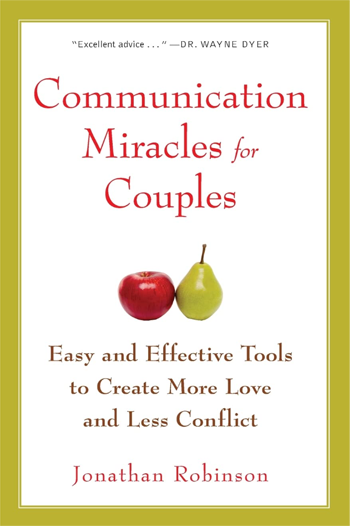
'Communication Miracles for Couples' by Jonathan Robinson: A Therapist's Book Review and Key Takeaways for Couples in 2026
Listen to this review on a podcast

As a relationship therapist with years of experience helping couples navigate the complexities of partnership, I've witnessed firsthand how poor communication can erode even the strongest bonds. Jonathan Robinson's "Communication Miracles for Couples" stands out as a beacon of hope, offering straightforward, effective tools that I've integrated into my sessions to foster deeper understanding and harmony.
In 2026, with relationships facing modern stresses like digital distractions and busy lifestyles, this book remains incredibly relevant, providing timeless strategies tailored for women in their 30s, 40s, and 50s seeking to reignite love and reduce conflict in their lives.
This guide isn't just theory; it's packed with actionable advice that aligns with therapeutic approaches like active listening and empathy-building, which I use daily to help clients shift from frustration to connection.
Whether you're in a long-term marriage or rebuilding after challenges, Robinson's insights can transform how you and your partner interact, leading to more fulfilling, loving relationships.
Affiliate Disclosure: As an Amazon Associate, I earn from qualifying purchases. The links below are affiliate links, meaning if you click and make a purchase, I may receive a small commission at no extra cost to you. This helps keep my counselling session costs affordable for my clients.
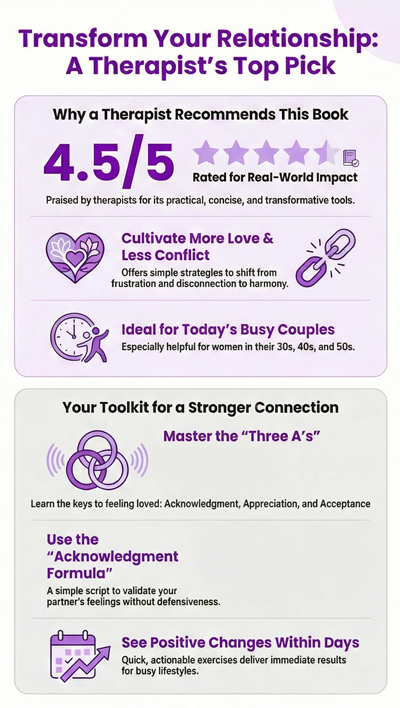
Therapist's Quick Verdict: This is the best quick-read communication book for couples who need fast results. Robinson’s "Three As" method (Acknowledgment, Appreciation, and Acceptance) is a miracle worker for de-escalating tension and restoring a sense of safety and "we-ness" in a very short amount of time.
| Author | Jonathan Robinson |
| Publication Year | 1997 (updated 2012) |
| Key Themes | Effective communication, creating intimacy, avoiding fights, solving problems without blame |
| Who is this book best for | This is best for busy couples who find complicated and lengthy psychology books overwhelming. If you need "on-the-spot" tools to stop an argument tonight, or if you want a simple way to bring appreciation back into a marriage that has become overly critical, this is the most practical choice. |
Key Features & Chapter Breakdown
'Communication Miracles for Couples' is structured into three main parts, each building on the last to guide readers from building intimacy to resolving conflicts effectively. The book avoids overwhelming theory, focusing instead on bite-sized, applicable techniques.
The introduction sets the stage by defining a "communication miracle" as those moments when partners truly connect, feel heard, and resolve issues with ease - something I've seen spark real change in my clients.
Part One: Creating Intimacy explores foundational needs, starting with Chapter 1, 'What We All Want (But Never Ask For)' delves into the 'three As': acknowledgment; appreciation; and acceptance. These are referred to as keys to feeling loved. It includes the Acknowledgment Formula: "It sounds like you... That must feel... I'm sorry you feel..." to validate emotions without defensiveness. In my practice, this has helped clients to express unmet needs to partners, reducing resentment and fostering closeness.
Subsequent chapters like 'Charming Your Partner's Heart' offer ways to use metaphors and nonverbal cues, such as synchronized breathing, to deepen emotional bonds without words - ideal for couples where verbal communication feels strained.
Part Two: Avoiding Fights covers handling upsets proactively, with tools like active listening and expressing feelings without blame. For instance, it teaches how to use "I" statements to prevent escalation, a technique I adapt for clients dealing with midlife stressors like career pressures or family demands.
Part Three: Solving Problems emphasizes collaborative resolution, including repairing trust and using empathy to navigate disagreements. The book ends with a summary of methods for quick reference, making it a handy resource for ongoing use.
Overall, the structure is concise. Most chapters are short, encouraging immediate application, which aligns with cognitive-behavioral techniques I employ to help couples build habits for lasting change.
In-Depth Review & Analysis
This book excels in its simplicity and practicality, making it accessible for couples at any stage. As a therapist, I appreciate how Robinson distills complex psychological concepts into everyday tools, much like the empathy exercises I use in sessions to bridge emotional gaps.
- Strengths: Backed by Robinson's 35+ years as a psychotherapist, the book features real couple examples and quick exercises that yield immediate results. Other therapists I've talked to talk about the book's transformative power, with many noting reduced arguments and increased intimacy after just a few chapters. It's particularly strong in promoting non-confrontational communication, which helps people feel empowered to express themselves without fear of conflict.
- Weaknesses: While effective for common issues, it may not delve deeply into severe problems like infidelity or abuse, where professional therapy is essential. Some of the examples feel slightly dated, though the core advice remains timeless.
- Practical Applications: The 'three As' have been game-changers in my practice; for instance, teaching acknowledgment helps clients validate their partner's fatigue, shifting dynamics from competition to support. Adapt it for modern life by incorporating it into daily check-ins via text or during evening routines, preventing small irritations from building.
- Relevance to Modern Relationships: In 2026, with remote work and social media strains, Robinson's focus on empathy counters digital miscommunications, encouraging face-to-face connection that rebuilds trust - vital for midlife couples navigating empty nests or career transitions.
Paraphrasing one of my clients who read the book: "This book turns common sense into actionable steps, making our conversations more thoughtful, kind and loving". It aligns with evidence-based approaches like those in cognitive-behavioral therapy, offering significant therapeutic value.
Pros and Cons
| Pros | Cons |
|---|---|
| Simple, actionable tools for quick improvements in communication | Examples may feel somewhat dated in a 2026 context |
| Focuses on building love and acceptance, reducing blame | Limited depth on diverse relationship dynamics like LGBTQ+ or cultural differences |
| Affordable, concise read with lasting reference value | Not suited for severe relational trauma or abuse |
Comparisons & Alternatives
If you're drawn to practical, empathy-based approaches like Robinson's, consider these alternatives for complementary insights. Robinson's book shines for its brevity and immediate applicability, ideal if you prefer quick wins over in-depth theory.
| Book | Focus | Best For |
|---|---|---|
| Communication Miracles for CouplesCheck price ❯❯ | Simple tools for intimacy and conflict avoidance | Couples wanting fast, effective communication fixes |
| Communication in RelationshipCheck price ❯❯ | Enhancing communication to prevent conflicts and boost trust | Those focusing on intimacy and emotional awareness |
| Communication and RelationshipCheck price ❯❯ | Building deeper connections through trust, intimacy, and problem-solving | Couples seeking comprehensive guides to strengthen bonds |
My Therapist's Buying Guide
When selecting relationship books on communication skills, look for evidence-based content, readability, and inclusivity. Prioritize those with practical exercises over abstract advice, as they encourage active participation. 'Communication Miracles for Couples' fits well into therapy by supplementing sessions with home-based tools, helping clients practice empathy and validation between appointments. Ensure the book resonates with your life stage. For example, women in midlife, may want to focus upon resources addressing balance, trust, and long-term harmony.
FAQs
Is this book suitable for couples in long-term relationships?
Absolutely; it's designed for partners at any stage, with tools that refresh communication in established marriages as well as new relationships.
Can it help if we're not arguing but feel disconnected?
Yes, the intimacy-building sections, like the 'three As' are perfect for reigniting emotional bonds in quiet relationships without conflict, aligning with what I've seen in therapy.
Is it appropriate for singles?
While primarily for couples, the communication principles apply to any relationship, though it's most impactful when practiced with a partner.
How does it compare to professional therapy?
It's an excellent supplement, offering tools to use between sessions, but not a replacement for personalized guidance in complex issues.
Are the techniques quick to implement?
Some of my clients reported seeing changes within days, thanks to the concise exercises - ideal for busy people juggling careers and family.
Does it address modern issues like digital communication?
The core advice adapts well to texts and calls, though it could expand more; use it to foster in-person empathy amid online distractions.
Is it inclusive for diverse couples?
It focuses on universal principles but assumes some traditional dynamics; supplement with inclusive resources if needed.
Conclusion
In summary, 'Communication Miracles for Couples' offers invaluable, therapist-approved tools to cultivate more love and less conflict, making it a top recommendation for women in their 30s, 40s, and 50s ready to invest in their relationships. Its practical approach not only builds trust but provides lasting therapeutic value, helping you create the harmonious partnership you deserve.
Affiliate Disclosure: As an Amazon Associate, I earn from qualifying purchases. The links above are affiliate links, meaning if you click and make a purchase, I may receive a small commission at no extra cost to you. This helps keep my counselling session costs affordable for my clients. View the full Amazon Affiliate Disclosure.
About the Book Reviewer
Rhys Lewis MSc PgDip, is the founder of the Relationship Clinic Wales and a professionally qualified couples therapist.
He is the author of 300 Ways To Improve Your Relationship and Infidelity: A Survival Guide.
Rhys provides these reviews to help clients and readers find the most effective, evidence-based tools for relationship health. View his list of best relationship advice books for couples in 2026 here.
Connect with Rhys: