
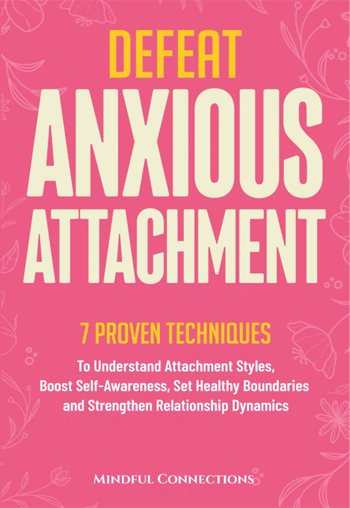
Defeat Anxious Attachment by Mindful Connections: A Therapist's Review and Key Takeaways for Couples in 2026
Listen to this review on a podcast

In my sessions with clients, I often encounter people who battle constant worries about their partner's commitment, leading to cycles of seeking reassurance that strain the bond. From a traditional viewpoint, this stems from early experiences shaping how we connect, and my assessment as a therapist highlights this book's value in offering straightforward paths to stability.
It delivers actionable steps that reduce fear and promote confidence, drawing from proven methods. I've incorporated its boundary-setting ideas with pairs facing trust issues, resulting in stronger, more balanced interactions that echo core family values.
Affiliate Disclosure: As an Amazon Associate, I earn from qualifying purchases. The links below are affiliate links, meaning if you click and make a purchase, I may receive a small commission at no extra cost to you. This helps keep my counselling session costs affordable for my clients.
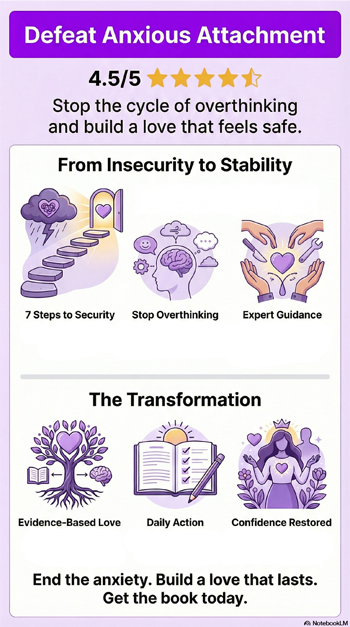
Therapist's Quick Verdict: This is the best straightforward workbook for tackling anxious attachment in everyday partnerships. It serves those experiencing relational insecurity by providing clinical tools for emotional regulation and attachment repair. The seven techniques offer a roadmap superior to generic advice, addressing core dynamics like fear of abandonment with evidence-based strategies for secure relating.
| Author | Mindful Connections |
| Publication Year | 2024 |
| Key Themes | Attachment theory basics, self-reflection exercises, boundary establishment, partnership strengthening |
| Who is this book best for | In my clinical experience, this book is best for partners troubled by constant doubts about their connection. When relationship fears lead to overthinking or clinginess, this guide steps in with targeted methods that suit those in committed ties wanting practical change. Readers often search for ways to ease attachment anxiety or build secure love, and this fits by offering exercises for busy lives in early to mid-stage relationships. I value it highly for its direct application in fostering lasting trust. |
Key Features & Chapter Breakdown
The volume centers on seven core methods drawn from attachment principles, making it straightforward for readers to apply in daily life. Its workbook style encourages active participation, which proves effective for those in my practice needing tangible ways to shift patterns.
Early sections lay the foundation by exploring different attachment types and their origins, helping individuals identify personal triggers without overwhelming detail. This mirrors initial therapy discussions where recognition leads to progress.
Midway, it delves into building awareness and setting limits, with exercises that promote reflection on past experiences. I've seen clients use these to address common issues like miscommunication in long-term bonds.
Concluding parts focus on applying insights to enhance connections, emphasizing ongoing practice for security. This holistic close supports sustained change, aligning with conservative approaches valuing stability.
Review & Analysis
This evidence-based guide stands out for its approachable explanation of personality traits in relationships:
- Strengths: The primary advantage lies in its practical framework that validates feelings while guiding toward solutions. It avoids blame, focusing on growth, which resonates with my emphasis on mutual respect in sessions. Backed by psychological insights, it uses real scenarios to illustrate points, making it relatable for everyday use.
- Weaknesses: A few areas could expand on advanced scenarios, but this keeps it concise for beginners. Some examples might benefit from more diversity, though the fundamentals hold strong.
- Practical Applications: Techniques like journaling prompts translate to real situations, such as handling distance in partnerships. One partner might learn to express needs calmly, reducing conflicts over perceived rejection.
- Current Relevance: In today's fast-paced world, its focus on quick, effective tools remains vital. It complements modern therapies like CBT by addressing attachment in digital-age relationships.
Pros and Cons
| Pros | Cons |
|---|---|
| Clear, actionable seven-step process | Limited depth on complex cases |
| Encourages non-judgmental self-insight | Brief on cultural variations |
| Real-world examples for daily use | May require supplementary reading |
Comparisons & Alternatives
For those with anxious tendencies seeking quick tools, this one excels in structure; the avoidant-focused alternative suits pairs with emotional distance, while the general styles book aids broader self-analysis. Overall, choose based on specific attachment challenges.
| Book | Focus | Best For |
|---|---|---|
| Defeat Anxious Attachment by Mindful Connections Check price ❯❯ | Overcoming anxious patterns practically | Individuals reducing relationship fears |
| Loving an Avoidant Partner by Mindful Connections Check price ❯❯ | Navigating avoidant dynamics | Pairs with emotional withdrawal issues |
| Attachment Styles Explained by Mindful Connections Check price ❯❯ | Comprehensive attachment overview | Those exploring self-sabotage broadly |
Therapist's Buying Guide
In choosing attachment books, seek those rooted in established theory with clear, testable methods. Prioritize readable formats that include exercises for real application, ensuring the author's credentials support reliable insights without overcomplication.
FAQs
Does it work for long-term couples?
Absolutely, its methods help established pairs rebuild security through shared activities.
Is prior knowledge needed?
No, it starts with basics, making it accessible for newcomers to the topic.
How does it aid therapy?
It reinforces session work with home practices that accelerate understanding.
Suitable for singles?
Yes, it builds personal foundations before entering new connections.
Addresses gender differences?
It notes variations but centers on universal principles for all.
Time to see results?
Many notice shifts within weeks of consistent application.
Conclusion
Therapeutically, this work excels in delivering attachment-informed strategies that facilitate regulation and relational repair. It parallels clinical interventions by promoting cognitive shifts away from fear-based responses, much like in focused couple work.
Ideal for those whose insecurities manifest in constant checking or emotional highs and lows, it resolves the distress of feeling unstable. The step-wise format suits active lifestyles, providing tools without requiring extensive time.
With its emphasis on proven steps, readers gain enduring calm and deeper ties. For anyone weary of anxiety overshadowing love, this delivers reliable paths to confidence. I suggest it as a key aid that sustains growth beyond reading.
Affiliate Disclosure: As an Amazon Associate, I earn from qualifying purchases. The links above are affiliate links, meaning if you click and make a purchase, I may receive a small commission at no extra cost to you. This helps keep my counselling session costs affordable for my clients. View the full Amazon Affiliate Disclosure.
About the Book Reviewer
Rhys Lewis MSc PgDip, is the founder of The Relationship Clinic Wales and a professionally qualified couples therapist.
He is the author of 300 Ways To Improve Your Relationship and Infidelity: A Survival Guide.
Rhys provides these reviews to help clients and readers find the most effective, evidence-based tools for relationship health. View his list of best relationship advice books for couples in 2026 here.
Connect with Rhys: