
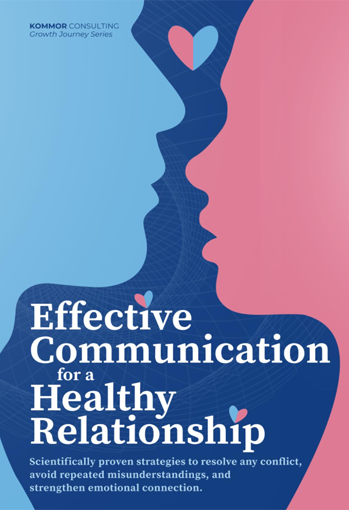
’Effective Communication for Healthy Relationships’ by Alexandra Estroff: A Therapist's Review and Key Takeaways for Couples in 2026
Listen to this review on a podcast

As a relationship therapist with over a decade of experience supporting couples in Wales, I've seen how misunderstandings can quietly undermine even the most committed partnerships, leading to feelings of isolation and resentment. Alexandra Estroff's "Effective Communication for Healthy Relationships" provides a compassionate, scientifically grounded roadmap to turn these challenges into opportunities for deeper connection.
This book remains highly relevant in 2026, addressing timeless issues amid growing digital distractions, and its approaches resonate with the cognitive-behavioral techniques I incorporate in my sessions to foster understanding and empathy.
Affiliate Disclosure: As an Amazon Associate, I earn from qualifying purchases. The links below are affiliate links, meaning if you click and make a purchase, I may receive a small commission at no extra cost to you. This helps keep my counselling session costs affordable for my clients.
Therapist's Quick Verdict: This is the best evidence-based relationship communication book for couples who want a structured, clinical approach. It excels at providing a clear roadmap with quizzes and rituals that move beyond "just talking" to actively rebuilding trust and emotional intimacy through proven therapeutic exercises.
| Author | Alexandra Estroff |
| Publication Year | 2025 |
| Key Themes | Effective communication strategies, conflict resolution, emotional intelligence, building intimacy |
| Who is this book best for | This is best for goal-oriented couples and those who enjoy a "homework" style approach to self-help. If you are looking for a comprehensive guide that uses quizzes to identify your specific communication style and provides a step-by-step plan to strengthen your bond, this is my top recommendation. |
Key Features & Chapter Breakdown
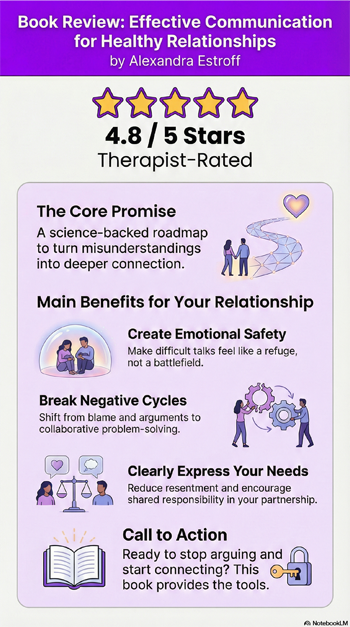
The book is thoughtfully structured to guide readers through a progressive journey of self-discovery and skill-building, starting with foundational concepts and building toward advanced applications. Early chapters focus on debunking common communication myths, such as the idea that true love eliminates the need for effort in conversations, and introduce tools for creating emotional safety - making discussions feel like a refuge rather than a battlefield.
Subsequent sections delve into identifying personal communication styles through engaging quizzes, which help partners understand their preferences and those of their loved ones. For example, it explores how to express needs, boundaries, and desires clearly without accusation, using rephrasing techniques to avoid defensiveness. The book includes practical "Try This" exercises, like role-playing scenarios and awareness prompts, to practice diffusing tension via mindful tone, timing, and setting.
Midway, the content shifts to navigating emotional triggers with self-awareness, transforming repeated misunderstandings into moments of closeness. Later chapters emphasize building trust through empathy, incorporating small daily rituals for reconnection amid busy lives, and leveraging emotional intelligence for presence and kindness in interactions. In my practice, I've adapted these quizzes and mapping exercises for clients, helping them shift from blame cycles to collaborative problem-solving, which often leads to breakthroughs in intimacy and mutual respect.
Review & Analysis
As a traditional relationship therapist, I appreciate how this book blends scientific research with approachable, heartfelt guidance, making it a valuable tool for couples navigating everyday challenges. Below, I break down its strengths, weaknesses, practical applications, and relevance to contemporary relationships, drawing from my experience working with women in their mid-life years who often bear the emotional load in partnerships.
- Strengths: One of the book's standout features is its reliance on evidence-based strategies, supported by psychological studies and real-life case studies that illustrate concepts without feeling contrived. The inclusion of reflection prompts, quizzes on communication styles and love languages, and actionable exercises encourages readers to actively engage, leading to immediate insights. Customers frequently praise its step-by-step flow, noting how it normalizes relationship struggles while providing reassurance that improvement is achievable. In my sessions, this aligns perfectly with cognitive-behavioral techniques, where reframing thoughts reduces conflict and builds emotional bonds.
- Weaknesses: While comprehensive, the book occasionally assumes a heterosexual, monogamous framework, with less emphasis on diverse cultural contexts or LGBTQ+ dynamics, which could limit its applicability for some readers. A few reviews mention that examples feel somewhat general, and it doesn't deeply explore severe issues like abuse, positioning it more as a preventive tool than a crisis intervention resource.
- Practical Applications: The 'mapping arguments' exercise, for instance, has proven transformative in my practice; it helps couples identify recurring triggers and patterns, allowing them to interrupt cycles before they escalate. For busy parents in their 40s and 50s, I recommend adapting the small reconnection rituals - such as daily check-ins or gratitude shares - to fit hectic schedules, fostering intimacy without overwhelming time commitments. Similarly, the emphasis on non-verbal cues and empathetic validation can help women express unmet needs, reducing resentment and promoting shared responsibility in the relationship.
- Relevance to Modern Relationships: In 2026, with digital distractions like social media and remote work blurring boundaries, the book's advice on mindful communication is timely. It encourages creating collaborative spaces free from interruptions, which resonates with clients facing 'phubbing' or screen-time conflicts. Overall, its focus on turning miscommunications into growth opportunities makes it a forward-thinking resource that complements therapy by empowering readers to apply skills independently.
Pros and Cons
| Pros | Cons |
|---|---|
| Scientifically proven strategies backed by research | Limited coverage of diverse cultural or LGBTQ+ dynamics |
| Actionable exercises, quizzes, and real-life examples for immediate use | Examples may feel general or dated in some contexts |
| Affordable, accessible, and encouraging for all relationship stages | Not suitable for severe issues like abuse; best as a supplement to therapy |
Comparisons & Alternatives
If you're seeking a book grounded in scientific strategies with practical exercises, Estroff's work shines; for those preferring a workbook format with more prompts, Hill's offers excellent depth; Golden Hour Publications provides strong emphasis on non-verbal cues and empathy.
| Book | Focus | Best For |
|---|---|---|
| Effective Communication for Healthy Relationships by Alexandra Estroff Check price ❯❯ | Scientifically proven strategies for communication and conflict resolution | Couples aiming to strengthen emotional connections |
| Communication Skills for Couples by Golden Hour Publications Check price ❯❯ | Guide to improve communications, resolve conflict, and deepen intimacy | Those seeking empathy and non-verbal cue techniques |
| Relationship Workbook for Couples by Linda Hill Check price ❯❯ | Workbook to build trust, improve communication, and resolve conflicts | Couples recovering from unhealthy patterns or seeking guided exercises |
Therapist's Buying Guide
When choosing self-help books on relationships, prioritize those with an evidence base, such as research-backed strategies, to ensure reliability over anecdotal advice. Readability is key - look for clear, engaging language without jargon, making it accessible for everyday readers. Inclusivity matters too; seek books that address diverse experiences, though many, like this one, offer adaptable core principles. Practical elements, like exercises and quizzes, provide the most value, allowing you to apply concepts immediately.
In my view, "Effective Communication for Healthy Relationships" excels in practicality and evidence, fitting well into a therapeutic journey as a tool for homework or self-reflection. Consider your specific needs: if communication breakdowns are the issue, this book's focus on emotional safety and empathy will serve you well, complementing professional sessions without replacing them.
FAQs
Is this book suitable for new relationships?
Yes, it lays a strong foundation with tools for building healthy habits from the start, though it's equally beneficial for long-term couples refreshing their dynamics.
Does it address digital communication issues?
While not the primary focus, it offers tips on mindful presence that help mitigate distractions from devices, encouraging more intentional interactions.
How does it compare to therapy sessions?
It's an excellent supplement, providing exercises to practice skills learned in therapy, but it doesn't replace personalized professional guidance for complex issues.
Is it helpful for women dealing with emotional labor?
Absolutely, by promoting empathy and clear expression, it helps distribute emotional responsibilities more evenly, reducing one-sided burdens.
Can singles benefit from this book?
While targeted at couples, the principles of self-awareness and effective communication apply to friendships, family, and future relationships.
Are there exercises suitable for busy schedules?
Yes, many involve short rituals or prompts that can be integrated into daily routines, making it practical for mid-life professionals and parents.
Does it cover cultural differences in communication?
Coverage is limited, but the core strategies are flexible and can be adapted to various cultural contexts with some personalization.
Conclusion
In summary, Alexandra Estroff's book offers timeless, practical wisdom that empowers couples to cultivate healthier, more fulfilling relationships through better communication. It's particularly valuable for women over 30, addressing common partnership hurdles, providing tools that build trust and intimacy while aligning with therapeutic principles. If you're committed to nurturing your connection with evidence-based strategies, this resource could be a game-changer.
Affiliate Disclosure: As an Amazon Associate, I earn from qualifying purchases. The links above are affiliate links, meaning if you click and make a purchase, I may receive a small commission at no extra cost to you. This helps keep my counselling session costs affordable for my clients. View the full Amazon Affiliate Disclosure.
About the Book Reviewer
Rhys Lewis MSc PgDip, is the founder of The Relationship Clinic Wales and a professionally qualified couples therapist.
He is the author of 300 Ways To Improve Your Relationship and Infidelity: A Survival Guide.
Rhys provides these reviews to help clients and readers find the most effective, evidence-based tools for relationship health. View his list of best relationship advice books for couples in 2026 here.
Connect with Rhys: