
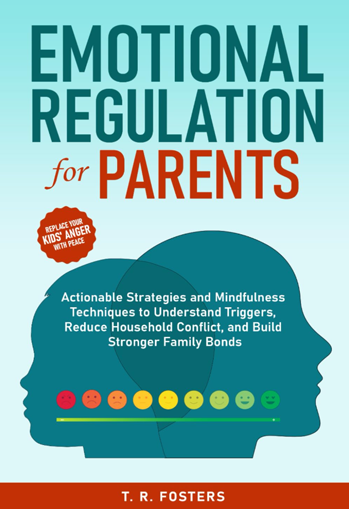
Emotional Regulation for Parents by T.R. Fosters: A Therapist's Review and Key Takeaways for Couples in 2026
Listen to this review on a podcast

As a relationship therapist, I've seen countless parents struggle with sudden emotional surges during everyday parenting challenges that quickly spill over into tension with their partner. These moments of reactivity, whether a sharp tone during bedtime battles or frustration boiling over after a long day, often leave both spouses feeling disconnected and children sensing the strain.
This book delivers straightforward mindfulness practices and trigger-awareness tools that help parents pause, respond thoughtfully and rebuild calm within the family system. In my sessions with couples navigating parenting pressures I have introduced similar regulation exercises drawn from its approach, watching partners move from blame cycles to collaborative support that strengthens their bond and models healthy emotional skills for their children. The result is fewer escalations, deeper empathy and a home environment where love feels safer and more consistent.
Affiliate Disclosure: As an Amazon Associate, I earn from qualifying purchases. The links below are affiliate links, meaning if you click and make a purchase, I may receive a small commission at no extra cost to you. This helps keep my counselling session costs affordable for my clients.
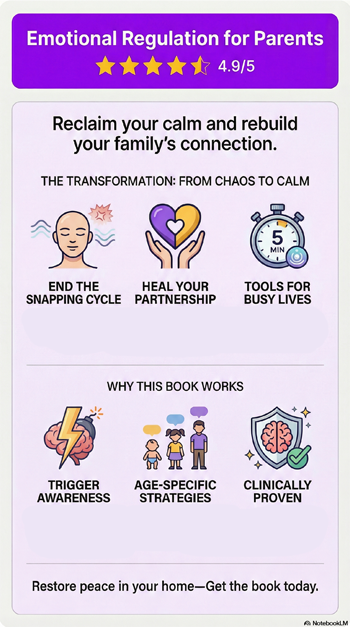
Therapist's Quick Verdict: This is the best practical mindfulness guide for parental emotional regulation in family settings. It provides a clear clinical roadmap for understanding how personal triggers interact with parenting demands and partner dynamics, helping couples interrupt reactive patterns that erode intimacy and child security. The age-specific strategies and daily exercises make it uniquely effective for real-life application where traditional therapy insights alone may fall short.
| Author | T.R. Fosters |
| Publication Year | 2024 |
| Key Themes | mindfulness for parents, identifying emotional triggers, positive parenting practices, reducing household conflict, age-specific regulation tools, strengthening family bonds |
| Who is this book best for | In my clinical experience, this book is best for parents whose emotional reactions are straining their partnership and family harmony. If daily parenting stresses leave you snapping at your children or withdrawing from your partner, or if you notice tension building between you and your spouse around discipline and routines, the straightforward exercises here fit perfectly into busy schedules. The short, focused sections suit parents who learn best through quick wins rather than dense theory. It targets the demanding early and middle family years when co-regulation challenges peak. I rate this resource highly because it directly tackles the hidden driver behind many couple conflicts I treat: unregulated parental emotions that undermine trust and connection. |
Key Features & Chapter Breakdown
T.R. Fosters begins with a compassionate overview of why parents so often feel emotionally hijacked and how mindfulness offers an evidence-aligned path to regain control without guilt or overwhelm. The opening establishes that emotional regulation is a learnable skill, not a character flaw, setting a tone of hope that resonates deeply with the couples I support who arrive feeling defeated by repeated flare-ups.
Middle sections provide the practical heart of the work, breaking down common triggers such as sleep deprivation, work spillover and differing parenting styles before offering targeted mindfulness techniques and reframing exercises tailored to developmental stages from toddlers to teenagers. Real-world examples show exactly how to apply a brief breathing pause or cognitive shift in the moment, helping parents stay present and connected rather than reactive. These chapters have proven especially valuable in my practice when I assign them between sessions to accelerate progress on communication breakdowns.
The concluding portion shifts focus to long-term family resilience, guiding readers to integrate regulation practices into daily rhythms, co-create emotional safety with their partner and pass healthy patterns to the next generation. This forward-looking approach reinforces that individual calm directly supports couple intimacy and child wellbeing, leaving readers with sustainable habits rather than temporary fixes.
Review & Analysis
This evidence-based guide stands out for its approachable explanation of emotional regulation in the context of family life:
- Strengths: The book's greatest strength is its collection of immediately usable mindfulness tools that require no special equipment or prior training. Fosters balances gentle encouragement with concrete steps that help parents interrupt old patterns, which aligns closely with the acceptance-based work I use in couples therapy. The age-specific guidance makes the material feel tailored rather than generic, and the emphasis on rebuilding connection after difficult moments supports the repair work central to healthy partnerships.
- Weaknesses: As a self-published title the text occasionally repeats key ideas for emphasis, and formal research citations are lighter than in academic volumes. Some readers may wish for more extended case studies, yet the brevity keeps the focus practical for time-pressed parents and avoids unnecessary complexity that could dilute the core message.
- Practical Applications: Each chapter ends with short exercises such as trigger journals, body-scan check-ins and partner check-in scripts that translate directly into morning routines or evening wind-downs. Couples can complete many together, turning individual growth into shared relational practice that reduces arguments about whose turn it is to handle a meltdown or bedtime resistance.
- Current Relevance: In 2026, with continued pressures from remote work, social media and economic uncertainty, the need for parental emotional steadiness has never been greater. The framework complements modern approaches like Emotionally Focused Therapy by supplying the self-regulation foundation many couples lack before deeper attachment work can take root.
Pros and Cons
| Pros | Cons |
|---|---|
| Highly actionable mindfulness exercises that deliver quick wins | Occasional repetition of core concepts for reinforcement |
| Clear age-specific strategies for every parenting stage | Fewer formal citations than textbook-style resources |
| Strong emphasis on rebuilding couple connection through shared calm | Shorter case examples than some readers may prefer |
Comparisons & Alternatives
If your primary challenge is understanding how your child receives love and affection, The 5 Love Languages of Children by Gary Chapman and Ross Campbell offers a complementary lens focused on tailored expressions of care that can reduce miscommunication in the parent-child dynamic. For parents navigating separation or divorce who need guidance on maintaining stability across two households, The Co-Parenting Handbook by Karen Bonnell provides essential structures for cooperation and child resilience post-split. This book on emotional regulation sits squarely in the middle, excelling when the root issue is a parent's own internal state affecting both partnership and parenting, making it the strongest starting point for intact couples experiencing daily friction before more specialised topics become relevant.
| Book | Focus | Best For |
|---|---|---|
| Emotional Regulation for Parents by T.R. Fosters Check price ❯❯ | Mindfulness and trigger management for parental calm | Couples whose reactivity is straining family harmony |
| The 5 Love Languages of Children by Gary Chapman and Ross Campbell Check price ❯❯ | Expressing love in a child's preferred language | Parents seeking to strengthen emotional connection with children |
| The Co-Parenting Handbook by Karen Bonnell Check price ❯❯ | Cooperative parenting after separation | Separated or divorced parents building resilient arrangements |
Therapist's Buying Guide
When choosing books for resolving parental disputes and conflict, prioritise titles grounded in established practices such as mindfulness, cognitive behavioural principles and attachment awareness rather than vague inspiration. Look for resources that include concrete exercises couples can practise together, age-appropriate adaptations for family life and a tone that emphasises compassion over perfection. The most helpful volumes avoid promising overnight transformation while still delivering measurable tools that integrate with ongoing therapy. Readability is key: clear language and short sections respect the limited time available to parents. Finally, select works that link personal regulation directly to improved couple dynamics and child outcomes, as this holistic view mirrors the integrated approach I take in sessions.
FAQs
Is this book suitable for couples without young children at home?
Yes. The core mindfulness and trigger-identification skills apply to any long-term partnership where stress or reactivity affects closeness, making it useful for empty-nest or pre-parent couples as well.
Will the strategies work if only one partner reads the book?
Absolutely. Many of my clients report noticeable improvements in household tone when one parent begins modelling calm responses, which often gently invites the other to join the process over time.
How quickly can I expect to see changes in family interactions?
Most parents notice reduced personal reactivity within the first week of consistent practice, with broader family harmony building over two to four weeks as new patterns take hold.
Does the book include exercises suitable for very young toddlers?
Yes. Dedicated sections offer simple, play-based regulation activities and parent self-calming techniques that work even with pre-verbal children.
Is this resource compatible with faith-based or conservative family values?
The approach focuses on universal skills of self-control, empathy and responsibility, presented in a respectful, non-ideological manner that aligns comfortably with traditional family priorities.
Can single parents benefit as much as partnered ones?
Definitely. The tools for personal regulation and child connection are equally valuable, often providing the internal stability single parents need when they lack daily co-parent support.
How does this book compare in length and depth to a full therapy programme?
It serves as an excellent self-help companion or preparation for therapy, offering focused tools that many clients use to accelerate progress between sessions rather than replacing professional guidance.
Conclusion
From a therapeutic perspective this book provides a robust clinical roadmap for addressing the biological and learned aspects of emotional reactivity that so often lie beneath surface-level parenting disagreements and couple discord. Its integration of mindfulness with practical family scenarios mirrors the emotion-focused and cognitive-behavioural techniques I employ in sessions, offering couples a shared language for discussing triggers without blame and a set of repeatable practices that build safety and attunement over time.
This book is especially well suited for couples in the thick of active parenting years who sense that their own stress responses are quietly widening the distance between them. It directly addresses the pain point of feeling perpetually on edge or misunderstood by a partner who reacts differently to the same child-related pressures. The concise chapters and ready-to-use exercises fit the lifestyle of working parents who cannot commit to lengthy daily journaling yet still crave tangible progress toward a calmer, more loving home.
The core outcome is greater compassion and more effective communication. If recurring misunderstandings or emotional distance have left you feeling disconnected from your partner amid the demands of family life, this book offers a scientifically sound path toward acceptance and collaboration. I recommend it to clients as a foundational resource that continues to inform their progress long after the final page.
Affiliate Disclosure: As an Amazon Associate, I earn from qualifying purchases. The links above are affiliate links, meaning if you click and make a purchase, I may receive a small commission at no extra cost to you. This helps keep my counselling session costs affordable for my clients. View the full Amazon Affiliate Disclosure.
About the Book Reviewer
Rhys Lewis MSc PgDip, is the founder of The Relationship Clinic Wales and a professionally qualified couples therapist.
He is the author of 300 Ways To Improve Your Relationship and Infidelity: A Survival Guide.
Rhys provides these reviews to help clients and readers find the most effective, evidence-based tools for relationship health. View his list of best relationship advice books for couples in 2026 here.
Connect with Rhys: