
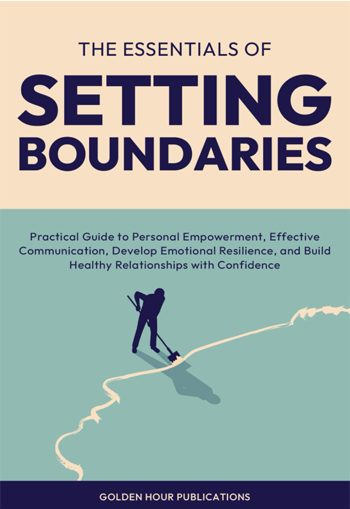
The Essentials of Setting Boundaries by Golden Hour Publications: A Therapist's Review and Key Takeaways for Couples in 2026
Listen to this review on a podcast

As a relationship therapist, I've seen many clients who feel overwhelmed, resentful, or exhausted because they struggle to say no or protect their time and energy. They often say yes when they want to say no, or allow others to overstep their emotional space, resulting in burnout and strained partnerships. This book directly addresses these common issues with clear, practical advice that resonates with the common-sense approach I take in therapy - emphasizing personal responsibility, mutual respect, and long-term relational health.
The book provides a straightforward framework for identifying your own boundary needs and communicating them effectively, which I've incorporated into sessions to help couples reduce conflict and build trust. It emphasizes self-care as the foundation for healthy relationships, aligning with the principles I teach to prevent codependency and promote secure attachment. In my work with couples facing recurring arguments over time, energy, or emotional availability, the insights from this guide have helped partners move from blame to understanding, creating space for genuine connection.
Affiliate Disclosure: As an Amazon Associate, I earn from qualifying purchases. The links below are affiliate links, meaning if you click and make a purchase, I may receive a small commission at no extra cost to you. This helps keep my counselling session costs affordable for my clients.
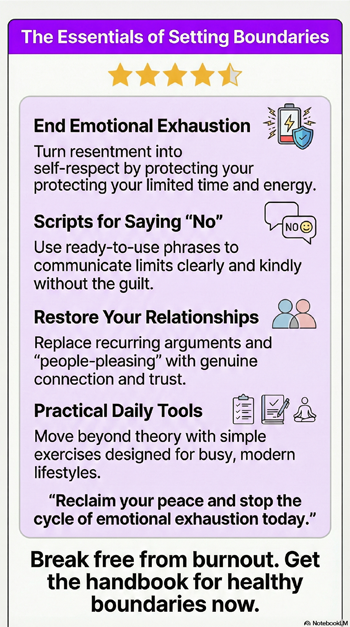
Therapist's Quick Verdict: This is the best practical handbook for learning to negotiate and enforce healthy boundaries in relationships and daily life. It is specifically designed for people who feel overwhelmed by the demands of others or who struggle to protect their time and energy. It provides simple yet powerful techniques to communicate limits clearly and kindly, helping to resolve the clinical problem of chronic resentment and emotional depletion that I see so often in therapy. Unlike more theoretical works, it focuses on immediate application, making it an excellent resource for busy individuals and couples looking for real change.
| Author | Golden Hour Publications |
| Publication Year | 2024 |
| Key Themes | boundary types, assertive communication, self-reflection exercises, emotional resilience, healthy relationships, self-care practices |
| Who is this book best for | In my clinical experience, this book is best for individuals and couples who frequently feel taken advantage of or drained by unbalanced relationships If you frequently find yourself agreeing to things that drain you or avoiding difficult conversations to keep the peace, this book is for you. The practical format with exercises fits the lifestyle of those who want quick, implementable changes rather than long theory. It targets the stage of relationship where boundaries have become blurred due to life stresses, helping to restore balance and prevent escalation to major conflicts. I rate it highly because it empowers readers with tools that complement therapy, leading to lasting improvements in self-esteem and relational satisfaction. |
Key Features & Chapter Breakdown
Golden Hour Publications structures the guide around foundational concepts of boundaries, explaining the different types - physical, emotional, mental, and time boundaries - with relatable examples from everyday life. This makes complex ideas immediately accessible and helps readers quickly identify where their own limits may have become blurred. The opening sections lay a strong groundwork by linking poor boundaries to common problems such as resentment, anxiety, and relationship strain, which I regularly observe in my counselling practice. Readers gain a clear understanding of why boundaries are not selfish but essential for mutual respect and long-term connection.
The middle sections focus on practical techniques for communicating boundaries assertively yet kindly, using scripts and role-play scenarios that readers can adapt to their own situations. It also includes self-reflection exercises to identify personal boundary violations and values, which align closely with the homework I assign in therapy sessions to build assertiveness. The emphasis on respectful communication helps avoid the common pitfall of boundaries coming across as aggressive or uncaring, fostering instead a sense of empowerment and clarity in interactions with partners, family, friends, and colleagues. These tools have proven valuable for clients who struggle with people-pleasing patterns that erode their sense of self.
The concluding chapters address maintaining boundaries over time, dealing with resistance or pushback from others, and integrating self-care routines to support ongoing boundary work. It highlights how healthy boundaries lead to better relationships and personal empowerment, with specific tips for couples to set shared boundaries around time, intimacy, and emotional labour. As a therapist, I see this as aligning with cognitive-behavioural techniques for building resilience and reducing anxiety in relationships. The book ends on an encouraging note, reminding readers that consistent practice leads to greater confidence and more satisfying connections.
Review & Analysis
This practical guide stands out for its approachable explanation of boundary setting in relationships:
- Strengths: The book's greatest strength is its no-nonsense, actionable advice that readers can apply immediately. It avoids jargon and focuses on practical steps, which aligns with the common-sense approach I use in sessions with clients who need quick wins to build momentum. The integration of self-care and communication makes it comprehensive for real-life application, helping to reduce the resentment that often builds when boundaries are absent. Clients have reported noticeable improvements in their sense of control and reduced emotional exhaustion after implementing the strategies.
- Weaknesses: Being a concise guide, it covers a wide range but may not explore the deeper psychological roots or trauma-related boundary issues as thoroughly as some specialized books. Readers with complex histories might benefit from pairing it with professional therapy. Some examples are general, but the core strategies remain timeless and effective, and the brevity makes it approachable for those with limited reading time.
- Practical Applications: The included scripts and exercises translate directly to everyday situations. For example, a client who struggles to say no to family requests can use the provided phrases to communicate limits kindly, leading to less guilt and more energy for their own priorities. In couples work, I've seen partners use the book's advice to discuss time boundaries, improving intimacy by reducing burnout and creating space for meaningful connection. The self-reflection prompts also serve as excellent starting points for joint discussions in therapy.
- Current Relevance: In 2026, with ongoing challenges like remote work blurring lines and social media increasing expectations, the book's focus on digital and emotional boundaries is highly relevant. It helps navigate modern relationship dynamics, complementing approaches like Emotionally Focused Therapy by providing the practical tools for the 'how' of boundary setting in therapy. The emphasis on self-care as a foundation resonates strongly with current understandings of burnout prevention and relational health.
Pros and Cons
| Pros | Cons |
|---|---|
| Practical communication scripts and exercises that can be used immediately | Concise format may feel brief for readers wanting extensive case studies |
| Clear explanations of different boundary types with everyday examples | Limited exploration of complex trauma-related boundary issues |
| Strong integration of self-care practices to support long-term boundary maintenance | Some examples are general rather than highly specific to diverse cultural contexts |
Comparisons & Alternatives
If you are looking for a more empathetic, story-driven exploration of boundary guilt and people-pleasing, Set Boundaries, Find Peace by Nedra Glover Tawwab is an excellent choice that delves into the emotional side with warmth and inclusivity, making it particularly helpful for those who feel intense shame when asserting limits. For those who prefer a structured, faith-based workbook with detailed exercises and biblical principles, the Boundaries Workbook by Henry Cloud and John Townsend offers in-depth worksheets for deeper personal reflection and spiritual grounding. The Essentials of Setting Boundaries sits as the ideal middle ground - a concise, secular, action-oriented manual that prioritizes immediate implementation for busy readers seeking straightforward guidance without extensive narrative or spiritual framing. It excels when the primary need is practical tools rather than emotional processing or faith integration.
| Book | Focus | Best For |
|---|---|---|
| The Essentials of Setting Boundaries by Golden Hour Publications Check price ❯❯ | Practical strategies for negotiating boundaries in communication and self-care | Individuals and couples seeking actionable tools for emotional resilience |
| Set Boundaries, Find Peace by Nedra Glover Tawwab Check price ❯❯ | Reclaiming yourself through boundary setting with personal stories | Those dealing with guilt and people-pleasing in relationships |
| Boundaries Workbook by Henry Cloud and John Townsend Check price ❯❯ | Workbook exercises for saying yes and no | Readers wanting structured, faith-informed boundary work |
Therapist's Buying Guide
When selecting books on negotiating boundaries to support relationship health, prioritize those with practical tools such as scripts, exercises, and self-reflection prompts over purely theoretical discussions. Look for resources grounded in clear, evidence-informed principles that link boundaries to self-care and emotional resilience, as this foundation supports sustainable change in real relationships. The most useful titles explain different boundary types and provide guidance on assertive yet respectful communication across personal and professional contexts. Readability matters greatly; the best books use straightforward language and everyday examples while respecting the reader's intelligence. Finally, choose works that emphasize acceptance and mutual respect rather than rigid rules, as this approach aligns with effective long-term couples therapy and helps prevent the resentment that arises from unbalanced dynamics.
FAQs
Is this book suitable for couples?
Yes. The strategies for communicating boundaries can be discussed together in sessions or at home to help partners understand each other's needs, reduce misunderstandings, and build greater mutual respect.
Does it include practical exercises?
Yes. It features self-reflection prompts, adaptable scripts, and step-by-step guidance that clients can use between sessions to practice assertiveness and track progress in real-life situations.
How does it compare to Set Boundaries, Find Peace?
It is more concise and focused on immediate action and scripts, while Nedra Glover Tawwab's book offers richer personal stories and deeper emotional exploration of guilt and people-pleasing.
Is it appropriate for beginners to boundary work?
Yes. It starts with basic definitions and builds progressively, making the concepts accessible for those new to the idea while still offering value for more experienced readers.
Will it help with work-life balance issues?
Absolutely. The sections on time and energy boundaries are particularly useful for managing professional demands alongside personal relationships and preventing burnout.
Can it be used alongside therapy?
It is an excellent supplement. The practical tools accelerate progress on issues such as people-pleasing or resentment and provide concrete homework that complements the deeper work done in counselling sessions.
How long does it take to read and apply?
The concise format allows most readers to finish in a few evenings, with the exercises designed for gradual implementation so that changes can begin within days of starting.
Conclusion
From a therapeutic perspective this book provides a solid clinical roadmap for understanding and implementing boundaries that support emotional regulation and secure attachment. The practical techniques align with the assertiveness training and cognitive reframing I use in sessions, helping couples shift from reactive patterns to proactive respect. Clients who apply these principles often report reduced anxiety and greater relational satisfaction, mirroring the outcomes I observe in therapy when boundaries become a shared language of care.
This book is especially well suited for individuals and couples who have developed patterns of over-accommodation or avoidance of conflict to maintain harmony. It addresses the pain point of feeling drained or unappreciated by offering a clear framework for change. The straightforward, exercise-based format fits the lifestyle of busy professionals and parents who need concise, applicable insights rather than lengthy theory.
The core outcome is empowered communication and restored balance in relationships. If you have been struggling with blurred lines that lead to resentment or disconnection, this book offers a sensible path toward mutual respect and self-care. I recommend it to clients as a valuable resource that supports ongoing therapy work and promotes healthier dynamics long after reading.
Affiliate Disclosure: As an Amazon Associate, I earn from qualifying purchases. The links above are affiliate links, meaning if you click and make a purchase, I may receive a small commission at no extra cost to you. This helps keep my counselling session costs affordable for my clients. View the full Amazon Affiliate Disclosure.
About the Book Reviewer
Rhys Lewis MSc PgDip, is the founder of The Relationship Clinic Wales and a professionally qualified couples therapist.
He is the author of 300 Ways To Improve Your Relationship and Infidelity: A Survival Guide.
Rhys provides these reviews to help clients and readers find the most effective, evidence-based tools for relationship health. View his list of best relationship advice books for couples in 2026 here.
Connect with Rhys: