
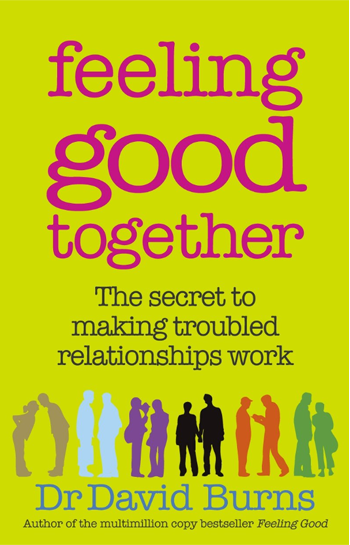
‘Feeling Good Together’ by David D. Burns: A Therapist's Review and Key Takeaways for Couples in 2026
Listen to this review on a podcast

As a relationship therapist, I've witnessed countless couples experience persistent communication breakdowns, emotional disconnects, and cycles of blame that erode trust over time. This book offers practical, evidence-based tools rooted in cognitive interpersonal therapy to rebuild connections and foster mutual understanding. In my sessions, I've applied similar insights from the book, such as the Five Secrets of Effective Communication, to help clients shift from defensive patterns to empathetic dialogues, leading to stronger relational dynamics.
Affiliate Disclosure: As an Amazon Associate, I earn from qualifying purchases. The links below are affiliate links, meaning if you click and make a purchase, I may receive a small commission at no extra cost to you. This helps keep my counselling session costs affordable for my clients.
Therapist's Quick Verdict: This is the best book for cognitive-based relationship repair in high-conflict relationships. It is specifically designed for couples who need guidance to help them choose their words more carefully. It provides different strategies to help partners to express their emotions without triggering a defensive reaction.
| Author | David D Burns |
| Publication Year | 2008 |
| Key Themes | Communication, conflict resolution, cognitive interpersonal therapy |
| Who is this book best for | In my clinical experience, this book is best for couples experiencing frequent arguments and emotional distance who need to build empathy in their relationship. It suits those who appreciate structured exercises and evidence-based approaches to rebuild trust and intimacy. If you are looking for practical tools like the Five Secrets of Effective Communication to fit busy lifestyles, this is my top recommendation. |
Key Features & Chapter Breakdown
The book begins by exploring why relationships fail, highlighting cognitive distortions that fuel conflicts and introducing the concept of Cognitive Interpersonal Therapy as a framework for change.
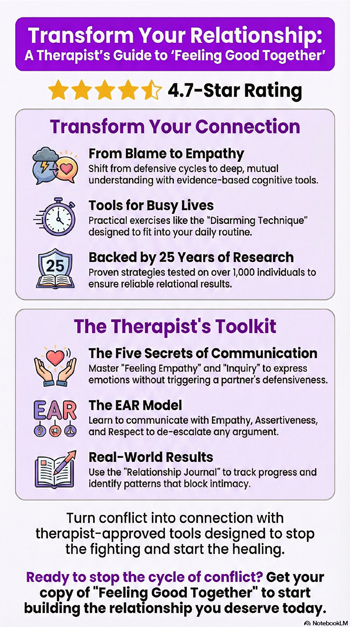
Subsequent sections delve into the Five Secrets of Effective Communication - disarming, thought empathy, feeling empathy, inquiry, and stroking - providing step-by-step guidance and exercises to practice these skills.
Later chapters address dealing with difficult personality types, such as the critic or the stubborn individual, with tools like the Relationship Journal to track interactions and identify patterns.
The book concludes with advanced techniques for intimacy, including the EAR model (Empathy, Assertiveness, Respect), emphasizing self-responsibility in transforming dynamics.
In my practice, I've used these concepts to help clients shift from blame to understanding, often incorporating the disarming technique to de-escalate sessions effectively.
Review & Analysis
This in-depth analysis provides a balanced perspective on the book's therapeutic value.
- Strengths: The book's evidence-based research from over 25 years and 1,000 individuals stands out, offering real couple examples that illustrate concepts vividly. Its approachable language avoids jargon, making complex ideas accessible. Practical tools like the Five Secrets foster immediate improvements in communication, as noted by the experiences of my clients where relationships transformed rapidly.
- Weaknesses: Some of my clients found the dialogue examples stilted and repetitive, which can make sections feel drawn out. It assumes a level of mutual willingness, limiting its applicability in one-sided efforts or severe cases like abuse.
- Practical Applications: The 'Disarming Technique' has proven invaluable in my sessions, helping clients acknowledge truths in criticisms to reduce defensiveness. I adapt the Intimacy Exercise into short daily check-ins, promoting emotional regulation and deeper bonds. The Relationship Satisfaction Test serves as a baseline for progress, aligning with cognitive-behavioral techniques I employ to address relational dynamics.
- Relevance to Modern Relationships: In today's fast-paced world, the book's focus on quick, effective communication resonates, especially for established couples juggling careers and family. It addresses contemporary issues like digital distractions by encouraging present-moment empathy, though it could expand on cultural diversity in examples.
Pros and Cons
| Pros | Cons |
|---|---|
| Backed by 25+ years of research and real-world testing | Some examples feel stilted or dated |
| Actionable exercises for immediate use in daily interactions | Can be repetitive in explanations |
| Affordable and accessible for most readers | Not ideal for severe issues like abuse |
Comparisons & Alternatives
If you're drawn to cognitive techniques, stick with Burns; for simpler, miracle-like tools, try Robinson; for modern scientific strategies, opt for Estroff.
| Book | Focus | Best For |
|---|---|---|
| Feeling Good Together by David D. BurnsCheck price ❯❯ | Cognitive interpersonal therapy for troubled relationships | Couples in high-conflict needing structured communication tools |
| Communication Miracles for Couples by Jonathan RobinsonCheck price ❯❯ | Easy tools for more love and less conflict | Couples seeking quick, practical techniques |
| Effective Communication for Healthy Relationships by Alexandra EstroffCheck price ❯❯ | Scientifically proven strategies for conflict resolution | Those healing from emotional disconnection with evidence-based focus |
Therapist's Buying Guide
When selecting relationship communication books, prioritize evidence-based content grounded in research, ensuring techniques are supported by clinical studies for reliable outcomes. Readability is key - look for clear, jargon-free language that makes concepts accessible without oversimplifying. Practical exercises, such as quizzes or step-by-step tools, enhance applicability, allowing readers to implement strategies immediately. Inclusivity matters, so seek books that address diverse cultural contexts and relationship types. Finally, focus on works emphasizing empathy, attachment styles, and long-term relational dynamics for comprehensive guidance.
FAQs
Is this book suitable for singles?
While primarily aimed at those in relationships, the principles of effective communication and self-awareness can benefit singles preparing for future connections.
How does it compare to therapy sessions?
It's a great supplement to professional help, offering tools that align with cognitive-behavioral approaches, but not a replacement for personalized guidance in complex cases.
Does it work if only one person reads it?
Yes, it can improve individual communication skills and shift dynamics, though mutual participation yields better results.
Is it suitable for severe issues like abuse?
No, it's designed for general conflicts; severe issues require professional intervention.
Is it based on research?
Yes, drawing from 25 years of clinical experience and studies on over 1,000 individuals.
Can it help non-romantic relationships?
Absolutely, the techniques apply to family, friends, and professional interactions.
Conclusion
From a therapeutic standpoint, this book excels in integrating cognitive reframing with interpersonal skills, promoting emotional regulation and attachment security. It mirrors elements of real-world therapy by encouraging clients to identify distortions in relational dynamics, much like cognitive-behavioral interventions in sessions, though it lacks the tailored depth of professional guidance.
It particularly aids middle-aged couples navigating mid-crisis stages, such as those feeling emotionally distant or entrenched in conflict patterns. The structured format, with short exercises like the Disarming Technique, suits busy professionals seeking preventive maintenance without overwhelming time commitments.
For those ready to invest in transformation, this resource empowers you to build empathy and reduce conflict escalation through proven communication strategies, fostering lasting empathy and fewer fights.
Affiliate Disclosure: As an Amazon Associate, I earn from qualifying purchases. The links above are affiliate links, meaning if you click and make a purchase, I may receive a small commission at no extra cost to you. This helps keep my counselling session costs affordable for my clients. View the full Amazon Affiliate Disclosure.
About the Book Reviewer
Rhys Lewis MSc PgDip, is the founder of The Relationship Clinic Wales and a professionally qualified couples therapist.
He is the author of 300 Ways To Improve Your Relationship and Infidelity: A Survival Guide.
Rhys provides these reviews to help clients and readers find the most effective, evidence-based tools for relationship health. View his list of best relationship advice books for couples in 2026 here.
Connect with Rhys: