
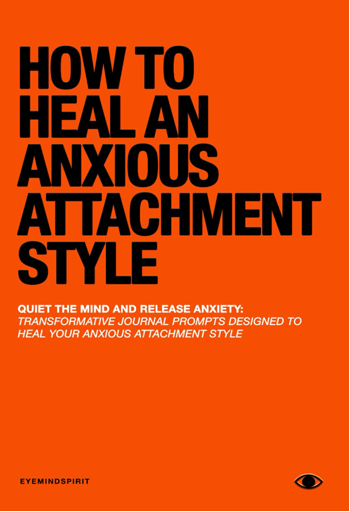
’How To Heal An Anxious Attachment Style’ by Eye Mind Spirit: A Therapist's Review and Key Takeaways for Couples in 2026
Listen to this review on a podcast

When working with clients as a Relationship Therapist I often encounter people with anxious attachment habits. They often experience constant worries about abandonment, they overthink partner responses, and typically struggle to maintain emotional balance in intimate connections. This book offers practical, interactive prompts and neuroscience-based exercises that foster self-awareness. It has helped my clients to rewire subconscious patterns, promoting secure relationship dynamics.
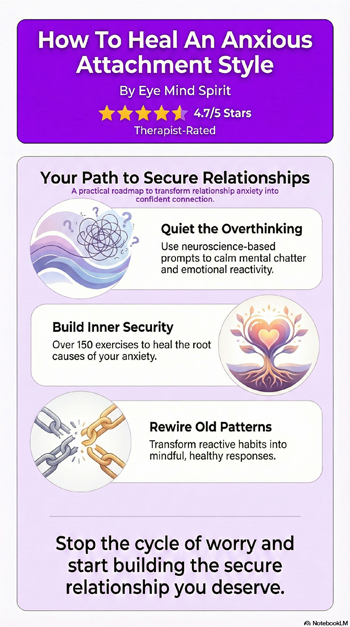
In an era where relational stress is amplified by modern life demands, this guided journal stands out for its accessible approach to healing, providing tools for emotional regulation and building inner security without requiring extensive time commitments.
The main benefits include over 150 targeted prompts that address root causes of anxiety, techniques to quiet mental chatter, and strategies for envisioning secure futures, making it a valuable resource for those seeking tangible steps toward healthier relationships.
Affiliate Disclosure: As an Amazon Associate, I earn from qualifying purchases. The links below are affiliate links, meaning if you click and make a purchase, I may receive a small commission at no extra cost to you. This helps keep my counselling session costs affordable for my clients.
Therapist's Quick Verdict: This is the best anxious attachment self-therapy journal for building secure relationships. It provides a clinical roadmap through evidence-based prompts and shadow work to address relational dynamics, solving overthinking and emotional reactivity better than purely theoretical texts by emphasizing interactive healing.
| Author | Eye Mind Spirit |
| Publication Year | 2023 |
| Key Themes | Anxious attachment healing, subconscious rewiring, shadow work, emotional regulation |
| Who is this book best for | In my clinical experience, this book is best for middle-aged women with anxious attachment seeking practical self-help for overthinking in relationships. This book is best for high-anxiety partners who feel like they're constantly spiraling or reacting on autopilot. If you are looking for interactive journal prompts and neuroscience-based exercises that fit a busy lifestyle, this is my top recommendation. |
Key Features & Chapter Breakdown
This guided journal is structured around key sections that build progressively toward secure attachment. The introduction sets the stage by explaining anxious attachment and its impacts on relationships.
Chapter 1 explores understanding anxious attachment, covering causes, signs, and triggers with prompts to identify personal patterns.
Chapter 2 delves into the power of the subconscious mind, examining safety patterns and self-concept shifts through reflective exercises.
Chapter 3 introduces techniques to rewire the brain, including daily neuroscience-based practices like visualization and affirmations.
Chapter 4 is the core shadow work journal, with six sub-chapters of prompts focused on healing past trauma and integrating hidden aspects of the self.
In my practice, I've used similar shadow work concepts to help clients move from reactive behaviors to mindful responses, adapting prompts for couple discussions to enhance mutual understanding.
Review & Analysis
This interactive workbook stands out in the self-help landscape for its blend of theory and practice, drawing from my experience and discussions with clients that praise its eye-opening prompts and real-world applicability.
- Strengths: The book's evidence-based approach, rooted in neuroscience and Carl Jung's shadow work, provides over 150 therapist-approved prompts that make complex concepts accessible. Real users highlight how it fosters deep self-insight without overwhelming, with many noting transformative shifts in relational patterns after consistent use.
- Weaknesses: Some of my clients have mentioned it lacks in-depth theoretical explanations, potentially feeling surface-level for those already familiar with attachment theory. It assumes a willingness to engage in journaling, which may not suit all learning styles.
- Practical Applications: In therapy, I've adapted the visualization exercises for clients dealing with abandonment fears, helping them envision secure scenarios to reduce anxiety. For busy parents, the short daily prompts can be integrated into routines, promoting emotional regulation during high-stress periods like family conflicts.
- Relevance to Modern Relationships: Amid rising mental health awareness in 2026, this book addresses contemporary issues like digital communication triggers, offering tools to manage overthinking in hybrid relationships, aligning with cognitive-behavioral techniques I employ in sessions.
Pros and Cons
| Pros | Cons |
|---|---|
| Interactive with over 150 prompts for hands-on healing | May feel basic for advanced readers |
| Neuroscience-based tools for rewiring the mind | Workbook format requires active participation |
| Affordable and accessible self-therapy option | Not suitable for severe trauma without professional support |
Comparisons & Alternatives
If you prefer a journal-style approach with prompts, stick with this one; for more theoretical depth on avoidant partners, consider the alternatives.
| Book | Focus | Best For |
|---|---|---|
| How To Heal An Anxious Attachment Style...Check price ❯❯ | Interactive prompts for anxious attachment healing | Middle-aged individuals seeking self-paced security |
| Defeat Anxious Attachment: Build Self-Awareness for Secure RelationshipCheck price ❯❯ | Self-awareness building for anxious styles | Those focusing on personal growth in relationships |
| Loving an Avoidant Partner: Understand and Heal Your RelationshipCheck price ❯❯ | Navigating mixed attachment dynamics | Partners in anxious-avoidant traps |
Therapist's Buying Guide
When selecting attachment habit self-help books, prioritize those with an evidence base drawn from attachment theory and neuroscience, ensuring they incorporate practical exercises like prompts or worksheets for active engagement. Look for readability that balances clinical insights with accessible language, avoiding overly academic tones that might alienate readers. Inclusivity is key, with content addressing diverse relationship stages and cultural contexts, while a focus on building self-awareness through emotional regulation techniques supports long-term relational health.
FAQs
Is this book suitable for beginners in attachment theory?
Yes, it starts with foundational explanations and builds through simple prompts, making it approachable for those new to the concept.
Can this replace professional therapy?
It's a great supplement for self-reflection but not a substitute for therapy, especially in cases of deep trauma.
Is it helpful for couples or just individuals?
Primarily for individual use, but prompts can be adapted for couple discussions to enhance mutual understanding.
How long does it take to see results?
Many of my clients have reported insights within weeks of consistent journaling, though full integration varies by individual.
Does it address cultural differences in relationships?
It focuses on universal patterns but may require personal adaptation for specific cultural contexts.
Is it suitable for men as well as women?
Absolutely, the content is gender-neutral and applicable to anyone experiencing anxious attachment.
How does it compare to other attachment books?
It excels in interactivity compared to more theoretical texts, offering hands-on tools for immediate application.
Conclusion
From a therapeutic perspective, this journal effectively supports emotional regulation and attachment repair by integrating cognitive reframing with practical exercises, much like the structured interventions in cognitive-behavioral therapy sessions. It bridges the gap between awareness and action, offering a self-paced alternative that complements professional guidance without overwhelming the reader.
This resource particularly aids middle-aged women navigating relational disconnection, addressing pain points like feeling overly dependent or fearing rejection through concise, daily prompts that suit demanding lifestyles. For those in maintenance phases or early crises, its format encourages consistent practice, fostering resilience in ongoing partnerships.
Embrace this tool to cultivate inner security and transform reactive patterns into confident connections, paving the way for deeper, more stable relationships.
Affiliate Disclosure: As an Amazon Associate, I earn from qualifying purchases. The links above are affiliate links, meaning if you click and make a purchase, I may receive a small commission at no extra cost to you. This helps keep my counselling session costs affordable for my clients. View the full Amazon Affiliate Disclosure.
About the Book Reviewer
Rhys Lewis MSc PgDip, is the founder of The Relationship Clinic Wales and a professionally qualified couples therapist.
He is the author of 300 Ways To Improve Your Relationship and Infidelity: A Survival Guide.
Rhys provides these reviews to help clients and readers find the most effective, evidence-based tools for relationship health. View his list of best relationship advice books for couples in 2026 here.
Connect with Rhys: