
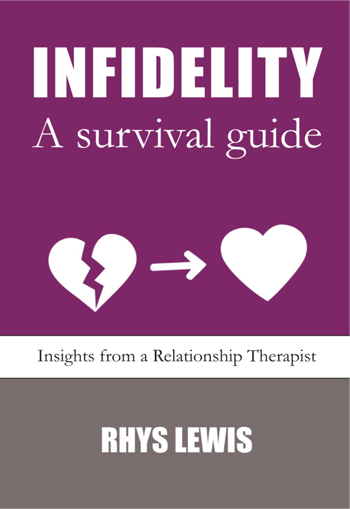
’Infidelity - A Survival Guide’ by Rhys Lewis: A Therapist's Review and Key Takeaways for Couples in 2026
Listen to this review on a podcast

As a psychiatrist, I've encountered many indidividuals experiencing the profound pain of betrayal, questioning their trust, self-worth, and future together. This book by my colleague Rhys Lewis provides a structured, evidence-based roadmap to understanding infidelity's causes, emotional impacts, and pathways to recovery or separation, drawing from real clinical experiences. In today's evolving relationship landscape, where infidelity affects up to 25% of marriages, this guide remains highly relevant, offering practical tools that align with therapeutic approaches that Rhys employs in his sessions.
Affiliate Disclosure: As an Amazon Associate, The Relationship Clinic earns from qualifying purchases. The links below are affiliate links, meaning if you click and make a purchase, The Clinic may receive a small commission at no extra cost to you. This helps keep The Clinic's counselling session costs affordable for its clients.
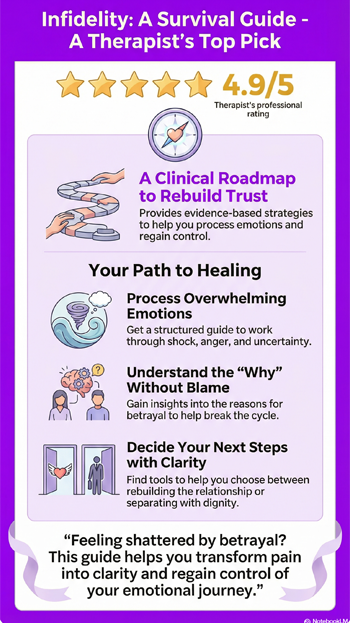
Therapist's Quick Verdict: This is the best infidelity recovery book for anyone seeking a clinical roadmap to rebuild trust and regain emotional regulation. It excels in addressing relational dynamics post-betrayal, offering evidence-based strategies that surpass competitors by integrating victim and perpetrator perspectives for comprehensive healing for both parties.
| Author | Rhys Lewis |
| Publication Year | 2025 |
| Key Themes | Understanding infidelity revelation, emotional responses, reasons for betrayal, decision-making for staying or leaving, rebuilding trust |
| Who is this book best for | This book is best for anyone navigating the aftermath of betrayal who feels overwhelmed by confusion, shock, anger, or uncertainty. It addresses the pain of feeling like your reality has shattered, providing a structured guide with exercises to process emotions and make informed decisions. If you're looking for evidence-based insights into relational dynamics with practical steps for recovery, this is my top recommendation for long-term maintenance post-crisis. |
Key Features & Chapter Breakdown
The book is structured in four parts, mirroring a therapeutic sequence. The preface sets a compassionate tone, dedicating the work to survivors and outlining the emotional turmoil of discovery.
Part one examines how infidelity is revealed, distinguishing between discovery and disclosure, with insights into common signs and mindsets. This helps clients timeline events to reduce confusion.
Part two explores responses, detailing victim and perpetrator emotions like shock, guilt, and remorse, alongside affair partner behaviors.
Part three delves into why infidelity occurs, emphasizing understanding without excusing, to break cycles of blame.
Part four guides decision-making, offering strategies for rebuilding or separating with dignity, including coping with triggers and fostering growth.
Review & Analysis
This guide stands out for its balanced, empathetic approach to a deeply painful topic.
- Strengths: Grounded in clinical experience and research, it provides a clear framework for both victims and perpetrators, promoting empathy through dual perspectives. Real-world statistics and examples make it relatable, while practical exercises align with cognitive-behavioral techniques for emotional regulation.
- Weaknesses: This book focuses empathy more upon the victims of infidelity and does not provide much room to hide for those who have betrayed their partner.
- Practical Applications: The trigger management section, with tools like the 90-second rule, has proven effective for clients facing intrusive thoughts - adapt by pairing with journaling for busy parents to process emotions quickly.
Pros and Cons
| Pros | Cons |
|---|---|
| Evidence-based insights from therapy practice | Focuses empathy on victims of infidelity rather than betrayers. |
| Practical exercises for immediate application | Limited focus on diverse cultural contexts |
| Balanced views for both partners | Not suited for severe trauma without professional support |
Comparisons & Alternatives
If you prefer a structured clinical guide, choose this; for provocative essays or victim-focused narratives, opt for alternatives.
| Book | Focus | Best For |
|---|---|---|
| Infidelity - A Survival GuideCheck price ❯❯ | Clinical recovery roadmap | Survivors seeking empathy and strategies |
| Navigating Infidelity by VariousCheck price ❯❯ | Provocative emotional essays | Those exploring varied perspectives |
| Cheating in a Nutshell by Tamara GuntherCheck price ❯❯ | Victim impact analysis | Betrayed partners needing validation |
Therapist's Buying Guide
When selecting infidelity self-help books on infidelity, prioritize evidence-based content supported by research or clinical experience for reliable advice. Look for readability with clear language and structured formats like exercises or chapters that facilitate practical application. Ensure inclusivity across perspectives, such as victim and perpetrator views, to foster comprehensive understanding without bias.
FAQs
Is this book suitable for those who have just discovered infidelity?
Yes, it provides immediate tools for processing shock and emotions, though pairing with therapy is recommended for acute distress.
Does it cover emotional infidelity as well as sexual?
Absolutely, it addresses both forms, noting their similar impacts on trust and recovery.
Is it helpful for both partners?
Yes, it encourages redemption, self-reflection and accountability, promoting empathy toward the betrayed partner.
How does it compare to therapy?
It serves as a valuable supplement, offering a framework for recovery, but isn't a substitute for personalized guidance.
Is it inclusive of diverse relationships?
While focused on committed partnerships, principles apply broadly, though cultural specifics are limited.
Does it advocate staying together?
It empowers informed decisions, providing tools for both rebuilding together or a dignified separation.
Are there exercises included?
Yes, practical, evidence-based exercises for coping with triggers and fostering growth.
Conclusion
From a therapeutic standpoint, this book effectively integrates attachment theory and cognitive reframing to address betrayal trauma, mirroring techniques in sessions for emotional regulation and trust rebuilding. It provides a clinical roadmap that helps process relational dynamics, reducing self-blame through evidence-based insights.
It helps anyone feeling shattered by betrayal, offering structure for those walking on eggshells post-discovery. The exercise-based format suits busy lifestyles, with short reflections fitting into daily routines for gradual healing. It offers clear guidance for those who have betrayed their partner.
Embrace this guide to transform pain into clarity, whether rebuilding or moving forward with integrity. Regain control over your emotional journey today.
Affiliate Disclosure: As an Amazon Associate, I earn from qualifying purchases. The links above are affiliate links, meaning if you click and make a purchase, I may receive a small commission at no extra cost to you. This helps keep my counselling session costs affordable for my clients. View the full Amazon Affiliate Disclosure.
About the Book Reviewer
Dr Ian Bownes is a colleague of the author Rhys Lewis MSc PgDip, the founder of The Relationship Clinic Wales - a professionally qualified couples therapist. He kindly agreed to provide a review of his book.
Rhys is the author of 300 Ways To Improve Your Relationship and Infidelity: A Survival Guide.
Rhys provides these reviews to help clients and readers find the most effective, evidence-based tools for relationship health. View his list of best relationship advice books for couples in 2026 here.
Connect with Rhys: