
‘Men Are from Mars, Women Are from Venus’ by John Gray: A Therapist's Review and Key Takeaways for Couples in 2026

Listen to this review on a podcast

As a relationship therapist with years of experience guiding couples through communication breakdowns, I've witnessed how misunderstandings between partners can erode even the strongest bonds. This classic book provides timeless insights into gender-based differences that align with patterns I've observed in sessions. In 2026, with evolving societal roles, its core principles remain relevant for fostering empathy and connection in modern relationships.
Affiliate Disclosure: As an Amazon Associate, I earn from qualifying purchases. The links below are affiliate links, meaning if you click and make a purchase, I may receive a small commission at no extra cost to you. This helps keep my counselling session costs affordable for my clients.
Therapist's Quick Verdict: This is the best book for understanding gender-specific communication styles in relationships. It provides a clinical roadmap for navigating relational dynamics rooted in attachment styles and emotional regulation, solving misunderstandings better than generic advice by using accessible metaphors to promote empathy.
| Author | John Gray |
| Publication Year | 1992 (updated editions) |
| Key Themes | Gender differences in communication, emotional needs, stress responses, building intimacy |
| Who is this book best for | In my clinical experience, this book is best for middle-aged couples seeking to bridge communication gaps ,who feel like roommates, or are walking on eggshells due to misunderstandings. It's great for couples who struggle with expressing needs differently. If you are looking for metaphorical tools and practical phrases to enhance empathy in daily interactions, this is my top recommendation. Ideal for preventive maintenance in long-term relationships, busy parents, or those who prefer straightforward self-help over fluffy advice. |
Key Features & Chapter Breakdown
The book is structured around the central metaphor of men being from Mars and women from Venus, exploring how these "planetary" differences manifest in everyday interactions. Early chapters introduce the concept, explaining how men and women have fundamentally different approaches to problem-solving and emotional expression.
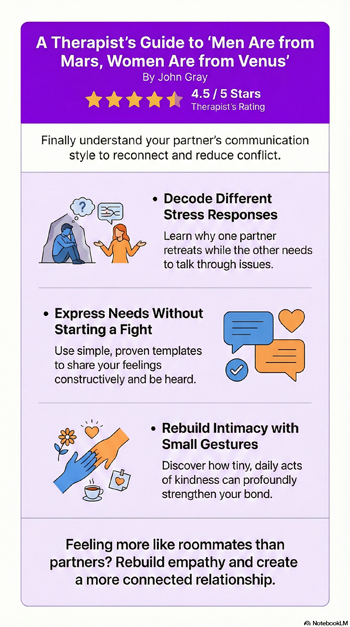
One key section delves into men's tendency to retreat to their "caves" during stress, while women prefer to talk through issues, offering strategies to respect these needs without conflict. In my practice, I've seen this dynamic play out repeatedly, and the book's exercises help clients shift from frustration to understanding.
Later chapters cover scoring points in relationships, where small acts of kindness accumulate differently for each gender, and provide communication templates like "love letters" to express feelings constructively. The book also addresses intimacy cycles, such as women's emotional "waves," with practical tips for support.
Overall, the breakdown emphasizes actionable insights over theory, making it accessible for couples to apply immediately in their relational dynamics.
Review & Analysis
This classic text offers a unique lens on gender differences that has helped countless couples, drawing from real-life examples and practical tools.
- Strengths: The book's metaphorical approach makes complex relational dynamics accessible and memorable, fostering empathy. It provides evidence-based insights into communication patterns, backed by the author's counseling experience, and includes real couple examples that resonate with readers. Many of my clients who have read the book highlight how it improves understanding and reduces conflicts through simple, implementable strategies.
- Weaknesses: Some critiques note overgeneralization of gender roles, which may not account for individual variations or diverse relationships. Certain examples feel dated in 2026's more fluid gender landscape, and it lacks depth on cultural or LGBTQ+ contexts.
- Practical Applications: The "cave" concept has aided my clients in giving space during stress, reducing arguments. Adapting the points system for busy parents - focusing on daily small gestures - aligns with cognitive-behavioral techniques to reframe appreciation. In sessions, I've used the love letter exercise to help couples express unmet needs, deepening intimacy and emotional regulation.
- Relevance to Modern Relationships: Despite its age, the core advice on empathy and communication remains vital amid today's stressors like work-life balance. It complements contemporary therapy by encouraging self-awareness in relational patterns.
Pros and Cons
| Pros | Cons |
|---|---|
| Timeless insights into gender differences that promote empathy | Overgeneralizes stereotypes, which may not fit all individuals |
| Practical exercises and communication templates for immediate use | Some examples feel dated in modern contexts |
| Affordable, accessible read with real-life examples | Not suitable for severe issues like abuse or trauma |
Comparisons & Alternatives
If you appreciate metaphorical insights into gender dynamics, stick with Gray; for broader life theories or modern takes, explore the alternatives.
| Book | Focus | Best For |
|---|---|---|
| Men Are from Mars, Women Are from VenusCheck price ❯❯ | Gender-based communication differences | Middle-aged couples seeking empathy tools |
| Things Taught About Love RelationshipsCheck price ❯❯ | Lessons on love and relational wisdom | Those reflecting on past experiences for growth |
| Let Them Theory: Life-Changing MillionsCheck price ❯❯ | Letting go and personal transformation | Individuals healing from relational disconnection |
Therapist's Buying Guide
When selecting general relationship improvement books, prioritize those with a strong evidence base, such as research-supported strategies that align with proven therapeutic models like cognitive-behavioral or attachment theory. Readability is key - opt for accessible language that avoids jargon while providing relatable examples. Look for inclusivity, ensuring the content addresses diverse backgrounds, genders, and relationship types without overgeneralizing. Practical exercises, like worksheets or step-by-step guides, enhance applicability, and cultural sensitivity ensures broader relevance. Books in this category should emphasize empathy-building and long-term maintenance over quick fixes.
FAQs
Is this book still relevant in 2026?
Yes, its core insights on communication differences remain helpful, though some examples may feel dated; adapt them to modern contexts.
Is it suitable for same-sex couples?
While focused on heterosexual dynamics, many principles on empathy and needs can apply broadly, but seek inclusive alternatives for better fit.
How does it compare to therapy sessions?
It's a valuable supplement for self-reflection but not a replacement for personalized professional guidance in complex issues.
Does it address cultural differences?
Limited; it primarily draws from Western perspectives, so pair with diverse resources for multicultural relationships.
Is it evidence-based?
Based on the author's counseling experience rather than rigorous studies, but aligns with some psychological concepts like attachment.
Can it help with severe conflicts?
Best for mild misunderstandings; for abuse or deep trauma, consult a therapist immediately.
What's the main takeaway?
Understanding and respecting gender-based differences fosters better communication and intimacy.
Conclusion
From a therapeutic standpoint, this book excels in highlighting how attachment styles and emotional regulation differ between partners, offering a framework that mirrors cognitive reframing techniques used in sessions. It empowers couples to move beyond surface conflicts to deeper understanding, much like guided therapy exercises that build resilience in relationships.
It particularly benefits middle-aged couples grappling with feeling like roommates or recovering from minor betrayals of trust. The metaphorical format suits busy lifestyles, with quick exercises that fit into daily routines for those in long-term maintenance phases.
For lasting transformation, embrace its tools to rebuild empathy and reduce escalation - start today for a more connected partnership.
Affiliate Disclosure: As an Amazon Associate, I earn from qualifying purchases. The links above are affiliate links, meaning if you click and make a purchase, I may receive a small commission at no extra cost to you. This helps keep my counselling session costs affordable for my clients. View the full Amazon Affiliate Disclosure.
About the Book Reviewer
Rhys Lewis MSc PgDip, is the founder of the Relationship Clinic Wales and a professionally qualified couples therapist.
He is the author of 300 Ways To Improve Your Relationship and Infidelity: A Survival Guide.
Rhys provides these reviews to help clients and readers find the most effective, evidence-based tools for relationship health. View his list of best relationship advice books for couples in 2026 here.
Connect with Rhys: