
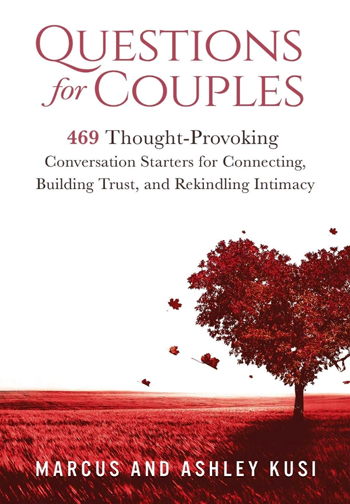
Questions for Couples by Marcus and Ashley Kusi: A Therapist's Review and Key Takeaways for Couples in 2026
Listen to this review on a podcast

Perhaps you've experienced the quiet drift that happens when daily life takes over - conversations stay surface-level, trust feels stagnant, and intimacy slowly fades even though love is still there. When working with clients as a couples therapist, I've seen many conflicts arise not from a lack of love or effort, but from a simple lack of meaningful dialogue that reveals what each partner truly needs to feel secure and connected. This book offers a straightforward solution with its collection of carefully crafted questions that turn ordinary evenings into opportunities for genuine understanding.
The real power lies in how these prompts encourage couples to share thoughts and feelings they might otherwise keep to themselves, creating the kind of emotional safety that I routinely guide clients toward in session. In my practice I have drawn directly from similar open-ended questioning techniques to help partners move past assumptions and rediscover one another, and this resource provides an accessible way for couples to do exactly that at home.
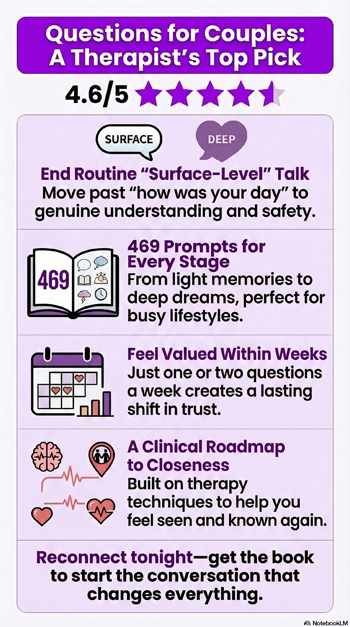
The questions cover everything from light-hearted memories to deeper discussions about trust, dreams and physical intimacy, making it suitable for dating couples, engaged partners, newlyweds or those who have been together for decades. My clients who incorporate just one or two questions into their weekly routine often report feeling more heard and valued within weeks.
Affiliate Disclosure: As an Amazon Associate, I earn from qualifying purchases. The links below are affiliate links, meaning if you click and make a purchase, I may receive a small commission at no extra cost to you. This helps keep my counselling session costs affordable for my clients.
Therapist's Quick Verdict: This is the best conversation starters book for couples to enhance communication and build trust. It is specifically designed for partners who want practical tools to move beyond routine exchanges and create meaningful dialogue that strengthens emotional bonds. The questions provide a clinical roadmap for addressing common relational dynamics such as emotional distance, mismatched communication styles and the gradual erosion of intimacy, helping couples develop the consistent connection that research shows is foundational to long-term satisfaction.
| Author | Marcus and Ashley Kusi |
| Publication Year | 2017 |
| Key Themes | Conversation starters, building trust, rekindling intimacy, communication skills, goal setting in relationships |
| Who is this book best for | In my clinical experience, this book is best for couples who want to improve communication and strengthen emotional connection through regular meaningful conversations. If you are looking for an easy-to-use resource with thought-provoking questions that fit busy lifestyles and help partners truly understand one another again, this is my top recommendation. The book maps directly onto common relationship pain points such as feeling emotionally disconnected, struggling to find time for deep talks or wanting to rebuild closeness after a period of distance. It suits couples at any stage - from early dating to long-term marriage - and works especially well for those who prefer gentle, self-guided tools over heavy theory or lengthy exercises. |
Key Features & Chapter Breakdown
Marcus and Ashley Kusi have created an exceptionally practical resource that stands out for its focus on actionable conversation prompts rather than abstract advice. The book contains exactly 469 open-ended questions carefully designed to spark vulnerability and understanding without requiring hours of reading or complex instructions. What makes it particularly valuable for the couples I see is its portability - the compact format means it can travel with you on date nights, weekends away or even be used during quiet evenings at home when screens are put away. The questions are presented in a way that feels natural and non-threatening, allowing partners to choose their comfort level while still moving toward deeper connection.
Rather than following a traditional chapter structure, the content is organised thematically around core areas of relationship life. Early sections focus on lighter, fun starters that help couples remember why they fell in love and laugh together again, easing into more substantial topics about trust, past experiences and future dreams. The middle portion dives into intimacy and emotional needs with questions that gently explore physical closeness, affection and what makes each partner feel truly loved and secure. Later sections include practical check-ins for setting shared goals and addressing everyday challenges, plus specific prompts around sexual desires and long-term vision. This progression mirrors the natural flow I encourage in therapy sessions, starting with safety and building toward greater openness. In my work I have seen how these thematic groupings help couples who feel stuck in repetitive arguments move forward by addressing root feelings rather than surface complaints.
The book also includes helpful suggestions for using the questions on a weekly or yearly basis, making it easy to integrate into real life without feeling like another chore. There are dedicated prompts for long-distance relationships and even a 365-day challenge option for committed pairs who want structure. What I appreciate most from a therapeutic perspective is how the questions promote the kind of active listening and empathy that form the foundation of secure attachment. Clients who use this resource often report that even one thoughtful answer per week leads to noticeable improvements in their sense of being known and valued by their partner, which aligns closely with the attachment-focused work I do in the counselling room.
Review & Analysis
This evidence-based guide stands out for its approachable explanation of personality traits in relationships:
- Strengths: The book's greatest strength is its pure practicality and authenticity. Written by a married couple who have used these exact questions themselves, it carries a genuine tone that resonates with real partners rather than clinical detachment. The variety ensures there is something for every mood and relationship phase, while the open-ended format naturally encourages the kind of respectful curiosity that I teach in sessions to reduce defensiveness and increase closeness. Many clients tell me these prompts have helped them discover new things about their partner even after years together, turning potential boredom into renewed fascination.
- Weaknesses: Published in 2017, the core content remains timeless but some couples may wish for more guidance on how to respond when answers reveal sensitive differences. The focus is deliberately on questions rather than answers or exercises, so those seeking step-by-step conflict resolution scripts may need to combine it with other resources. A few prompts could feel repetitive for very advanced communicators, though most readers find the sheer volume allows them to skip and choose freely.
- Practical Applications: The questions translate directly into everyday scenarios that busy couples can manage. A simple prompt about favourite memories can turn a car journey into quality time, while deeper questions about trust can be used during weekly check-ins to prevent small issues from growing. I often suggest couples pick one question each Sunday evening, set phones aside and truly listen - many report this single habit reduces arguments and increases feelings of partnership within a month.
- Current Relevance: Relevance to modern relationships remains exceptionally high in 2026. With constant digital distractions and busy schedules, couples need accessible tools that require no extra apps or subscriptions. This book complements evidence-based approaches such as emotionally focused therapy by providing the daily practice that turns therapeutic insights into lived habits. Its emphasis on face-to-face conversation feels more important than ever in our screen-dominated world.
Pros and Cons
| Pros | Cons |
|---|---|
| Simple format that fits easily into busy couple routines | Requires ongoing commitment to see full benefits |
| Questions promote vulnerability and deeper understanding | Some topics may need therapist support for very sensitive couples |
| Versatile for dating, engaged or long-married partners | Limited additional exercises beyond the questions themselves |
Comparisons & Alternatives
If you are looking for a gentle, everyday way to strengthen your relationship through consistent conversation, Questions for Couples by Marcus and Ashley Kusi is the clear choice for proactive trust building. It excels at helping couples create the daily emotional connection that prevents problems before they start. Rebuilding Trust After Betrayal: A 30-Day Connected Workbook for Couples to Heal and Rebuild Trust is better suited when significant damage has already occurred and structured daily healing exercises are needed to restore safety. Rebuilding Trust: Guided Therapy Techniques and Activities to Restore Love, Trust, and Intimacy in Your Relationship by Morgan Johnson offers more clinical depth with therapist-guided activities for couples who prefer a workbook style with professional techniques. The Kusi book sits comfortably as the accessible starting point that many of my clients use successfully before or alongside the more intensive repair workbooks.
| Book | Focus | Best For |
|---|---|---|
| Questions for Couples by Marcus and Ashley Kusi Check price ❯❯ | Daily conversation starters for connection and trust | Couples seeking proactive communication improvement |
| Rebuilding Trust After Betrayal: A 30-Day Connected Workbook for Couples to Heal and Rebuild Trust Check price ❯❯ | Structured 30-day healing after betrayal | Couples recovering from significant trust damage |
| Rebuilding Trust: Guided Therapy Techniques and Activities to Restore Love, Trust, and Intimacy in Your Relationship by Morgan Johnson Check price ❯❯ | Clinical exercises and therapy-style activities | Couples wanting guided professional techniques for repair |
Therapist's Buying Guide
When selecting conversation-based books to support relationship trust and communication, look first for resources grounded in real couple experience rather than purely academic theory. Prioritise titles that include a large variety of open-ended questions across different life areas so couples can return to the book repeatedly without running out of material. The most useful books also provide guidance on frequency of use and suggestions for different relationship stages. Readability is essential - the best resources keep language simple and inviting so that even tired partners after a long day will pick it up willingly. Finally, choose books that emphasise mutual curiosity and acceptance rather than fixing one another, as this approach aligns closely with effective long-term couples therapy that builds secure, lasting bonds.
FAQs
Is this book suitable for long-term married couples?
Yes. Many couples who have been together for decades report discovering new insights about their partner through these questions, helping to rekindle the connection that can fade over time.
Can we use this book if we are in couples therapy?
Absolutely. It works wonderfully as a complement to therapy sessions, giving couples structured prompts to practise between meetings and accelerate progress on communication and trust.
How long does each question take to discuss?
Most couples spend 10-30 minutes per question depending on how deeply they wish to explore, making it easy to fit into busy schedules without feeling overwhelming.
Does it include questions about physical intimacy?
Yes, there are thoughtful prompts around intimacy and affection that help couples discuss this important area with greater openness and respect.
Is it appropriate for couples in long-distance relationships?
Very much so. The book includes specific suggestions for using the questions over phone or video calls, helping maintain emotional closeness despite physical distance.
Will it help if one partner is more talkative than the other?
Yes. The balanced format encourages both partners to answer and listen equally, often helping quieter individuals feel safe enough to open up more fully over time.
How many questions should we use per week?
One or two thoughtful questions per week is ideal for most couples, allowing time to reflect and integrate the conversation without it becoming a chore.
Conclusion
From a therapeutic perspective this book provides a robust clinical roadmap for understanding and strengthening relationships through consistent, meaningful conversations. Couples who regularly engage with these prompts often experience rapid shifts from emotional distance to curiosity and safety, creating the foundation needed for deeper therapeutic progress if and when they do attend counselling sessions.
This book is especially well suited for couples who have accumulated years of unspoken assumptions about each other's behaviour and now feel somewhat disconnected despite still loving one another. It directly addresses the pain point of routine conversations that no longer satisfy the need for true understanding. The simple question format fits the lifestyle of busy professionals, parents and long-distance partners who need insight without lengthy reading or complicated workbooks.
The core outcome is greater compassion and more effective communication. If recurring misunderstandings or emotional distance have left you feeling disconnected from your partner, this book offers a scientifically sound path toward acceptance and collaboration. I recommend it to clients as a book that they can use over a long period to improve their communication. Start with one question tonight and watch how small consistent conversations create lasting trust and closeness.
Affiliate Disclosure: As an Amazon Associate, I earn from qualifying purchases. The links above are affiliate links, meaning if you click and make a purchase, I may receive a small commission at no extra cost to you. This helps keep my counselling session costs affordable for my clients. View the full Amazon Affiliate Disclosure.
About the Book Reviewer
Rhys Lewis MSc PgDip, is the founder of The Relationship Clinic Wales and a professionally qualified couples therapist.
He is the author of 300 Ways To Improve Your Relationship and Infidelity: A Survival Guide.
Rhys provides these reviews to help clients and readers find the most effective, evidence-based tools for relationship health. View his list of best relationship advice books for couples in 2026 here.
Connect with Rhys: