
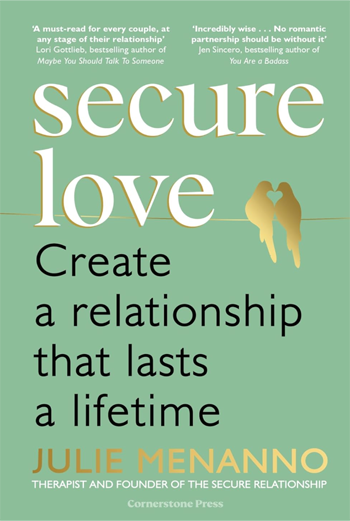
’Secure Love’ by Julie Menanno: A Therapist's Review and Key Takeaways for Couples in 2026
Listen to this review on a podcast

Working as a Relationship Counsellor based in the UK, I've met countless couples with recurring conflicts that stem from unmet emotional needs, often rooted in their attachment patterns. This book offers a compassionate, evidence-based framework for understanding and fostering secure attachments that I've referred to in sessions for years. It provides practical tools to break negative cycles and build lasting emotional intimacy, making it highly relevant for modern relationships facing stress from busy lifestyles and past traumas.
Affiliate Disclosure: As an Amazon Associate, I earn from qualifying purchases. The links below are affiliate links, meaning if you click and make a purchase, I may receive a small commission at no extra cost to you. This helps keep my counselling session costs affordable for my clients.
Therapist's Quick Verdict: This is the best book for couples navigating anxious and avoidant dynamics in relationships. It provides a clinical roadmap grounded in attachment theory, addressing relational dynamics such as emotional regulation and unmet attachment needs. It's much more effective than generic self-help guides - it offers specific strategies to interrupt negative cycles and foster secure bonds.
| Author | Julie Menanno |
| Publication Year | 2024 |
| Key Themes | Attachment theory, secure relationships, emotional regulation, breaking negative cycles |
| Who is this book best for | In my clinical experience, this book is best for established couples experiencing emotional disconnection or recurring conflicts. This book is best for partners anxiously chasing for their unmet emotional needs, or avoidanct partners that find it difficult to connect. If you are looking for actionable exercises like communication scripts and attachment style assessments that fit into busy lifestyles for long-term maintenance of intimacy, this is my top recommendation. |
Key Features & Chapter Breakdown
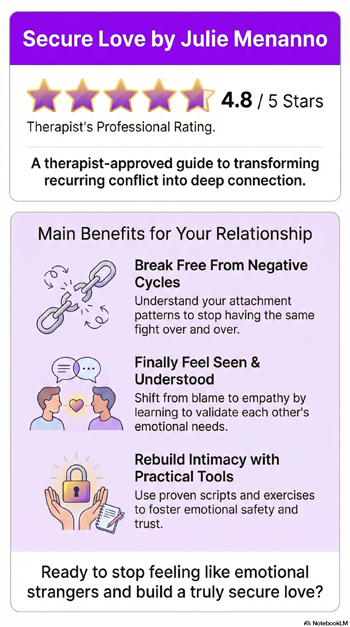
The book begins by introducing attachment theory, explaining how early experiences shape adult relational patterns and identifying the four main attachment styles - secure, anxious, avoidant, and disorganized - with self-reflection prompts to help readers recognize their own tendencies.
Subsequent sections delve into negative cycles in relationships, illustrating how unmet attachment needs fuel repetitive conflicts, and provide strategies for interrupting these patterns through empathetic communication and vulnerability.
Later chapters focus on building secure bonds, offering exercises for expressing needs, validating emotions, and fostering emotional safety, while emphasizing the importance of individual growth alongside partnership.
In my practice, I've used these concepts to help clients shift from blame to understanding, aligning with cognitive-behavioral techniques to reframe relational dynamics and promote lasting change.
Review & Analysis
This in-depth analysis draws from my experience working with the framework in the book and my client's experiences - highlighting the book's strengths in providing therapeutic value while noting areas for improvement.
- Strengths: The book's evidence-based approach, rooted in attachment theory, resonates deeply with my clients, offering real couple examples that make complex concepts relatable. Many praise its transformative insights, equating it to months of therapy, with practical scripts and exercises that facilitate immediate application in daily interactions. It excels in validating attachment needs without judgment, helping couples feel seen and understood.
- Weaknesses: Some of my clients noted that the examples primarily feature heterosexual couples, potentially limiting relatability for diverse relationships. Additionally, those already familiar with attachment theory may find certain sections repetitive, though this reinforces key ideas for newcomers.
- Practical Applications: In sessions, I've adapted the book's negative cycle interruptions for busy parents, suggesting brief daily check-ins to express attachment needs, which mirrors cognitive reframing to reduce defensiveness. For middle-aged women dealing with emotional disconnection, the vulnerability exercises help rebuild intimacy, applying to real scenarios like post-betrayal recovery or mid-life relational ruts.
Pros and Cons
| Pros | Cons |
|---|---|
| Evidence-based insights from attachment theory | Primarily focuses on heterosexual examples |
| Practical exercises and communication scripts for immediate use | May feel repetitive for those versed in attachment concepts |
| Accessible language that feels like therapy sessions | Not a substitute for professional help in severe cases |
Comparisons & Alternatives
If you're seeking a couple-focused guide with practical tools for secure bonds, choose Menanno; for individual healing from anxious patterns, opt for the alternatives.
| Book | Focus | Best For |
|---|---|---|
| Secure Love by Julie Menanno Check price ❯❯ | Building secure attachments in couples | Partners in long-term relationships |
| Heal Your Anxious Attachment Style in Relationships Check price ❯❯ | Individual healing from anxious attachment | Those focusing on personal growth |
| Defeat Anxious Attachment: Build Self-Awareness and Create a Secure Relationship Check price ❯❯ | Overcoming anxious patterns through self-awareness | Individuals recovering from relational anxiety |
Therapist's Buying Guide
Offer advice on what to look for relationship books about attachment styles (evidence base, readability, research, etc). When selecting books on attachment styles, prioritize those grounded in evidence-based research from psychology, ensuring they draw from established theories like Bowlby's attachment framework. Look for readability that balances clinical depth with accessible language, avoiding overly academic jargon while providing clear explanations. Practical elements, such as exercises, scripts, and real-life examples, are essential for application, alongside inclusivity across diverse relationships, cultures, and life stages to ensure broad relevance.
FAQs
Is this book suitable for singles?
While primarily aimed at couples, the principles of understanding attachment styles can benefit singles in preparing for future relationships or self-reflection.
How does it compare to therapy sessions?
It serves as an excellent supplement, offering tools similar to those in sessions, but it's not a replacement for personalized professional guidance in complex cases.
Does the book address diverse relationships?
Examples lean toward heterosexual couples, but the core attachment principles apply universally, with readers adapting them to their contexts.
Is it helpful for long-term marriages?
Yes, it excels in maintaining secure bonds in established relationships, addressing mid-life disconnection through practical strategies.
Can it help with anxious-avoidant dynamics?
Absolutely, it provides specific tools to break negative cycles common in such pairings, fostering emotional regulation and secure attachment.
Is the book evidence-based?
Yes, it's rooted in attachment theory research, with the author drawing from her clinical experience as a licensed therapist.
How long does it take to see results from the exercises?
Many of my clients using the book report immediate insights, but consistent application over weeks yields deeper changes in relational dynamics.
Conclusion
From a therapeutic perspective, this book effectively integrates attachment theory with practical interventions, promoting emotional regulation and cognitive reframing to address unmet needs in relationships. It mirrors elements of couples therapy by encouraging vulnerability and validation, often leading to reduced conflict escalation compared to unsupported self-help efforts.
It particularly aids middle-aged couples feeling like emotional strangers, tackling pain points such as recurring arguments or intimacy gaps stemming from anxious or avoidant patterns. The format, with concise exercises and real-life scripts, suits busy professionals in long-term maintenance phases, allowing incremental progress without overwhelming time commitments.
For those ready to invest in deeper connection, this resource offers a pathway to rebuild trust and empathy, transforming relational habits into secure, fulfilling bonds that endure life's challenges.
Affiliate Disclosure: As an Amazon Associate, I earn from qualifying purchases. The links above are affiliate links, meaning if you click and make a purchase, I may receive a small commission at no extra cost to you. This helps keep my counselling session costs affordable for my clients. View the full Amazon Affiliate Disclosure.
About the Book Reviewer
Rhys Lewis MSc PgDip, is the founder of The Relationship Clinic Wales and a professionally qualified couples therapist.
He is the author of 300 Ways To Improve Your Relationship and Infidelity: A Survival Guide.
Rhys provides these reviews to help clients and readers find the most effective, evidence-based tools for relationship health. View his list of best relationship advice books for couples in 2026 here.
Connect with Rhys: