
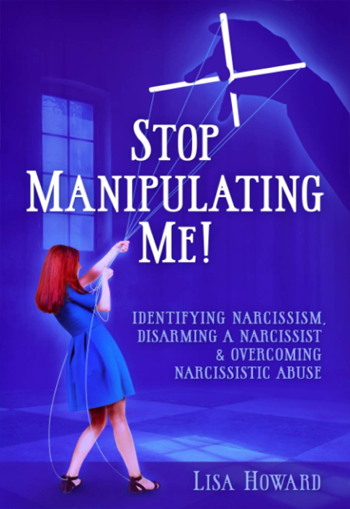
Stop Manipulating Me!: Identifying Narcissism, Disarming A Narcissist & Overcoming Narcissistic Abuse by Lisa Howard: A Therapist's Review and Key Takeaways for Couples in 2026
Listen to this review on a podcast

I've often worked with clients who have been questioning their own sanity after years in relationships where one partner consistently twists reality, demands constant attention, and leaves them walking on eggshells.
As a relationship counsellor working with such couples I've seen how the core struggle is rarely a simple lack of communication; it is often the hidden dynamics of narcissistic behaviour that erode self-trust and emotional safety in a relationship over time.
This book offers a clear, compassionate approach for recognising those patterns without blame and for taking practical steps to protect yourself while still hoping for healthier connections.
In my sessions, I've drawn directly from its insights on gaslighting survival and negotiating boundaries to help clients shift from reactive defence to calm, empowered responses. The result is often faster progress toward either rebuilding the relationship on firmer ground or finding the strength to step away with dignity and renewed self-worth.
Affiliate Disclosure: As an Amazon Associate, I earn from qualifying purchases. The links below are affiliate links, meaning if you click and make a purchase, I may receive a small commission at no extra cost to you. This helps keep my counselling session costs affordable for my clients.
Therapist's Quick Verdict: This is an interesting practical manual for identifying narcissistic abuse and reclaiming personal power in relationships. It is specifically designed for anyone caught in cycles of emotional manipulation who needs immediate, actionable strategies rather than abstract theory. It provides a clinical roadmap for spotting red flags early, surviving gaslighting, and healing without pathologising the survivor, helping couples or individuals move from chronic self-doubt to restored boundaries and healthier relational dynamics far more effectively than many broader self-help titles.
| Author | Lisa Howard |
| Publication Year | 2019 |
| Key Themes | Narcissistic personality disorder identification, gaslighting survival, boundary negotiation, emotional abuse recovery, survivor stories and practical disarming techniques |
| Who is this book best for | In my clinical experience, this book is best for individuals or partners trapped in emotionally manipulative relationships who need concrete tools to regain control of their life. If you are looking for straightforward strategies that explain why a partner twists facts, demands admiration, or leaves you feeling drained without endless theory, this is my top recommendation. The book maps directly onto common relationship pain points such as repeated gaslighting, loss of self-trust, and the exhaustion of trying to fix someone who cannot be changed. It suits those in any stage from early suspicion to post-separation recovery and works especially well alongside therapy for clients who learn best through step-by-step exercises and real-life examples. |
Key Features & Chapter Breakdown
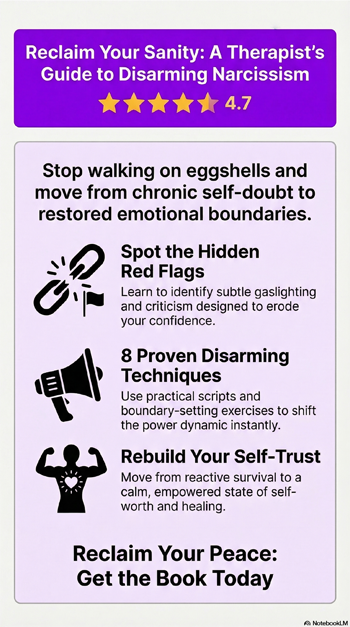
Lisa Howard structures the book around the lived reality of narcissistic relationships rather than dense clinical jargon. It opens with clear explanations of Narcissistic Personality Disorder traits drawn from both professional training and the author's personal experience, helping readers recognise subtle red flags such as constant criticism disguised as concern or the gradual erosion of their own confidence through gaslighting. This foundation feels immediately validating for clients who have spent years wondering if they were the problem.
The middle sections deliver eight specific practices for disarming manipulative behaviours in daily interactions, supported by survivor stories that illustrate how small boundary changes can shift power dynamics without confrontation. These chapters blend evidence-based approaches with practical scripts for responses that protect emotional safety while avoiding escalation, exactly the kind of toolkit I integrate into sessions when clients describe feeling powerless in the moment.
The concluding chapters focus on long-term healing and prevention, guiding readers toward environments and relationships that support genuine connection rather than exploitation. Throughout, Howard emphasises self-compassion and whole-person recovery, which aligns closely with the acceptance and commitment strategies I use to help couples or individuals rebuild self-esteem after prolonged narcissistic exposure.
Review & Analysis
This evidence-based guide stands out for its approachable explanation of personality traits in relationships:
- Strengths: The book's greatest strength is its balanced, evidence-based presentation combined with immediately usable tools. Howard never suggests there is an ideal personality; instead she shows that narcissistic patterns carry both short-term appeal and long-term costs. This aligns closely with the acceptance-based approach I use in couples therapy. The integration of survivor accounts, scientific insights, and practical scripts is rigorous yet explained in clear, engaging prose supported by vivid real-life examples that clients find instantly relatable.
- Weaknesses: Published in 2019, some of the cited studies have been supplemented by newer research on trauma recovery and neuroplasticity. The book is also more focused on individual protection than on dyadic interaction, so readers seeking detailed couple exercises may need to supplement it. A small number of cultural references feel slightly dated, though the core strategies remain solid and timeless.
- Practical Applications: The book's techniques translate directly into everyday scenarios. A partner who dismisses your feelings can be met with a calm boundary statement rather than endless explanation. Someone who uses silent treatment to regain control can be disarmed by consistent self-care routines that reduce emotional reactivity. These applications help clients move from reactive survival to proactive relationship management.
- Current Relevance: Relevance to modern relationships remains high in 2026. With increased awareness of emotional abuse and mental health, clients appreciate a book that normalises variation without pathologising the survivor. The framework also complements evidence-based approaches such as Emotionally Focused Therapy and trauma-informed care by providing a practical lens on power imbalances and recovery patterns.
Pros and Cons
| Pros | Cons |
|---|---|
| Strong practical focus with eight ready-to-use disarming practices | Published in 2019; some newer trauma research is not included |
| Clear red flags and survivor stories that build immediate recognition and hope | Primarily individual-focused rather than full couple-exercise format |
| Compassionate emphasis on survivor healing without blame or endless theory | Occasional repetition of core concepts for reinforcement |
Comparisons & Alternatives
If your primary concern is codependent patterns that keep you drawn to narcissistic partners despite the pain, Women Who Love Too Much by Robin Norwood offers a deeply personal exploration of why certain individuals repeatedly choose emotionally unavailable people and provides reflective exercises for breaking those cycles. For readers who prefer a faith-integrated, structured nine-step process for healing from any destructive relationship including narcissistic abuse, Navigating Destructive Relationships: 9 Steps toward Healing by Brad Hambrick delivers biblical wisdom alongside practical pastoral guidance. Lisa Howard's book sits comfortably between the two: more action-oriented and immediately applicable than Norwood's reflective style yet more secular and technique-driven than Hambrick's church-based framework, making it the clearest choice for clients who want fast, evidence-supported tools without requiring a spiritual lens.
| Book | Focus | Best For |
|---|---|---|
| Stop Manipulating Me!: Identifying Narcissism, Disarming A Narcissist & Overcoming Narcissistic Abuse by Lisa Howard Check price ❯❯ | Practical identification and disarming of narcissistic manipulation | Couples or individuals needing immediate tools to survive gaslighting and rebuild boundaries |
| Women Who Love Too Much by Robin Norwood Check price ❯❯ | Codependency patterns in relationships with narcissistic or addictive partners | Individuals seeking deeper insight into why they stay in unhealthy dynamics |
| Navigating Destructive Relationships: 9 Steps toward Healing by Brad Hambrick Check price ❯❯ | Faith-based structured steps for healing from abusive relationships | Readers wanting a spiritual framework alongside practical recovery guidance |
Therapist's Buying Guide
When selecting books on narcissism and narcissistic abuse to support relationship work, look first for a strong empirical foundation grounded in recognised personality disorder criteria combined with real survivor perspectives. Prioritise titles that include practical tools such as scripts, boundary exercises, and red-flag checklists that couples or individuals can apply immediately. The most useful books also discuss how narcissistic traits interact in close relationships rather than focusing solely on diagnosis. Readability matters: the best resources explain complex dynamics without jargon while still respecting the seriousness of emotional abuse. Finally, choose books that emphasise survivor empowerment and acceptance of natural limits rather than promising to change the narcissist, as this approach aligns with effective long-term couples therapy and prevents prolonged hope that keeps people stuck.
FAQs
Is this book only for romantic relationships?
No. While many examples draw from intimate partnerships, the red flags and disarming techniques apply equally to narcissistic bosses, family members, or friends.
Can I use this book while still in the relationship?
Yes. The eight practices focus on internal safety and boundary responses that work even before deciding to leave or stay.
How does it compare to professional therapy?
It is an excellent complement that accelerates progress between sessions by giving clients concrete language and strategies they can practise daily.
Is the content too technical or academic?
No. The writing is accessible, story-driven, and grounded in everyday examples rather than clinical terminology.
Will it help if my partner has only some narcissistic traits?
Absolutely. The tools apply to any pattern of manipulation, whether full Narcissistic Personality Disorder or strong traits that still cause harm.
How long does it take to see results from the techniques?
Many clients report reduced anxiety and clearer thinking within the first two weeks of consistent boundary practice.
Conclusion
From a therapeutic perspective this book helps readers understand the mechanics of narcissistic relational patterns. Couples or individuals who grasp these dimensions often experience rapid shifts from blame and self-doubt to curiosity and self-protection, creating the safety needed for deeper emotional repair or healthy separation.
This book is especially well suited for partners who have accumulated years of unspoken assumptions about each other's behaviour and now feel repeatedly invalidated or exhausted. It directly addresses the pain point of wondering whether you are overreacting or whether the relationship can ever feel safe again.
The core outcome is greater compassion for yourself and more effective communication or boundary enforcement. If recurring misunderstandings, gaslighting, or emotional distance have left you feeling disconnected or diminished, this book offers a scientifically sound path toward acceptance of what cannot be changed and collaboration where it is still possible.
Affiliate Disclosure: As an Amazon Associate, I earn from qualifying purchases. The links above are affiliate links, meaning if you click and make a purchase, I may receive a small commission at no extra cost to you. This helps keep my counselling session costs affordable for my clients. View the full Amazon Affiliate Disclosure.
About the Book Reviewer
Rhys Lewis MSc PgDip, is the founder of The Relationship Clinic Wales and a professionally qualified couples therapist.
He is the author of 300 Ways To Improve Your Relationship and Infidelity: A Survival Guide.
Rhys provides these reviews to help clients and readers find the most effective, evidence-based tools for relationship health. View his list of best relationship advice books for couples in 2026 here.
Connect with Rhys: