
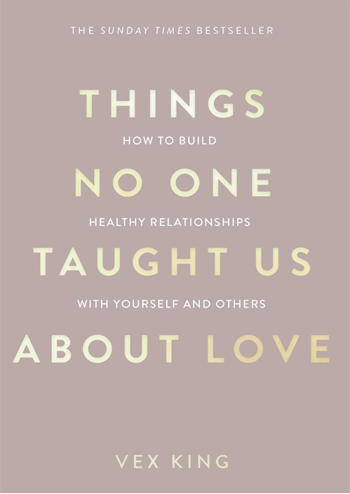
’Things No One Taught Us About Love’ by Vex King: A Therapist's Review and Key Takeaways for Couples in 2026
Listen to this review on a podcast

As a relationship therapist with years of experience guiding couples through emotional challenges, I've witnessed how misconceptions about love can erode even the strongest bonds. Vex King's "Things No One Taught Us About Love" addresses these hidden truths head-on, offering practical insights into self-love and relational dynamics that resonate deeply in today's fast-paced world. This book is particularly relevant in 2026, as more clients seek tools to heal from past traumas and build resilient partnerships grounded in mutual respect and understanding.
Affiliate Disclosure: As an Amazon Associate, I earn from qualifying purchases. The links below are affiliate links, meaning if you click and make a purchase, I may receive a small commission at no extra cost to you. This helps keep my counselling session costs affordable for my clients.
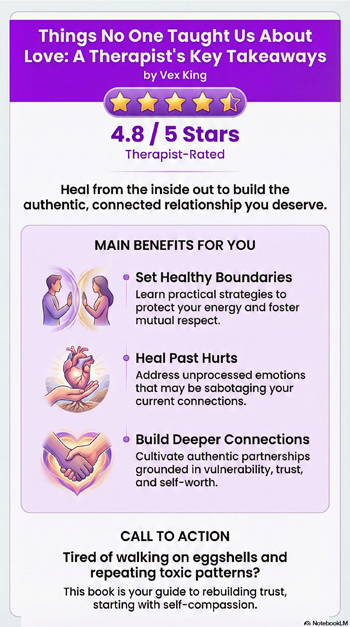
Therapist's Quick Verdict: This is the best book for self-love and healthy relationship building. It provides a clinical roadmap for individuals struggling with attachment styles and emotional regulation, offering evidence-based strategies that surpass generic advice by focusing on internal healing to foster relational dynamics rooted in authenticity and boundaries.
| Author | Vex King |
| Publication Year | 2024 |
| Key Themes | Self-love, misconceptions about love, setting boundaries, healing trauma, building healthy relationships |
| Who is this book best for | This book is best for busy parents or professionals in middle-age who often feel disconnected in love, like they're repeating toxic patterns or walking on eggshells due to unprocessed trauma and low self-worth. The book's format of relatable personal stories, inspirational messages, and practical boundary-setting exercises suits reflective learners in mid-crisis or long-term maintenance stages, offering a non-fluffy, evidence-informed path to self-love and healthier bonds - if you're seeking ways to overcome misconceptions about love and manifest deeper connections amid feeling unfulfilled or betrayed. |
Key Features & Chapter Breakdown
The book begins by dismantling common myths about love, exploring how society conditions us to seek validation externally rather than cultivating it within. It includes personal anecdotes and exercises to identify unprocessed emotions that hinder relationships.
Subsequent sections delve into self-understanding, with practical steps for setting boundaries and healing trauma, drawing on concepts like attachment styles that I've incorporated into cognitive-behavioral techniques during sessions to help clients shift from codependency to interdependence.
Later chapters focus on manifesting healthy partnerships through vulnerability and reciprocity, offering inspirational messages and expert advice on communication and emotional regulation.
In my practice, I've used similar ideas to guide couples in recognizing how self-love amplifies relational harmony, much like the book's emphasis on openness to personal growth in long-term bonds.
Review & Analysis
This in-depth analysis draws from the book's content and comments from clients of mine who have read the book, providing a balanced perspective through a therapist's lens.
- Strengths: The book's evidence-based insights on self-love and relational dynamics are profound, with relatable personal stories and practical exercises that promote emotional healing. I have to praise its readability and transformative wisdom, making complex topics like attachment styles accessible and applicable to everyday life.
- Weaknesses: Some of my clients found it slightly repetitive in emphasizing self-love themes, and it may lack depth on cultural diversity in relationships, potentially limiting its resonance for non-Western audiences. A few clients noted that it feels preachy at times, though this is minor compared to its overall value.
- Practical Applications: The exercises for boundary-setting and trauma healing align with techniques I use in sessions, such as mindfulness practices to regulate emotions during conflicts. For busy parents, adapt the self-reflection prompts into short daily check-ins to deepen intimacy without overwhelming schedules. This approach has helped my clients foster vulnerability, reducing defensive patterns in high-conflict scenarios.
- Relevance to Modern Relationships: In 2026, with rising awareness of mental health, the book's focus on unlearning toxic patterns is timely, supporting couples navigating post-pandemic stressors by promoting resilience through self-compassion and honest communication.
Pros and Cons
| Pros | Cons |
|---|---|
| Highly readable and insightful, with thought-provoking wisdom on self-awareness and love | Slightly repetitive in some sections |
| Practical exercises for emotional well-being and building authentic connections | May feel preachy or less focused in some cultural contexts |
| Relatable anecdotes that validate readers' experiences and encourage growth | Not ideal for those seeking quick fixes or advanced clinical depth |
Comparisons & Alternatives
If you're seeking vibrational self-empowerment, opt for Vex King; for gender-specific communication insights, choose Gray; for practical letting-go strategies, Robbins is ideal.
| Book | Focus | Best For |
|---|---|---|
| Things No One Taught Us About LoveCheck price ❯❯ | Self-love and healthy relationship building | Middle-aged individuals healing from past patterns |
| Men Are from Mars, Women Are from VenusCheck price ❯❯ | Gender differences in communication | Couples navigating misunderstandings |
| Let Them TheoryCheck price ❯❯ | Letting go and personal empowerment | Individuals focusing on self-growth |
Therapist's Buying Guide
When selecting self-help books that focus upon general relationship health, prioritize those with an evidence base, such as research-backed insights on attachment theory, emotional regulation, impulse control, conflict habits and personality. Look for readability that makes complex concepts accessible without oversimplification, and inclusivity that addresses diverse experiences. In this category of relationship self-improvement books, ensure the text includes practical exercises for real-world application, promoting long-term behavioral change rather than temporary motivation.
FAQs
Is this book suitable for singles?
Yes, it emphasizes self-love and personal growth, making it valuable for anyone, though its principles apply broadly to relationships.
How does it compare to therapy sessions?
It's a great supplement for self-reflection but not a replacement for personalized professional guidance in addressing deep-seated issues.
Does the book address trauma healing?
Yes, it includes advice on processing unhealed emotions, aligning with therapeutic approaches like cognitive reframing.
Is it helpful for long-term couples?
Absolutely, it offers tools for maintaining openness and adapting to evolving relational dynamics.
Can it help with boundary-setting?
The book provides practical strategies for establishing boundaries, which I've seen transform client interactions.
Is the advice evidence-based?
It draws on psychological concepts like attachment styles, making it grounded yet accessible.
Who should avoid this book?
Those in severe abusive situations should seek professional help first, as it's not designed for crisis intervention.
Conclusion
From a therapeutic standpoint, this book excels in promoting emotional regulation and attachment security through self-directed practices that mirror cognitive-behavioral interventions, helping readers reframe love as an internal resource rather than an external fix. It complements therapy by encouraging cognitive reframing of past hurts, fostering resilience in relational contexts where vulnerability often feels risky.
It particularly aids middle-aged women and their partners recovering from emotional disconnection, addressing pain points like feeling undervalued or walking on eggshells in conversations. The format of short, reflective exercises suits busy lifestyles, allowing gradual integration into daily routines for sustained relational maintenance.
Embrace this guide to cultivate deeper empathy and fewer conflicts; rebuilding trust starts with self-compassion. Consider adding it to your library for the transformation it promises in everyday interactions.
Affiliate Disclosure: As an Amazon Associate, I earn from qualifying purchases. The links above are affiliate links, meaning if you click and make a purchase, I may receive a small commission at no extra cost to you. This helps keep my counselling session costs affordable for my clients. View the full Amazon Affiliate Disclosure.