
The ADHD Effect on Marriage by Melissa Orlov: A Therapist's Review and Key Takeaways for Couples in 2026
Listen to this review on a podcast

As a relationship therapist, I've seen couples where one partner feels like the household manager and the other feels constantly criticised - and ADHD sits quietly in the middle of that loop. Missed follow-through, hyperfocus on hobbies but not on chores, sudden anger, and intimacy that fades under resentment are patterns clients describe with painful familiarity. My quick verdict is that Melissa Orlov's The ADHD Effect on Marriage remains one of the clearest, most usable maps of these dynamics for partners who need language before they can change habits.
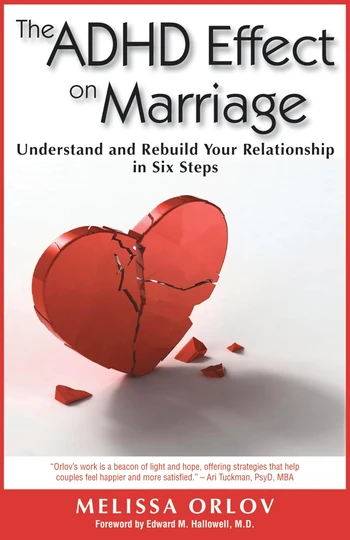
First published in 2010 and updated in 2020, the book explains how ADHD symptoms and the non-ADHD partner's reactions combine into stuck relational roles. Orlov names patterns such as parent-child dynamics, chore wars and the blame game, then offers a six-step rebuild that asks both people to change. In sessions I have used her framing to help couples stop arguing about "who is lazy" and start treating reliability, emotional regulation and communication as jointly designed systems. The main benefits are recognition that ADHD belongs in the marriage conversation, a structured path out of chronic anger, and worksheets that turn insight into practice.
Affiliate Disclosure: As an Amazon Associate, I earn from qualifying purchases. The links below are affiliate links, meaning if you click and make a purchase, I may receive a small commission at no extra cost to you. This helps keep my counselling session costs affordable for my clients.
Therapist's Quick Verdict: This is the best practical book for ADHD-affected marriages that need a shared rebuild plan. It is specifically designed for couples where untreated or undertreated ADHD has created parent-child roles, nagging cycles, intimacy loss and mutual blame. It provides a clinical roadmap that separates symptom effects from reactive patterns, solving the gap left by traditional marriage advice that ignores ADHD. Partners gain a six-step sequence for empathy, emotion work, treatment, communication, boundaries and reconnecting romance.
| Author | Melissa Orlov (foreword by Edward M. Hallowell, MD) |
| Publication Year | 2010 (updated 2020) |
| Key Themes | ADHD in marriage, parent-child dynamics, chore wars, empathy, obstacle emotions, treatment for both partners, communication, boundaries, reigniting romance |
| Who is this book best for | In my clinical experience, this book is best for couples where one or both partners have ADHD and the relationship has drifted into nagging, resentment or parent-child roles. If you feel like the household "parent" while your partner feels constantly supervised, or if intimacy has cooled under chronic frustration, this is my top recommendation in the ADHD-marriage niche. The six-step format suits partners who want a clear sequence rather than vague inspiration. It fits mid-crisis repair and longer-term maintenance once diagnosis or strong ADHD traits are on the table. |
Key Features & Chapter Breakdown
Orlov organises the book in two large movements across roughly 225-240 pages. The first section helps couples understand how ADHD shows up in marriage: diagnosis basics, symptom effects, and about a dozen relational patterns that public summaries and her ADHD Marriage materials repeatedly highlight - including parent-child dynamics, chore wars and the blame game. The second section walks through six rebuild steps with stories, tools and worksheets. A foreword by Edward M. Hallowell, MD, situates the work for readers who already trust ADHD-informed clinical voices.
The opening chapters establish why traditional marriage counselling sometimes misses the mark when ADHD is untreated or misunderstood. Orlov argues that symptoms and partner reactions interact; blaming only one person keeps the loop alive. In clinic this maps closely to couples who arrive saying "we have tried talking" while still living a manager-and-underperformer script. Naming the pattern reduces shame for both partners and creates a shared target for change.
The rebuild path is explicit. Step 1 cultivates empathy for how ADHD and non-ADHD experiences differ. Step 2 addresses obstacle emotions such as anger, fear, denial and hopelessness. Step 3 frames effective treatment as a relationship issue for both partners, not only medication for the ADHD spouse. Step 4 focuses on communication techniques that work when attention, working memory and emotional intensity are part of the system. Step 5 covers boundaries and finding individual voices so neither partner stays trapped as parent or child. Step 6 turns to reigniting romance and fun once safety and reliability begin to return. The epilogue's "don't try harder, try differently" message is one clients often remember between sessions.
Worksheets and tools at the end support couples who prefer structured homework. Amazon customer themes frequently praise the recognition factor ("this is our marriage"), the clarity of the six steps, and the book's usefulness for both ADHD and non-ADHD partners. Some UK reviewers note that access to specialist ADHD couple treatment can be harder on the NHS than the US examples imply - a fair practical caveat when adapting the treatment chapter locally.
Review & Analysis
This guide stands out for its clear framing of ADHD as a marital system issue rather than a character flaw:
- Strengths: Orlov's greatest strength is translating ADHD symptoms into recognisable couple patterns without dismissing either partner's pain. The parent-child dynamic explanation helps high-functioning non-ADHD partners see how over-functioning maintains the very unreliability they hate, while ADHD partners see how defensiveness and under-treatment feed the cycle. Public review themes emphasise practicality, couple stories and a balanced tone that invites both people to act. From a therapist's seat, the six-step sequence is easy to pace across counselling: empathy and emotion first, then treatment and skills, then romance - which mirrors how I sequence work when couples are flooded.
- Weaknesses: The book is rooted in US service contexts; UK readers may find specialist ADHD-informed couple therapy harder to source than the text assumes. Some examples skew heterosexual and marriage-labelled, though many principles transfer to long-term partnerships. It is not a substitute for medical assessment, trauma-focused work or safety planning where abuse is present. Readers wanting dense academic citation will find a practitioner-educator voice rather than a research monograph. Compared with newer neurodivergence-and-attachment titles, it is more ADHD-marriage specific and less about autism or sensory-attachment overlap.
- Practical Applications: Day to day, couples can inventory which of Orlov's patterns they live in, replace nagging with agreed external supports (lists, alarms, shared calendars), and practise empathy statements before problem-solving. The obstacle-emotions work helps partners name anger without weaponising diagnosis. In therapy I often adapt Step 4 into short, timed conversations with one topic and a written follow-up, which respects working-memory limits. Step 5's boundary work is useful when one partner has lost hobbies and friendships to household management.
- Current Relevance: Relevance in 2026 remains high as adult ADHD diagnosis rises and more couples discover ADHD after years of unexplained conflict. Digital life intensifies distraction and hyperfocus battles. Orlov's updated edition and enduring Amazon reputation (commonly around the mid-4s out of 5 across large rating counts) keep the book a first-line recommendation when ADHD is clearly in the marital picture. It pairs well with attachment-focused neurodivergence resources when rejection sensitivity and sensory load also drive conflict.
Pros and Cons
| Pros | Cons |
|---|---|
| Clear six-step rebuild for ADHD-affected marriages | US treatment-access assumptions can frustrate some UK readers |
| Names parent-child, nagging and chore-war patterns without one-sided blame | Less focus on autism or broader neurodivergence beyond ADHD |
| Worksheets, couple stories and updates that keep advice usable years on | Not ideal as a sole resource where abuse, crisis or complex trauma dominate |
Comparisons & Alternatives
Choose Orlov when ADHD itself is reshaping reliability, roles and romance in a committed partnership. Choose Anxious Attachment Recovery for Neurodivergent Minds by Brenda Emerson when the main struggle is anxious attachment, rejection sensitivity and sensory load rather than household ADHD systems. Choose Gina Pera's Is It You, Me, or Adult A.D.D.? when you want a broader adult-ADHD education text with strong emphasis on accurate diagnosis and treatment literacy for partners. Orlov is the marriage-rebuild roadmap; Emerson is the neurodivergent attachment niche; Pera is the deeper ADHD literacy companion.
| Book | Focus | Best For |
|---|---|---|
| The ADHD Effect on Marriage by Melissa Orlov Check price ❯❯ | Six-step rebuild for ADHD-affected marriages | Couples stuck in parent-child and nagging cycles |
| Anxious Attachment Recovery for Neurodivergent Minds by Brenda Emerson Read my review ❯❯ Check price ❯❯ | Anxious attachment recovery for neurodivergent minds | ADHD/autistic adults healing rejection fear and overthinking |
| Is It You, Me, or Adult A.D.D.? by Gina Pera Check price ❯❯ | Adult ADHD literacy for partners and couples | Partners needing deeper diagnosis and treatment education |
Therapist's Buying Guide
When selecting neurodivergency in relationships books for ADHD-affected couples, look for titles that treat ADHD as part of the relational system rather than as a moral failing. Prioritise pattern language for parent-child roles, practical communication supports that respect working memory, and a both-partners change model over "fix the ADHD person only". Readability matters: couples in chronic conflict benefit from clear steps and worksheets more than dense academic prose. Prefer resources that encourage empathy without excusing harmful behaviour, discuss treatment options honestly, and can sit alongside counselling. Orlov meets many of these criteria for the ADHD-marriage niche, especially when partners finally need a shared vocabulary for why trying harder has failed.
FAQs
Is this book only for the non-ADHD partner?
No. Orlov repeatedly invites both partners to change. ADHD and non-ADHD spouses both gain language for patterns, emotions, treatment and communication.
Can it replace couples therapy or medical treatment?
It is a strong self-help companion but not a replacement for therapy, ADHD assessment or prescribed treatment where those are needed.
Does it help if both partners have ADHD?
Yes. Many patterns still apply; shared executive-function strain can intensify chore wars and emotional volatility, so the six steps remain useful.
Is it suitable for UK readers?
Yes for the relational patterns and rebuild steps. Adapt the treatment chapter to local NHS and private pathways, which can be slower than US examples suggest.
How does it compare with Gina Pera's book?
Pera is often praised for broad adult-ADHD education; Orlov is more tightly organised as a six-step marriage rebuild. Many couples benefit from reading both over time.
Will it help with intimacy problems?
Indirectly and directly: earlier steps reduce resentment and parent-child roles that kill desire; Step 6 specifically addresses reconnecting romance and fun.
How long does it take to work through?
Around 225-plus pages; many couples read in two to four weeks, then revisit worksheets while practising one step at a time.
Conclusion
From a therapeutic perspective this book offers a usable clinical roadmap for marriages strained by ADHD symptoms and reactive partner patterns. It supports cognitive reframing of "laziness" into executive-function and emotional-regulation challenges, then asks both people to rebuild roles, communication and treatment habits. Clients who grasp the parent-child dynamic often move faster from blame to collaborative design of supports, which makes counselling sessions more productive.
This book is especially well suited to mid-life couples - and younger partners facing the same loops - who feel stuck between nagging and shutdown. It targets the pain point of living with a spouse who seems able to focus on everything except shared responsibilities, and of becoming a manager you never intended to be. The six-step format fits readers who need sequence and worksheets rather than motivational slogans.
The core strength is an ADHD-aware path from chronic marital injury toward shared empathy, fairer roles and renewed connection. The main outcome is less parent-child conflict and more intentional partnership. If ADHD is shaping your marriage and generic advice has failed, I recommend Orlov as a first-line couple resource, then deepen attachment or broader neurodivergence work with titles such as Emerson when rejection sensitivity sits beside the ADHD picture.
Affiliate Disclosure: As an Amazon Associate, I earn from qualifying purchases. The links above are affiliate links, meaning if you click and make a purchase, I may receive a small commission at no extra cost to you. This helps keep my counselling session costs affordable for my clients. View the full Amazon Affiliate Disclosure.
About the Book Reviewer
Rhys Lewis MSc PgDip, is the founder of The Relationship Clinic Wales and a professionally qualified couples therapist.
He is the author of 300 Ways To Improve Your Relationship and Infidelity: A Survival Guide.
Rhys provides these reviews to help clients and readers find the most effective, evidence-based tools for relationship health. View his list of best relationship advice books for couples in 2026 here.
Connect with Rhys: