
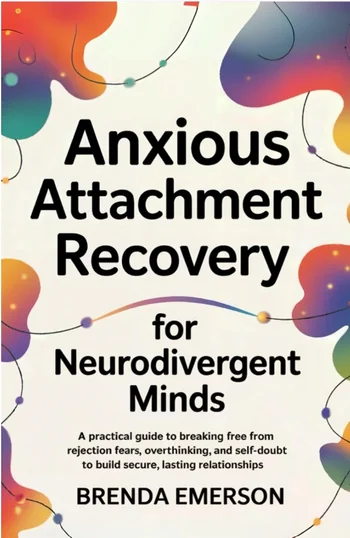
Anxious Attachment Recovery for Neurodivergent Minds by Brenda Emerson: A Therapist's Review and Key Takeaways for Couples in 2026
Listen to this review on a podcast

As a relationship therapist, I've seen neurodivergent clients and partners who spiral after a delayed text, ruminate on tone of voice, or feel 'too much' when they need reassurance. Anxious attachment is hard enough on its own; when it sits alongside ADHD, autism or high sensory sensitivity, traditional 'just communicate more' advice often fails because it ignores nervous-system load. My quick verdict is that Emerson's book offers a clear, affirming map of this overlap for readers who already know the attachment vocabulary but cannot make generic tips stick..
It explains why pattern-spotting strengths become threat-scanning in love, how rejection sensitivity and sensory overload fuel attachment panic, and why perfectionism intensifies relational anxiety. In sessions I have used these ideas to help couples separate 'your brain's alarm' from 'your partner's intent', which reduces blame and opens room for calmer repair. The main benefits are practical regulation tools, neurodivergent-specific reframes of common attachment advice, a three-step approach to relationship perfectionism, and a bonus progress tracker that keeps recovery concrete rather than vague..
Affiliate Disclosure: As an Amazon Associate, I earn from qualifying purchases. The links below are affiliate links, meaning if you click and make a purchase, I may receive a small commission at no extra cost to you. This helps keep my counselling session costs affordable for my clients.
Therapist's Quick Verdict: This is the best practical book for anxious attachment recovery in neurodivergent adults. It is specifically designed for ADHD, autistic and otherwise neurodivergent readers whose rejection fears, overthinking and sensory load make generic attachment tips feel impossible. It provides a clinical roadmap that connects sensory processing, pattern recognition and emotional regulation to relational dynamics, solving the gap left by one-size-fits-all security advice. Partners and individuals gain language that reduces shame while still supporting movement toward secure connection.
| Author | Brenda Emerson |
| Publication Year | 2024 |
| Key Themes | Anxious attachment, neurodivergence, rejection sensitivity, sensory processing, overthinking, emotional regulation, perfectionism, secure relationships |
| Who is this book best for | In my clinical experience, this book is best best for neurodivergent adults with anxious attachment who feel overwhelmed by standard relationship advice. If delayed replies send you into catastrophic overthinking, if sensory overload and rejection sensitivity collide in arguments, or if you keep being told to "calm down" without tools that fit how your brain works, this is my top recommendation in this niche. The short, practical format suits busy readers who need regulation strategies and clear protocols rather than lengthy academic theory. It fits individual healing work and couples who want a shared vocabulary for neurodivergent attachment patterns in dating or mid-relationship repair stages. |
Key Features & Chapter Breakdown
Emerson builds the book as a practical recovery guide rather than a dense textbook. Across roughly 170 pages she focuses on the collision between neurodivergent wiring and anxious attachment: why conventional tips fail, how sensory processing links to attachment panic, how powerful pattern recognition can become relationship threat-scanning, how heightened rejection sensitivity can be misunderstood, how perfectionism intensifies anxiety, how high empathy needs protective boundaries, and what she calls the attachment paradox for neurodivergent minds. A bonus progress tracker supports readers who prefer visible structure for healing work.
The opening material establishes why standard attachment advice often feels unworkable for neurodivergent readers. Emerson emphasises working with the brain's strengths instead of forcing neurotypical calm. In clinic this maps closely to what I see when clients have tried multiple self-help books yet still escalate after ambiguous messages: the problem is rarely lack of insight, but a mismatch between advice and sensory-emotional processing. Framing the issue this way reduces shame and sets a collaborative tone for change.
The middle of the book develops the core mechanisms readers recognise in daily life. Emerson links sensory processing to attachment panic and shows how calming the nervous system during uncertainty is a relationship skill, not a luxury. She addresses pattern recognition that spots abandonment threats everywhere, rejection sensitivity that amplifies small cues, and perfectionism that turns love into constant self-monitoring. The three-step protocol for perfectionism and the guidance on boundaries for highly empathic neurodivergent partners are especially useful when I help couples interrupt pursue-withdraw cycles without pathologising either person.
Later sections pull these strands into a recovery stance around the attachment paradox: needing closeness while fearing it, seeking reassurance while feeling ashamed of needing it. Emerson's emphasis on secure-feeling connection rather than performance of 'secure behaviour' aligns with emotion-focused and nervous-system-informed couple work. The progress tracker gives readers a way to notice small wins between sessions. I often invite clients to bring tracker notes to counselling so we can translate private insight into shared repair language with a partner.
Review & Analysis
This practical guide stands out for its approachable explanation of anxious attachment in neurodivergent relationships:
- Strengths: The book's greatest strength is its specific focus on the overlap between neurodivergence and anxious attachment, an area many popular titles leave generic. Emerson validates lived experience around sensory load, rejection sensitivity and overthinking without suggesting the reader is simply 'too needy'. Customer feedback frequently highlights practicality, relatable language and the progress tracker. From a therapist's seat, the non-blaming stance and concrete protocols make it easier for clients to attempt regulation before a difficult conversation rather than only analysing patterns after a rupture.
- Weaknesses: As an independently published practical guide of about 170 pages, it does not replace peer-reviewed clinical manuals or longer evidence-heavy attachment texts. Exact chapter titles are lightly documented publicly, and some readers may want more varied case examples across different forms of neurodivergence. Goodreads ratings sit in a modest range, which is common for niche self-published titles. Readers seeking deep couple-dialogue scripts may still need to pair it with a therapist-led book such as Secure Love.
- Practical Applications: Day to day, readers can use the sensory-attachment link to plan recovery after conflict (dim lights, reduce noise, pause before texting), redirect pattern-spotting into checking facts with a partner, and apply the perfectionism protocol when they catch themselves monitoring every interaction for proof of love. The progress tracker supports weekly self-review. In therapy I adapt these into couple experiments: one partner names a sensory cue that spiked panic; the other offers a predictable reassurance ritual that does not demand endless debate.
- Current Relevance: Relevance in 2026 is high as more adults receive ADHD or autism diagnoses later in life and bring that clarity into dating and long-term relationships. Online dating, rapid messaging and ambiguous digital cues intensify rejection sensitivity. Emerson's framing complements Emotionally Focused Therapy and CBT-informed regulation work by giving neurodivergent clients language that fits their nervous systems rather than asking them to mask into neurotypical calm.
Pros and Cons
| Pros | Cons |
|---|---|
| Neurodivergent-specific framing of anxious attachment and rejection sensitivity | Shorter independently published guide; less academic depth than clinical texts |
| Practical protocols plus a bonus progress tracker for recovery | Some readers may want more varied neurodivergence case examples |
| Clear links between sensory processing, perfectionism and attachment panic | Best as a complement to therapy or a deeper couple-focused attachment book |
Comparisons & Alternatives
Choose Emerson when you need anxiety-attachment tools that respect neurodivergent sensory load and rejection sensitivity. Choose How to Heal an Anxious Attachment Style by Eye Mind Spirit when you want a prompt-heavy journal for individual anxious-attachment work. Choose Secure Love by Julie Menanno when both partners need an Emotionally Focused Therapy-informed roadmap for secure bonding in the couple as a unit. Emerson sits in the neurodivergency niche; Eye Mind Spirit is interactive self-therapy; Menanno is the stronger couple-process guide.
| Book | Focus | Best For |
|---|---|---|
| Anxious Attachment Recovery for Neurodivergent Minds by Brenda Emerson Check price ❯❯ | Anxious attachment recovery tailored to neurodivergent minds | Neurodivergent adults healing rejection fear and overthinking |
| How to Heal an Anxious Attachment Style by Eye Mind Spirit Read my review ❯❯ Check price ❯❯ | Guided journal prompts for anxious attachment healing | Individuals wanting structured self-therapy prompts |
| Secure Love by Julie Menanno Read my review ❯❯ Check price ❯❯ | EFT-informed secure attachment for couples | Partners rebuilding emotional safety together |
Therapist's Buying Guide
When selecting neurodivergency in relationships books, look for titles that treat ADHD, autism or sensory differences as part of the relational system rather than as a defect to erase. Prioritise nervous-system literacy, rejection-sensitivity awareness and practical regulation tools over slogans about simply communicating better. Readability matters: dense academic books can overload executive function, while purely inspirational titles may lack usable steps. Prefer resources that encourage acceptance of natural variation, include trackers or worksheets, and can sit alongside counselling. Emerson meets many of these criteria for the anxious-attachment niche, especially for readers who have already tried generic attachment advice without lasting change..
FAQs
Is this book only for autistic readers?
No. It is written for neurodivergent minds more broadly, including ADHD and high sensory sensitivity, whenever anxious attachment and rejection fears dominate relationships.
Can it replace couples therapy?
It is a strong self-help companion but not a replacement for therapy, particularly where trauma, crisis or high conflict are present.
Will a neurotypical partner benefit too?
Yes. Partners often gain empathy for sensory-driven attachment panic and learn how to offer reassurance without escalating debates.
Does it include exercises or only theory?
It emphasises practical protocols, regulation insights and a bonus progress tracker rather than long academic theory.
How does it differ from Attached or other mainstream attachment books?
Mainstream titles explain styles well; Emerson focuses on why those tips fail when neurodivergent processing and rejection sensitivity intensify anxiety.
Is it suitable if I am newly diagnosed?
Yes. Many late-diagnosed adults find the validating tone helpful while they rebuild relationship habits with clearer self-understanding.
How long does it take to read?
Around 170 pages; most readers can finish in one to two weeks at a chapter-per-evening pace, then reuse the tracker.
Conclusion
From a therapeutic perspective this book offers a useful clinical roadmap for anxious attachment when neurodivergence shapes emotional regulation and threat detection. It supports cognitive reframing of rejection cues and nervous-system regulation before couples attempt deeper attachment repair. Clients who grasp the sensory-attachment link often move faster from self-criticism to workable strategies, which is exactly the shift that makes counselling sessions more productive.
This book is especially well suited to neurodivergent adults - and the partners who love them - who feel stuck between craving closeness and drowning in overthinking. It targets the pain point of being told to relax when the body cannot, and of feeling 'too much' in relationships. The concise practical format fits readers who need tools that respect executive-function limits rather than lengthy homework manuals.
The core strength is a neurodivergency-aware path from anxious attachment toward greater security. The main outcome is calmer emotional regulation and less rejection-driven spiral in close relationships. If standard attachment advice has never fitted how your mind works, I recommend Emerson as a focused starting resource, then deepen couple skills with therapy or a text such as Secure Love when both of you are ready.
Affiliate Disclosure: As an Amazon Associate, I earn from qualifying purchases. The links above are affiliate links, meaning if you click and make a purchase, I may receive a small commission at no extra cost to you. This helps keep my counselling session costs affordable for my clients. View the full Amazon Affiliate Disclosure.
About the Book Reviewer
Rhys Lewis MSc PgDip, is the founder of The Relationship Clinic Wales and a professionally qualified couples therapist.
He is the author of 300 Ways To Improve Your Relationship and Infidelity: A Survival Guide.
Rhys provides these reviews to help clients and readers find the most effective, evidence-based tools for relationship health. View his list of best relationship advice books for couples in 2026 here.
Connect with Rhys: