
After the Affair (Third Edition) by Janis Abrahms Spring: A Therapist's Review and Key Takeaways for Couples in 2026
Listen to this review on a podcast

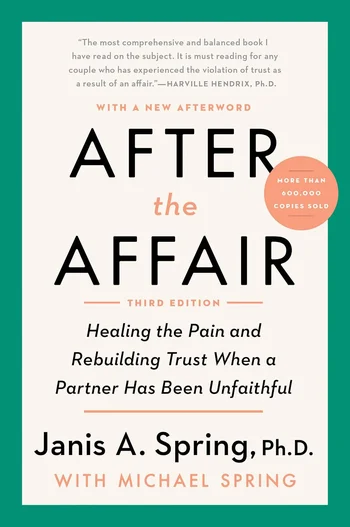
"I want to believe you, but I don't know how." Months after an affair has come to light, that sentence from a hurt partner often marks the real start of the work. The shouting has usually quietened by then, yet trust has not returned on its own, and the partner who strayed is just as stuck, apologising again and again without knowing what would actually help. Janis Abrahms Spring's After the Affair was written for exactly this impasse. Spring is a US clinical psychologist who trained in cognitive therapy under Aaron Beck and has treated couples for decades, and this third edition of her classic, which the publisher says has sold more than 600,000 copies, speaks to both partners at once. My quick verdict: this is the most practical, clinician-written guide to rebuilding trust that I can recommend to a couple who are seriously considering staying together.
Its main benefits are structure and fairness. Spring calls the two people the "hurt partner" and the "unfaithful partner", normalises the storm of feelings each one goes through, and then asks both to do specific, observable work rather than wait for time to heal. In sessions I borrow her emphasis on deeds over declarations when an unfaithful partner believes a heartfelt apology should be enough. Couples tend to calm down once the question shifts from "do you still love me?" to "what will you do, this week, that I can see?" I hold a traditional view that commitment and honesty matter, and Spring respects both while still asking each partner to look honestly at the relationship they shared.
Affiliate Disclosure: As an Amazon Associate, I earn from qualifying purchases. The links below are affiliate links, meaning if you click and make a purchase, I may receive a small commission at no extra cost to you. This helps keep my counselling session costs affordable for my clients.
Therapist's Quick Verdict: This is the best clinician-written roadmap for couples who want to rebuild trust and intimacy after an affair. It guides hurt and unfaithful partners through three stages: normalising the crisis, deciding whether to recommit, and then restoring trust, emotional connection and sexual intimacy. Rooted in cognitive therapy, it replaces vague hope with concrete trust-building behaviours, structured conversations and a fair framework for understanding relational dynamics. It solves the problem most affair books leave open: what each partner actually has to do, week by week, once the decision to try again has been made.
| Author | Janis Abrahms Spring |
| Publication Year | 2020 (Third Edition, Harper Paperbacks; first published 1996) |
| Key Themes | Affair recovery, rebuilding trust, hurt and unfaithful partners, deciding whether to recommit, responsibility and repair, forgiveness, restoring sexual intimacy |
| Who is this book best for | In my clinical experience, this book is best for couples who have decided, or are trying to decide, whether to stay together after infidelity and need a concrete plan for rebuilding trust. If you keep asking how you could ever trust your partner again, or you are the unfaithful partner wondering what you can do beyond saying sorry, Spring answers both questions directly. Her clear stages and checklists suit couples who like structure, and the book works well as homework alongside couples counselling. I rate it highly because it gives both partners a fair share of the work and a visible way to measure progress. |
Key Features & Chapter Breakdown
The third edition paperback runs to 368 pages (ISBN-13 978-0063045293, Harper Paperbacks, 2020). It keeps the three-stage structure that made the original 1996 book a fixture on therapists' reading lists, and adds a new section in which patients ask questions that earlier editions did not address. Each stage speaks to the hurt partner and the unfaithful partner in turn, often side by side.
The first stage is about surviving the initial trauma. Spring explains why the hurt partner may feel a shattered sense of self, intrusive thoughts and swings between rage and despair, and why the unfaithful partner may feel relief, guilt, grief for the affair partner or impatience to "move on". Framing these reactions as normal responses to crisis is, in my experience, one of the most stabilising things a couple can hear in the first weeks.
The second stage helps couples decide whether to recommit. Rather than pushing reconciliation, Spring invites each partner to examine their doubts, fears and assumptions about love, so that any decision to stay or leave is deliberate rather than impulsive. I find this section useful for couples who feel pressured by family, finances or children to decide quickly.
The third and longest stage covers learning from the affair and rebuilding. Spring asks couples to decipher what the infidelity meant, to accept an appropriate share of responsibility for the conditions in the relationship without excusing the betrayal, and to prevent the same problems recurring. She then sets out concrete steps for the unfaithful partner to earn back trust, for the hurt partner to risk opening up again, and for both to talk about and restore sexual intimacy, ending with a discussion of forgiveness.
Review & Analysis
This long-standing classic stands out for turning affair recovery into a shared, step-by-step task:
- Strengths: Spring's greatest strength is concreteness. Reader reviews repeatedly praise its actionable steps, thought-provoking questions and examples of couples facing similar struggles, and several say it was recommended by their own therapist. Her even-handed voice means neither partner feels written out of the story. In my practice the book helps couples replace rumination with agreed, observable actions, which is usually when trust starts to grow again.
- Weaknesses: The emphasis on both partners examining their contribution to the relationship can feel unfair to a hurt partner who is still raw, and some reader reviews say exactly that. A minority also find the trust-building lists too prescriptive. That is why I recommend reading it once the acute shock has eased, ideally with a counsellor, and why the practicality score sits a little below the therapist rating. It is written primarily for couples hoping to stay together.
- Practical Applications: Used well, the book becomes a shared workplan. Couples can read a section separately, mark one passage that felt fair and one that felt hard, then discuss both within an agreed time limit. The unfaithful partner can turn Spring's trust-building ideas into a short written list of specific behaviours, and the hurt partner can note which ones genuinely help. Reviewing that list weekly gives progress a shape and reduces repeated interrogation.
- Current Relevance: Relevance in 2026 remains strong. The third edition updates a book whose core framework has stood the test of time, and its focus on transparency and earned trust applies directly to the phones, messages and social media accounts at the centre of many affairs I now see in clinic. The new question-and-answer material reflects the doubts couples still raise today.
Pros and Cons
| Pros | Cons |
|---|---|
| Concrete trust-building steps for both hurt and unfaithful partners | Shared-responsibility focus can feel unfair to a newly hurt partner |
| Clear three-stage roadmap from crisis to decision to rebuilding | Some readers find the trust-building lists too prescriptive |
| Written by an experienced clinical psychologist, updated in a third edition | Written mainly for couples hoping to stay together |
Comparisons & Alternatives
Choose Spring when you want a structured plan for rebuilding trust and intimacy and both partners are willing to do the work. Choose Infidelity: A Survival Guide by Rhys Lewis (my own book) when discovery is recent and you need a crisis roadmap for the first days and weeks, whether you rebuild or part. Choose Not Just Friends by Shirley P. Glass when you want to understand how emotional affairs develop from friendships at work or online, and how to rebuild walls and windows in your relationship. The Survival Guide steadies the crisis; Glass explains how affairs begin; Spring shows how to rebuild.
| Book | Focus | Best For |
|---|---|---|
| After the Affair (Third Edition) by Janis Abrahms Spring Check price ❯❯ | Step-by-step trust and intimacy rebuilding | Couples deciding to recommit after an affair |
| Infidelity: A Survival Guide by Rhys Lewis Read my review ❯❯ Check price ❯❯ | Acute crisis roadmap for affair recovery | Couples in the first weeks after discovery needing practical steps |
| Not Just Friends by Shirley P. Glass Check price ❯❯ | How emotional affairs develop and how to recover | Couples confused by an emotional or workplace affair |
Therapist's Buying Guide
When choosing an affair recovery book, match it to your stage and your goal. In the first raw weeks, look for practical crisis guidance on safety, emotional regulation and short-term decisions. Once you are weighing whether to stay, favour books written by experienced clinicians that address both partners fairly and offer concrete steps rather than general reassurance. Check that the book covers emotional as well as sexual betrayal, and that it leaves room to separate well if rebuilding is not possible. Spring fits the decision and rebuilding stages best.
FAQs
Is After the Affair for the hurt partner or the unfaithful partner?
Both. Spring addresses the hurt partner and the unfaithful partner throughout, which makes it a good shared read for couples working on recovery together.
What is new in the third edition?
The publisher describes a new section in which patients ask questions not covered in earlier editions, along with updated strategies for communication, earning trust and forgiveness.
Does Spring blame the hurt partner for the affair?
No. She asks each partner to accept an appropriate share of responsibility for the relationship, not for the decision to cheat. Some hurt partners still find this hard early on, so timing matters.
Should I read it straight after discovery?
The early chapters help in the crisis, but many couples get most from the rebuilding sections once the acute shock has eased. A crisis guide such as Infidelity: A Survival Guide can come first.
Does it help if we decide to separate?
Partly. The decision stage helps you choose deliberately, but most of the book is aimed at couples who try to rebuild.
How long is it?
The third edition paperback is 368 pages. Most couples work through it over several weeks, a section at a time.
Conclusion
From a therapeutic perspective After the Affair supports the structured repair work at the heart of affair recovery. Spring's cognitive approach helps couples manage overwhelming emotions, make a considered decision about the future and then rebuild trust through repeated, visible actions. It mirrors the later phases of real-world couples therapy, once the crisis has steadied and both partners are ready to work.
This book suits couples who want to stay together but do not know how to start rebuilding. It speaks to the hurt partner who cannot imagine trusting again and to the unfaithful partner who feels that nothing they say is enough. The staged format fits readers who like clear steps and measurable progress.
The core strength is Spring's fair, concrete roadmap. The main outcome is a shared, practical plan for earning back trust and restoring intimacy after infidelity. If discovery is recent, start with Infidelity: A Survival Guide, add Not Just Friends if the affair grew out of a friendship, and turn to Spring when you are ready to rebuild.
Affiliate Disclosure: As an Amazon Associate, I earn from qualifying purchases. The links above are affiliate links, meaning if you click and make a purchase, I may receive a small commission at no extra cost to you. This helps keep my counselling session costs affordable for my clients. View the full Amazon Affiliate Disclosure.
About the Book Reviewer
Rhys Lewis MSc PgDip, is the founder of The Relationship Clinic Wales and a professionally qualified couples therapist.
He is the author of 300 Ways To Improve Your Relationship and Infidelity: A Survival Guide.
Rhys provides these reviews to help clients and readers find the most effective, evidence-based tools for relationship health. View his list of best relationship advice books for couples in 2026 here.
Connect with Rhys: