
Disarming the Narcissist (Third Edition) by Wendy T. Behary: A Therapist's Review and Key Takeaways for Couples in 2026
Listen to this review on a podcast

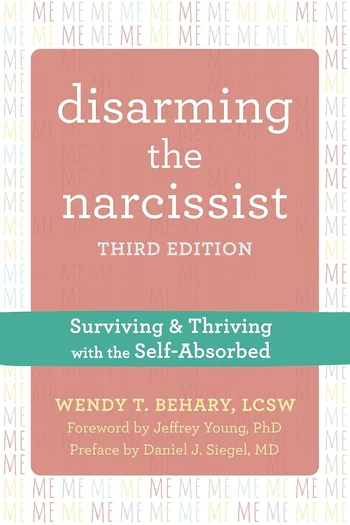
Not everyone who lives with a self-absorbed partner wants to walk away. Some love the person, share children or a home with them, and simply want to stop feeling invisible, criticised and drained in every conversation. That is the reader Wendy T. Behary had in mind. Behary is a licensed clinical social worker, founder and clinical director of the Cognitive Therapy Center of New Jersey and a faculty member at the Schema Therapy Institute of New York, and her practice specialises in narcissism and high-conflict couples. Disarming the Narcissist, now in a fully revised third edition, has become a self-help classic for people who deal with a narcissistic partner, parent, colleague or friend. My quick verdict: this is the most clinically grounded and humane book I know on communicating with a narcissist, and the one I reach for when a client wants to stay, at least for now, and be heard.
Its main benefits are understanding and skill. Behary uses schema therapy to explain the hurt and shame that often lie beneath narcissistic arrogance and entitlement, and she asks readers to notice their own triggers too: the old patterns of self-sacrifice, subjugation or defectiveness that make them easy to hook. In sessions I borrow her idea of empathic confrontation, which pairs genuine understanding of what drives the other person with a clear, firm statement of what is not acceptable. Clients who learn to do both stop either appeasing or exploding, and conversations become calmer and more honest. I hold a traditional view that commitment deserves effort, and Behary respects that while insisting firmly on self-respect and limits.
Affiliate Disclosure: As an Amazon Associate, I earn from qualifying purchases. The links below are affiliate links, meaning if you click and make a purchase, I may receive a small commission at no extra cost to you. This helps keep my counselling session costs affordable for my clients.
Therapist's Quick Verdict: This is the best clinician-written guide to understanding and communicating with a narcissistic partner without losing yourself. Drawing on schema therapy and interpersonal neurobiology, it explains the early life patterns that drive narcissistic behaviour and the matching schemas that keep partners stuck. It then teaches step-by-step communication skills, including empathic confrontation and limit setting, so readers can sidestep power struggles and ask for respect. The third edition adds material on shame, hypersexuality and infidelity in narcissism, divorce and the impact on children.
| Author | Wendy T. Behary, LCSW |
| Publication Year | 2021 (Third Edition, New Harbinger; UK release November 2021) |
| Key Themes | Narcissistic personality traits, schema therapy, your own triggers and schemas, empathic confrontation, setting limits, communication skills, shame and infidelity in narcissism, divorce and co-parenting |
| Who is this book best for | In my clinical experience, this book is best for partners who want to understand a narcissistic or self-absorbed partner and communicate more effectively while protecting their own self-respect. If every conversation leaves you feeling dismissed, or you keep swinging between appeasing your partner and losing your temper, Behary shows you why and what to do instead. The blend of explanation, self-reflection and scripted communication suits thoughtful readers who want to try changing the dynamic before deciding whether to stay. I rate it highly because it treats both partners as human without excusing harmful behaviour. |
Key Features & Chapter Breakdown
The third edition paperback runs to 240 pages (ISBN-13 978-1684037704, New Harbinger, published October 2021 in the US and November 2021 in the UK). It carries a foreword by Jeffrey Young, the founder of schema therapy, and a preface by Daniel J. Siegel. The publisher describes this edition as fully revised and updated in response to reader feedback.
The early chapters help readers recognise narcissistic traits such as arrogance, lack of empathy, entitlement and exploitation, and explain how they develop. Using schema therapy, Behary describes how unmet childhood needs can leave a person defended by superiority and control, which helps readers see the behaviour as a pattern rather than a personal verdict on them.
The book then turns the lens on the reader. Behary explores the schemas that may make you vulnerable to a narcissist's traps, such as self-sacrifice, subjugation or a sense of defectiveness, and helps you notice when you are being triggered. In my experience this is the section that changes most for clients, because it gives them back a sense of choice.
The practical core teaches communication skills: staying grounded, using empathic confrontation, asserting your own needs, and setting limits on unacceptable behaviour, including knowing when it is time to draw the line. The new material covers shame, hypersexuality and infidelity in narcissism, legal information for anyone divorcing a narcissist, and the effects of narcissism on children.
Throughout, Behary illustrates her points with examples drawn from her clinical work, showing how a typical exchange can escalate and how the same conversation might unfold differently using her approach. I find these worked examples especially helpful for clients who understand the theory but freeze in the moment.
Review & Analysis
This clinician-written classic stands out for combining compassion with firm boundaries:
- Strengths: Behary's greatest strength is clinical depth delivered warmly. Endorsements from John Gottman, Judith Beck and Randi Kreger reflect its standing among professionals, and reader reviews describe it as informative, insightful and validating, with one noting that it is as much about the reader as the person bothering them. In my practice it helps clients understand the dynamic well enough to respond rather than react.
- Author Credibility: Behary is a distinguished founding fellow of the Academy of Cognitive Therapy and has specialised for many years in treating narcissism and high-conflict couples. That background shows in the precision of her explanations and in her refusal to reduce narcissistic people to cartoon villains, which makes her guidance more usable in real relationships.
- Weaknesses: Reader reviews are more mixed than for many self-help books. Some survivors of severe narcissistic abuse feel the empathic approach is too soft, and that low or no contact is the safer choice. Others find parts of the book wordy or demanding of the reader. I agree that the book suits milder to moderate narcissism best, and it is not a substitute for safety planning where there is abuse.
- Practical Applications: Readers can keep a short log of difficult exchanges, noting what was said, which of their own schemas was triggered and how they responded. They can then rehearse an empathic confrontation for the next similar moment: one sentence acknowledging what may be driving the partner, followed by a clear statement of their own need or limit. Practising this calmly in counselling first can make it easier at home.
- Current Relevance: Relevance in 2026 is high. Narcissism is discussed everywhere online, often loosely, and Behary offers a grounded clinical alternative to labels and quick fixes. The third edition's new sections on infidelity, divorce and children reflect the questions couples bring to therapy today.
Pros and Cons
| Pros | Cons |
|---|---|
| Clinically grounded explanation of what drives narcissistic behaviour | Empathic approach can feel too soft for survivors of severe abuse |
| Practical scripts for empathic confrontation and limit setting | Some readers find the writing wordy or demanding |
| Helps readers understand their own triggers and schemas | Less help for those who have already decided to leave |
Comparisons & Alternatives
Choose Behary when you want to understand a narcissistic partner and learn to communicate and set limits, especially if you are not ready to leave. Choose Stop Manipulating Me! by Lisa Howard when you need a shorter, accessible introduction to recognising narcissistic manipulation and protecting yourself from it. Choose How to Divorce a Narcissist by Diana Jordan when you have decided to separate and need practical guidance on the UK family court process. Howard helps you recognise the pattern; Behary helps you understand and respond to it; Jordan helps you leave safely.
| Book | Focus | Best For |
|---|---|---|
| Disarming the Narcissist (Third Edition) by Wendy T. Behary Check price ❯❯ | Understanding and communicating with a narcissist | Partners who want to stay and be heard |
| Stop Manipulating Me! by Lisa Howard Read my review ❯❯ Check price ❯❯ | Recognising narcissistic manipulation | Readers who need an accessible starting point |
| How to Divorce a Narcissist by Diana Jordan Read my review ❯❯ Check price ❯❯ | Divorce and the family court | Partners who have decided to separate |
Therapist's Buying Guide
When choosing a book about narcissism in relationships, start with your safety and your goal. If there is abuse, intimidation or coercive control, prioritise safety planning and professional support before any book. If you want to stay and improve communication, look for clinician-written guidance that explains the dynamic without demonising anyone and teaches concrete skills. If you have decided to leave, choose practical guidance on separation and recovery. Behary fits readers who want to understand and respond.
FAQs
Is Disarming the Narcissist about staying or leaving?
Mainly about understanding and communicating with a narcissist while protecting yourself. Behary also helps you recognise when it is time to draw the line, and the third edition adds information on divorce.
What is empathic confrontation?
It means acknowledging what may be driving the other person while clearly stating what is not acceptable to you. It aims to avoid both appeasing and attacking.
What is new in the third edition?
The publisher lists new information on shame, hypersexuality and infidelity in narcissism, legal information for divorcing a narcissist, and the impact of narcissism on children.
Is it suitable if my relationship is abusive?
Use caution. The approach suits milder to moderate narcissism best. If you feel unsafe, seek professional and safety support first.
Do I need to know about schema therapy first?
No. Behary explains the ideas in plain language, though some readers find parts sit halfway between self-help and textbook.
How long is it?
The third edition paperback is 240 pages. Many readers return to the communication chapters repeatedly as they practise.
Conclusion
From a therapeutic perspective Disarming the Narcissist supports two key tasks: understanding the schemas that drive a narcissistic partner and recognising your own. Behary's approach builds emotional regulation and assertive communication, helping readers step out of reactive cycles and into calmer, clearer exchanges. It mirrors the work I do with high-conflict couples in therapy.
This book suits partners who feel unseen, criticised or drained but are not ready to leave. It speaks to the pain of loving someone who seems unable to consider your needs, and to the frustration of conversations that always end the same way. Its reflective, skills-based format suits readers willing to look at themselves as well as their partner.
The core strength is Behary's compassionate yet firm clinical approach. The main outcome is a clearer understanding of the narcissistic dynamic and practical skills to communicate, set limits and protect your self-respect. If you need a simpler introduction start with Lisa Howard, and if you have decided to separate turn to Diana Jordan.
Affiliate Disclosure: As an Amazon Associate, I earn from qualifying purchases. The links above are affiliate links, meaning if you click and make a purchase, I may receive a small commission at no extra cost to you. This helps keep my counselling session costs affordable for my clients. View the full Amazon Affiliate Disclosure.
About the Book Reviewer
Rhys Lewis MSc PgDip, is the founder of The Relationship Clinic Wales and a professionally qualified couples therapist.
He is the author of 300 Ways To Improve Your Relationship and Infidelity: A Survival Guide.
Rhys provides these reviews to help clients and readers find the most effective, evidence-based tools for relationship health. View his list of best relationship advice books for couples in 2026 here.
Connect with Rhys: