
Healing from Infidelity by Michele Weiner-Davis: A Therapist's Review and Key Takeaways for Couples in 2026
Listen to this review on a podcast

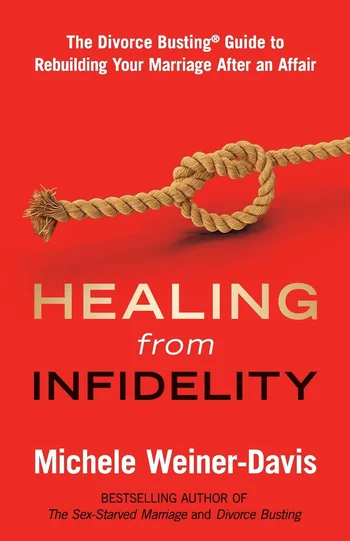
Most couples who contact me after an affair comes to light want one answer before anything else: can a marriage really survive this? Michele Weiner-Davis answers with a firm, hopeful yes, provided both partners are willing to work for it. A marriage therapist best known for Divorce Busting and The Sex-Starved Marriage, she wrote Healing from Infidelity to put the plan she uses with her own clients into the hands of ordinary couples. She is open about her pro-marriage bias, and the book reads like a calm, experienced guide walking a frightened couple through the wreckage one step at a time. My quick verdict: this is the most straightforward, task-based infidelity recovery book I can give to a couple who have both decided they want to save their marriage.
Its main benefits are clarity and practicality. Weiner-Davis gives separate, specific jobs to the betrayed spouse and the unfaithful spouse, covering how to handle questions about the affair, how to talk about intense emotions without another argument, how to end the affair properly and how to offer an apology that actually heals. In sessions I often borrow her focus on what works rather than endless analysis of what went wrong. When a couple stops asking "why did this happen to us?" for an hour at a time and starts asking "what helped this week?", progress usually follows. I share her conviction that a marriage is worth fighting for, and her book gives couples a practical way to do that fighting together.
Affiliate Disclosure: As an Amazon Associate, I earn from qualifying purchases. The links below are affiliate links, meaning if you click and make a purchase, I may receive a small commission at no extra cost to you. This helps keep my counselling session costs affordable for my clients.
Therapist's Quick Verdict: This is the best solution-focused, step-by-step guide for couples committed to rebuilding their marriage after an affair. It takes both spouses from the trauma of discovery through ending the affair, healing apologies, managing flashbacks and rebuilding accountability, to forgiveness and sexual reconnection. Grounded in the Divorce Busting approach, it favours small, concrete changes over lengthy analysis of relational dynamics. It solves the problem of couples who want to stay together but feel paralysed, by giving each partner a clear list of what to do next.
| Author | Michele Weiner-Davis, MSW |
| Publication Year | 2017 (Michele Weiner-Davis Training Corp paperback) |
| Key Themes | Affair recovery, solution-focused therapy, discovery trauma, answering questions about the affair, ending the affair, healing apologies, flashbacks, rebuilding trust and accountability, forgiveness, sexual reconnection |
| Who is this book best for | In my clinical experience, this book is best for couples who have both decided to stay together after an affair and want a clear, practical plan for rebuilding their marriage. If you are stuck in nightly arguments about the betrayal, or you are the unfaithful spouse who does not know how to answer questions or apologise properly, Weiner-Davis tells you exactly what to try. The short, plain-English chapters suit busy couples who want action rather than theory, and the book works well alongside counselling. I rate it highly because it turns a shapeless crisis into manageable tasks for both partners. |
Key Features & Chapter Breakdown
The paperback runs to 216 pages (ISBN-13 978-0998058412, Michele Weiner-Davis Training Corp, published January 2017). It is a compact book, drawn from the author's decades of work with couples recovering from betrayal and filled with case vignettes of couples who were devastated by an affair and later recovered.
The opening material deals with the shock of discovery. Weiner-Davis explains the traumatic feelings betrayed spouses experience and the confusing mix of guilt and relief many unfaithful spouses feel, and helps both understand that these reactions are normal. She sets the tone early: healing is hard, but possible for couples willing to do whatever it takes.
The core of the book is the step-by-step programme. It covers how the unfaithful spouse should respond to questions about the affair, how both partners can talk about intense emotions without arguing, how to end the affair cleanly, and how to give an apology that is sincere and healing. I find the guidance on questions especially useful, because the pattern of endless interrogation and defensive answers is one of the most common blocks I see in clinic.
The apology guidance deserves particular mention. Weiner-Davis treats a healing apology as something more than saying sorry: it needs to be sincere, specific and offered without defensiveness, and it may need repeating as the betrayed spouse processes new waves of hurt. In my experience, unfaithful partners who grasp this stop resenting the betrayed partner's need to revisit the pain, and betrayed partners begin to feel genuinely heard.
Later sections address the longer road: overcoming flashbacks and painful memories, rebuilding trust and accountability, finding forgiveness, reconnecting sexually and making the marriage stronger than it was before the affair. Weiner-Davis also offers practical tips for affair-proofing a relationship in the future.
Review & Analysis
This solution-focused guide stands out for its sheer usability:
- Strengths: Weiner-Davis's greatest strength is clarity. Reader reviews consistently describe the book as informative, easy to read on a tough subject and full of sound, logical advice, and several say it helped save their marriage. She speaks directly to both spouses, so neither feels sidelined. In my practice her tasks give couples something constructive to do in the weeks when talking alone keeps going round in circles.
- Author Credibility: Weiner-Davis is a social worker by training (MSW), a long-practising marriage therapist and a TEDx speaker whose talk on The Sex-Starved Marriage has reached millions. She runs intensive sessions for couples dealing with infidelity, and the book distils more than three decades of that work. Her voice is warm, direct and unapologetically hopeful, which many frightened couples find reassuring in the darkest weeks.
- Weaknesses: Her openly pro-marriage stance will not suit readers still unsure whether to stay, and the book offers less for couples who decide to separate. Some reader reviews suggest it addresses the betrayed partner's trauma less deeply than they needed, and one notes it works best alongside a real counsellor. Readers seeking a deeper exploration of why the affair happened may want a second book.
- Practical Applications: The book lends itself to a weekly plan. Couples can each read the section for their role, agree one or two specific actions, such as a set time for questions about the affair or a routine for handling flashbacks, and review what helped at the end of the week. Keeping the focus on what is working, in true solution-focused style, helps couples notice progress they would otherwise miss.
- Current Relevance: Relevance in 2026 remains high. Published in 2017, it is more recent than many affair recovery classics, and its practical guidance on ending contact, rebuilding accountability and handling triggers applies directly to the texting and social media affairs common today.
Pros and Cons
| Pros | Cons |
|---|---|
| Clear, step-by-step tasks for both betrayed and unfaithful spouses | Strong pro-marriage stance will not suit readers still undecided |
| Practical help with questions, apologies and flashbacks | Less depth on the betrayed partner's trauma than some readers want |
| Short, readable and full of real case vignettes | Limited guidance for couples who decide to separate |
Comparisons & Alternatives
Choose Weiner-Davis when you have both decided to stay and want short, practical tasks to follow from week to week. Choose Infidelity: A Survival Guide by Rhys Lewis (my own book) when discovery is recent and you are not yet sure whether to rebuild or part, and need a crisis roadmap for the first days and weeks. Choose After the Affair by Janis Abrahms Spring when you want a deeper, clinician-written exploration of the decision to recommit and of what each partner contributed. The Survival Guide steadies the crisis; Spring goes deepest; Weiner-Davis is the most action-focused.
| Book | Focus | Best For |
|---|---|---|
| Healing from Infidelity by Michele Weiner-Davis Check price ❯❯ | Solution-focused, task-based affair recovery | Couples who have both decided to save their marriage |
| Infidelity: A Survival Guide by Rhys Lewis Read my review ❯❯ Check price ❯❯ | Acute crisis roadmap for affair recovery | Couples in the first weeks after discovery needing practical steps |
| After the Affair by Janis Abrahms Spring Read my review ❯❯ Check price ❯❯ | Step-by-step trust and intimacy rebuilding | Couples deciding to recommit after an affair |
Therapist's Buying Guide
When choosing an affair recovery book, be honest about where you both stand. If you are still deciding whether to stay, look for a book that leaves room for either outcome and helps you through the immediate crisis. If you have both committed to rebuilding, favour experienced clinicians who give concrete tasks to each partner, practical help with triggers and questions, and guidance on restoring intimacy. Short, readable books are more likely to be finished by both partners. Weiner-Davis fits committed couples who want action.
FAQs
Is Healing from Infidelity for the betrayed or the unfaithful spouse?
Both. Weiner-Davis gives specific tasks to each spouse, and many readers say it works best when both partners read it.
What does Divorce Busting mean?
It is the author's solution-focused approach to saving marriages, named after her earlier bestseller. It emphasises small, practical changes that work rather than long analysis of problems.
Does it help with flashbacks?
Yes. Overcoming flashbacks and painful memories is one of the book's core topics, with guidance for both partners on handling them.
Is it useful if we are not sure we want to stay together?
It is written for couples who want to save their marriage. If you are undecided, a crisis guide such as Infidelity: A Survival Guide may suit you better first.
Does it cover sex after an affair?
Yes. Reconnecting sexually is part of the programme, which is unsurprising from the author of The Sex-Starved Marriage.
How long is it?
The paperback is 216 pages, so most couples can read it in a week or two and then return to sections as needed.
Conclusion
From a therapeutic perspective Healing from Infidelity supports the practical, behavioural side of affair recovery. Its solution-focused approach helps couples regulate overwhelming emotions, replace destructive arguments with structured conversations and rebuild trust through consistent, visible actions. It mirrors the active phase of real-world couples therapy, when both partners have committed to the work.
This book suits couples who want to save their marriage but feel overwhelmed by where to start. It speaks to betrayed spouses tormented by flashbacks and unanswered questions, and to unfaithful spouses who want to make amends but keep getting it wrong. Its short, practical format fits readers who prefer action to theory.
The core strength is Weiner-Davis's clear, hopeful, task-based plan. The main outcome is a practical week-by-week path from the crisis of discovery to forgiveness and renewed intimacy. If you are still in the first shock, start with Infidelity: A Survival Guide, add After the Affair for depth, and use Weiner-Davis as your day-to-day toolkit.
Affiliate Disclosure: As an Amazon Associate, I earn from qualifying purchases. The links above are affiliate links, meaning if you click and make a purchase, I may receive a small commission at no extra cost to you. This helps keep my counselling session costs affordable for my clients. View the full Amazon Affiliate Disclosure.
About the Book Reviewer
Rhys Lewis MSc PgDip, is the founder of The Relationship Clinic Wales and a professionally qualified couples therapist.
He is the author of 300 Ways To Improve Your Relationship and Infidelity: A Survival Guide.
Rhys provides these reviews to help clients and readers find the most effective, evidence-based tools for relationship health. View his list of best relationship advice books for couples in 2026 here.
Connect with Rhys: