
How Can I Ever Trust You Again? by Andrew G. Marshall: A Therapist's Review and Key Takeaways for Couples in 2026
Listen to this review on a podcast

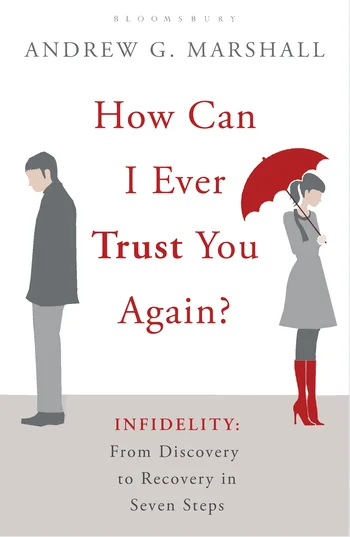
Few questions carry more weight after an affair comes to light than the one Andrew G. Marshall uses as his title. How Can I Ever Trust You Again? is written for the moment when a partner suddenly feels like a stranger, and its subtitle, Infidelity: From Discovery to Recovery in Seven Steps, sets out the promise: a staged path from the shock of finding out to a relationship that can be rebuilt, or a clearer decision if it cannot. Marshall, a UK marital therapist, wrote it for both sides of the affair, whether you discovered it or were discovered. My quick verdict: this is one of the most readable British guides to affair recovery.
Its main benefit is normalisation. By describing the stages couples typically pass through, from shock and disbelief to intense questioning, decision time, hope, attempted normality, despair and finally intense learning, Marshall helps partners see that their swings of feeling are part of a recognisable process rather than proof that recovery is impossible. As a counsellor, I find that framing useful for couples in the first chaotic months, because it gives each partner a map and a reason to keep going when progress feels like it is slipping backwards.
Affiliate Disclosure: As an Amazon Associate, I earn from qualifying purchases. The links below are affiliate links, meaning if you click and make a purchase, I may receive a small commission at no extra cost to you. This helps keep my counselling session costs affordable for my clients.
Therapist's Quick Verdict: This is the most readable UK guide to surviving an affair, for couples who want a staged map from discovery to recovery that speaks to both partners. Drawing on his work as a marital therapist and many case studies, Marshall explains the seven stages couples move through, what makes people vulnerable to affairs, eight types of affair and how understanding them helps with deciding whether to stay or go, and why some couples emerge stronger while others get derailed.
| Author | Andrew G. Marshall |
| Publication Year | 2011 (Bloomsbury paperback, 1st edition, 17 January 2011) |
| Key Themes | Discovering an affair, shock and disbelief, intense questioning, deciding whether to stay or go, eight types of affair, vulnerability to affairs, hope and attempted normality, despair and setbacks, intense learning, diversions and derailments in recovery, rebuilding trust |
| Who is this book best for | From a counselling perspective, this book is best for couples in the weeks and months after an affair has been discovered who want to understand what they are going through and whether their relationship can recover. If you are the partner who found out, Marshall helps you make sense of the chaos; if you are the partner who had the affair, he explains what your partner needs from you. I rate it highly because it is calm, practical and fair to both people, although it is psychoeducation rather than a research protocol. |
Key Features & Chapter Breakdown
The edition reviewed here is the Bloomsbury paperback (1st edition, ISBN-13 978-1408809464, 17 January 2011, 288 pages). After an introduction, the book is organised around the seven stages: Shock and Disbelief, Intense Questioning, Decision Time, Hope, Attempted Normality, Despair (subtitled Bodies Float to the Surface) and Intense Learning, followed by a section on diversions, derailments and dead-ends that can stall recovery.
According to the publisher, Marshall also explains what makes people more vulnerable to affairs, describes eight types of affair and why understanding your partner's affair is key to deciding whether to stay or go, offers ways to stop your imagination running wild when your mind goes into meltdown, and looks at why some couples come out stronger while others are derailed. Each chapter also includes a section for the unfaithful partner, and the author's site describes exercises for both partners to do together.
Review & Analysis
This practical UK guide stands out for its calm, even-handed approach to affair recovery:
- Strengths: Marshall's greatest strength is fairness. He writes for the betrayed partner and the unfaithful partner without judging either, which helps couples stay in the same conversation. The stage-by-stage structure turns an overwhelming experience into something more manageable, and his typology of affairs gives couples language for what happened and why.
- Author Credibility: According to his publisher, Andrew G. Marshall is a marital therapist with more than 25 years' experience at the time of publication and the author of I Love You But I'm Not in Love With You. His website says he has written more than twenty books on relationships, which have been translated into over twenty languages.
- Weaknesses: In my view, it is popular psychoeducation rather than a research-based programme like the Gottmans' work, and the 2011 voice occasionally feels a little brisk. The exercises are guidance rather than a week-by-week workbook. Couples facing ongoing deception or safety concerns will need more than a self-help book.
- Practical Applications: Couples can read the description of each stage separately, then each name the stage they think they are in and what would help them move forward.
- Current Relevance: Relevance in 2026 is high. Phones, messaging apps and social media make affairs easier to start and easier to discover, and the stages Marshall describes remain recognisable.
Pros and Cons
| Pros | Cons |
|---|---|
| Clear seven-stage map from discovery to recovery | Popular psychoeducation rather than a research-based programme |
| Guidance for both the betrayed and the unfaithful partner | Exercises are guidance, not a week-by-week programme |
| Explains eight types of affair to help with stay-or-go decisions | The 2011 popular-therapy voice can feel a little brisk |
Comparisons & Alternatives
Choose How Can I Ever Trust You Again? when an affair has been discovered and you want a calm, staged map of the recovery process that speaks to both partners and helps you decide whether to stay. Choose Infidelity: A Survival Guide by Rhys Lewis when the discovery is recent and you need a crisis roadmap for the first days and weeks, whether you rebuild or part. Choose After the Affair by Janis Abrahms Spring when you both want the deeper clinical classic on deciding whether to recommit and rebuilding trust and intimacy.
| Book | Focus | Best For |
|---|---|---|
| How Can I Ever Trust You Again? by Andrew G. Marshall Check price ❯❯ | Seven stages from discovering an affair to recovery | Couples working through an affair together, from either side |
| Infidelity: A Survival Guide by Rhys Lewis Read my review ❯❯ Check price ❯❯ | Crisis roadmap for the first days and weeks after discovery | Recent discovery, whether you rebuild or part |
| After the Affair by Janis Abrahms Spring Read my review ❯❯ Check price ❯❯ | Deciding whether to recommit and rebuilding trust and intimacy | Couples who both want to do the work of rebuilding |
Therapist's Buying Guide
When choosing a book after infidelity, start with where you are now. If there is violence, intimidation or coercive control, put your safety and professional support before any book. If you have only just found out, look for a crisis guide that helps you get through the first days without making irreversible decisions. If you are trying to understand the months ahead and whether your relationship can recover, choose a staged recovery guide that addresses both partners. If you have both decided to rebuild, look for a structured plan for restoring trust and intimacy, ideally alongside couples counselling.
FAQs
What are the seven stages in How Can I Ever Trust You Again?
Shock and disbelief, intense questioning, decision time, hope, attempted normality, despair and intense learning. Marshall uses them to show that the ups and downs after an affair follow a recognisable pattern.
Is the book for the betrayed partner or the unfaithful partner?
Both. The publisher describes it as offering guidance and support whether you discovered the affair or were discovered, and it is most useful when both partners read it.
What are the eight types of affair?
Marshall describes eight types of affair and argues that understanding which type your partner had is key to deciding whether to stay or go.
Will it tell us whether to stay together?
No book can make that decision for you, but Decision Time is one of the seven stages, and Marshall's discussion of affair types and of what derails recovery can help you make a more informed choice.
How does it differ from After the Affair?
Both are written by experienced therapists. Marshall offers a UK, stage-by-stage map of the whole journey from discovery to recovery, while Janis Abrahms Spring goes deeper into the decision to recommit and a structured plan for rebuilding trust and intimacy.
Conclusion
From a therapeutic perspective How Can I Ever Trust You Again? supports two key tasks: understanding the emotional stages that follow the discovery of an affair, and making a considered decision about whether and how to rebuild. Marshall's even-handed guidance gives both partners a shared map.
This book suits couples in the first months after an affair has come to light, as well as partners who feel stuck or derailed later in recovery.
The core strength is Marshall's ability to make a frightening experience feel understandable. The main outcome is a clear sense of where you are in the recovery process and what each partner can do to move forward. If the discovery is very recent, start with Infidelity: A Survival Guide, and if you both want to rebuild in depth, read After the Affair next.
Affiliate Disclosure: As an Amazon Associate, I earn from qualifying purchases. The links above are affiliate links, meaning if you click and make a purchase, I may receive a small commission at no extra cost to you. This helps keep my counselling session costs affordable for my clients. View the full Amazon Affiliate Disclosure.
About the Book Reviewer
Rhys Lewis MSc PgDip, is the founder of The Relationship Clinic Wales and a professionally qualified couples therapist.
He is the author of 300 Ways To Improve Your Relationship and Infidelity: A Survival Guide.
Rhys provides these reviews to help clients and readers find the most effective, evidence-based tools for relationship health. View his list of best relationship advice books for couples in 2026 here.
Connect with Rhys: