
Is It You, Me, or Adult A.D.D.? by Gina Pera: A Therapist's Review and Key Takeaways for Couples in 2026
Listen to this review on a podcast

As a relationship therapist, I've seen partners arrive exhausted by brilliance, forgetfulness, big feelings and broken follow-through - blaming themselves or each other for years before anyone names adult ADHD. The non-ADHD partner often feels gaslit by hyperfocus beside missed bills; the ADHD partner feels permanently criticised. My quick verdict is that Gina Pera's Is It You, Me, or Adult A.D.D.? remains one of the strongest literacy guides for couples who need accurate understanding before ordinary "communicate better" advice can work.
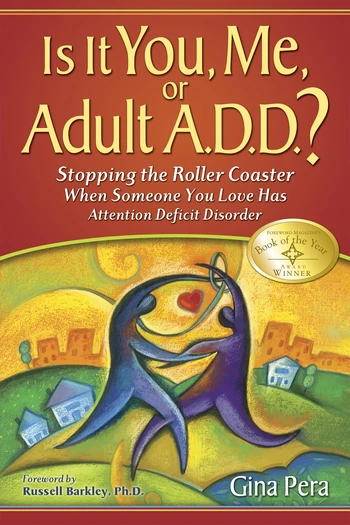
First published in 2008 by 1201 Alarm Press, with a foreword by Russell A. Barkley, PhD, the book walks partners through recognising adult ADHD, understanding how symptoms sabotage empathy and reliability, and pursuing treatment and practical strategies together. Pera writes as an award-winning journalist and educator informed by her own late-diagnosis marriage story, not as a licensed clinician - leaning on expert interviews and research. In sessions I use her framing to help couples stop moralising the roller coaster and ask whether untreated ADHD is defeating their best intentions. Main benefits are recognition, science-informed compassion, and treatment literacy that Amazon and independent reviewers still praise years on.
Affiliate Disclosure: As an Amazon Associate, I earn from qualifying purchases. The links below are affiliate links, meaning if you click and make a purchase, I may receive a small commission at no extra cost to you. This helps keep my counselling session costs affordable for my clients.
Therapist's Quick Verdict: This is the best comprehensive adult-ADHD literacy book for partners who need to stop the relationship roller coaster. It is designed for couples where undiagnosed or undertreated ADHD has made ordinary couples advice fail, leaving partners stuck in blame and confusion. It separates symptom effects from character judgements, filling the gap left by marriage books that never mention ADHD. Partners gain clear language for diagnosis, treatment options and practical strategies that protect the relationship while ADHD is addressed.
| Author | Gina Pera (foreword by Russell A. Barkley, PhD) |
| Publication Year | 2008 |
| Key Themes | Adult ADHD recognition, relationship roller coaster, executive function and empathy gaps, diagnosis and treatment literacy, partner strategies, hope after late diagnosis |
| Who is this book best for | In my clinical experience, this book is best for partners who suspect adult ADHD is driving chronic confusion, volatility and failed "talking it through". If you live with brilliance and broken follow-through in the same person, or if therapy has stalled because nobody named ADHD, this is my top literacy recommendation in the niche. The denser format suits readers who want thorough education before a short workbook, especially at mid-crisis recognition or early after diagnosis. |
Key Features & Chapter Breakdown
Library records list roughly 369 pages, ISBN-13 978-0981548708 (ASIN 0981548709), 1201 Alarm Press, 2008. Review summaries describe three parts: recognising ADHD and the roller coaster; understanding the disorder and management; then couple strategies. Graphics, tables, bibliography and partner anecdotes support the text; Barkley's foreword situates it for readers who trust established ADHD voices.
Early chapters focus on discovery - patterns that look like selfishness or laziness until a neurodevelopmental explanation fits better. Public reviews emphasise executive-function gaps that undermine listening, empathy and emotional regulation - skills ordinary couples work assumes. In clinic this maps to partners who say "we have tried every tip" while agreements still fail under stress.
Middle and later chapters unpack adult presentations - hyperfocus, emotional intensity, high-risk patterns - then turn to assessment, treatment literacy and couple strategies. Public reviews note Pera's reframe that strengths are independent of ADHD. At nearly 370 pages it is denser than many modern workbooks; Amazon themes praise recognition and hope, while some UK readers need to translate US treatment-access examples to NHS pathways.
Review & Analysis
This guide stands out for teaching partners to see adult ADHD as a relationship-relevant condition rather than a moral failure:
- Strengths: Pera's greatest strength is comprehensive literacy. She helps the non-ADHD partner stop over-personalising chaos and helps the ADHD partner seek assessment without drowning in shame. Public themes highlight empathy, clarity on why ordinary couples tactics fail when ADHD is untreated, and a hopeful tone. ForeWord INDIES 2008 gave Gold in Psychology and Silver in Family and Relationships; Amazon ratings commonly sit around the mid-4s. In clinic it accelerates psychoeducation from "is this character?" to "how do we design supports?"
- Weaknesses: Length can overwhelm flooded couples; some prefer a shorter rebuild first. Pera is a journalist-educator, not a treating clinician, so medical decisions need qualified practitioners. US-centric treatment access can frustrate UK NHS readers. The focus is ADHD rather than broad neurodivergence-and-attachment, and it is not a substitute for safety planning where abuse is present.
- Practical Applications: Couples can share recognition chapters to inventory symptoms versus reactive patterns, then take that list into GP or specialist referral conversations. Replace moral lectures with external supports - written agreements, reminders, shorter talks - while pursuing assessment. In therapy I often assign selected chapters and practise empathy statements that name ADHD effects without excusing harmful behaviour.
- Current Relevance: Relevance in 2026 remains strong as adult ADHD recognition rises and more couples discover ADHD after years of unexplained conflict. Pera stays a first-line literacy recommendation before a tighter marriage-rebuild plan. It pairs well with Melissa Orlov for six-step rebuild work and Brenda Emerson when rejection sensitivity and sensory load sit beside ADHD.
Pros and Cons
| Pros | Cons |
|---|---|
| Deep adult-ADHD literacy that helps partners stop moralising the roller coaster | Longer denser read than many modern ADHD-marriage workbooks |
| Empathic stories plus science-informed explanation; strong public review recognition | US treatment-access assumptions can frustrate some UK NHS readers |
| Clear why ordinary couples advice fails when ADHD is untreated or misunderstood | Not ideal as a sole resource where abuse, crisis or complex trauma dominate |
Comparisons & Alternatives
Choose Pera when you need thorough adult-ADHD education for partners before or alongside treatment. Choose The ADHD Effect on Marriage by Melissa Orlov when ADHD is already on the table and you want a tighter six-step marriage rebuild. Choose Anxious Attachment Recovery for Neurodivergent Minds by Brenda Emerson when the main struggle is anxious attachment, rejection sensitivity and sensory load rather than ADHD systems literacy. Pera is the deeper ADHD literacy companion; Orlov is the marriage-rebuild roadmap; Emerson is the neurodivergent attachment niche.
| Book | Focus | Best For |
|---|---|---|
| Is It You, Me, or Adult A.D.D.? by Gina Pera Check price ❯❯ | Adult ADHD literacy for partners and couples | Partners needing deeper diagnosis and treatment education |
| The ADHD Effect on Marriage by Melissa Orlov Read my review ❯❯ Check price ❯❯ | Six-step rebuild for ADHD-affected marriages | Couples stuck in parent-child and nagging cycles |
| Anxious Attachment Recovery for Neurodivergent Minds by Brenda Emerson Read my review ❯❯ Check price ❯❯ | Anxious attachment recovery for neurodivergent minds | ADHD/autistic adults healing rejection fear and overthinking |
Therapist's Buying Guide
When selecting neurodivergency in relationships books for ADHD-affected couples, look for titles that treat ADHD as a relational-system issue rather than a moral failing. Prioritise symptom-to-relationship translation, honest treatment literacy, and empathy for both partners without excusing harmful behaviour. Some couples need a dense education text first; others need a shorter rebuild sequence. Prefer resources that sit alongside counselling and discourage "fix the ADHD person only" thinking. Pera fits when partners still lack shared ADHD vocabulary; Orlov is often the next practical step.
FAQs
Is this book only for the non-ADHD partner?
No. It speaks to both partners. ADHD adults often gain language for patterns they disliked in themselves; partners gain compassion without abandoning accountability.
Can it replace couples therapy or medical treatment?
It is a strong self-help companion but not a replacement for therapy, ADHD assessment or prescribed treatment where those are needed.
Is Gina Pera a licensed therapist?
No. She is an award-winning journalist, educator and consultant on adult ADHD and relationships. Clinical care still belongs with qualified practitioners.
Is it suitable for UK readers?
Yes for recognition and relational patterns. Adapt treatment-access chapters to local NHS and private pathways, which can be slower than US examples suggest.
How does it compare with Melissa Orlov's book?
Pera is broader adult-ADHD education for partners; Orlov is more tightly organised as a six-step marriage rebuild. Many couples benefit from reading both over time.
Will it help if we already have a diagnosis?
Yes. Literacy still deepens empathy and follow-through; Orlov is often the practical next rebuild title after diagnosis.
How long does it take to work through?
Around 370 pages; many couples read over several weeks, or assign chapters selectively rather than finishing in one push.
Conclusion
From a therapeutic perspective this book offers a usable clinical roadmap for couples fighting about character when ADHD symptoms and partner reactions have been running the show. It reframes "laziness" and "selfishness" as executive-function and emotional-regulation challenges, then points partners toward assessment and treatment literacy rather than endless lectures. Clients who share a coherent ADHD map often make counselling more productive because the problem is named accurately.
It suits mid-life couples - and younger partners in the same loops - stuck between confusion, resentment and failed communication tips. The pain point is living with a spouse who can hyperfocus on interests yet miss relational follow-through, while you become the household manager you never intended to be. The denser format fits readers who want thorough understanding before a shorter workbook-style rebuild.
The core strength is partner-centred adult-ADHD literacy that moves couples from chronic misattribution toward shared understanding, treatment-informed hope and fairer expectations. The main outcome is less moralising conflict and more intentional partnership around ADHD realities. If adult ADHD may be shaping your relationship and generic advice has failed, I recommend Pera as a first-line literacy resource, then deepen marriage rebuild work with Orlov and attachment regulation work with Emerson when those layers sit beside the ADHD picture.
Affiliate Disclosure: As an Amazon Associate, I earn from qualifying purchases. The links above are affiliate links, meaning if you click and make a purchase, I may receive a small commission at no extra cost to you. This helps keep my counselling session costs affordable for my clients. View the full Amazon Affiliate Disclosure.
About the Book Reviewer
Rhys Lewis MSc PgDip, is the founder of The Relationship Clinic Wales and a professionally qualified couples therapist.
He is the author of 300 Ways To Improve Your Relationship and Infidelity: A Survival Guide.
Rhys provides these reviews to help clients and readers find the most effective, evidence-based tools for relationship health. View his list of best relationship advice books for couples in 2026 here.
Connect with Rhys: