
Nonviolent Communication by Marshall B. Rosenberg: A Therapist's Review and Key Takeaways for Couples in 2026
Listen to this review on a podcast

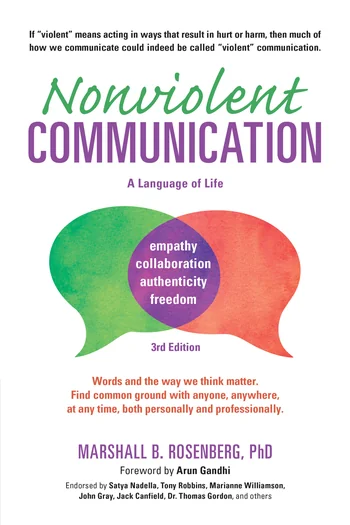
"You never listen to me." Few sentences start a row between partners faster, and Nonviolent Communication: A Language of Life is, at heart, a book about what to say instead. Marshall B. Rosenberg opens with his own childhood in Detroit in 1943, when race riots erupted near his home and he was beaten at school because of his name. Those experiences left him with two questions he spent his life exploring: what disconnects us from our compassionate nature, and what helps some people stay connected to it even under the most trying conditions? My quick verdict: this is the clearest introduction I know to a needs-based language for conflict, and one of the most useful books a blaming, defensive couple can read together.
The book's central claim is that much of our everyday speech, including judging, blaming, criticising and demanding, creates hurt and distance even when we do not intend it. Rosenberg's alternative is a four-part process: describe what you observe without evaluating it, say how you feel, name the need behind that feeling, and make a clear, doable request. In counselling I find this framing valuable for couples whose arguments are really competitions over who is right, because it moves the conversation from "what is wrong with you" to "what matters to each of us".
Affiliate Disclosure: As an Amazon Associate, I earn from qualifying purchases. The links below are affiliate links, meaning if you click and make a purchase, I may receive a small commission at no extra cost to you. This helps keep my counselling session costs affordable for my clients.
Therapist's Quick Verdict: This is the clearest guide to replacing blame and judgment with a language of feelings and needs, for couples whose arguments escalate through criticism and defensiveness. Rosenberg sets out a simple four-part process of observations, feelings, needs and requests, then shows it at work in dialogues from families, classrooms, workplaces and mediation, with later chapters on empathy, anger, self-compassion, conflict resolution and appreciation.
| Author | Marshall B. Rosenberg, PhD |
| Publication Year | 3rd edition, PuddleDancer Press, September 2015 |
| Key Themes | Life-alienating communication, observing without evaluating, a vocabulary for feelings, needs behind feelings, requests versus demands, empathic listening, self-compassion, expressing anger, conflict resolution and mediation, the protective use of force, appreciation |
| Who is this book best for | From a counselling perspective, this book is best for couples whose disagreements quickly turn into criticism, blame and defensiveness. If you both know what you want to say but it keeps coming out as an accusation, Rosenberg gives you a structure for saying it in a way your partner can actually hear. I rate it highly because it teaches a skill rather than a slogan, although it does need practice. |
Key Features & Chapter Breakdown
The edition reviewed here is the third edition paperback (ISBN-13 978-1892005281, PuddleDancer Press, 1 September 2015, 264 pages). Its fourteen chapters build the process step by step. The early chapters describe the habits that block compassion, such as moralistic judgments, comparisons and denying responsibility for our actions, then teach how to separate observations from evaluations, build a vocabulary for feelings, and take responsibility for our feelings by tracing them to our needs. The chapter on taking responsibility for our feelings also sets out four options for hearing a difficult message, which I find especially relevant when a partner's words land as criticism.
The middle chapters cover requests rather than demands, receiving others empathically, the power of empathy, and connecting compassionately with ourselves. Later chapters turn to expressing anger fully, conflict resolution and mediation, the protective use of force, liberating ourselves from old programming, and expressing appreciation. Many chapters include short exercises and "NVC in Action" dialogues, and the back pages summarise the four-part process and list basic feelings and needs.
Review & Analysis
This practical classic stands out for the way it turns empathy into a learnable language:
- Strengths: Rosenberg's greatest strength is clarity. Separating what happened from our judgment of it, and our feelings from what we think the other person did to us, gives couples a way to describe a problem without starting a fight. The many worked dialogues show the process under pressure rather than only in theory, and the lists of feelings and needs at the back are a handy reference for partners who struggle to put emotions into words.
- Author Credibility: Marshall B. Rosenberg, PhD (1934-2015) was a psychologist who first used the process in school integration projects in the 1960s and founded the Center for Nonviolent Communication in 1984. According to his publisher, he led trainings and peace programmes in many countries, including war-torn regions.
- Weaknesses: In my view, the process can feel awkward or scripted at first, and many readers note that it is easier to understand than to apply. It is a language discipline rather than a Gottman-style, couples-specific repair map, and many of its examples come from schools, workplaces and mediation rather than romantic relationships.
- Practical Applications: Couples can pick one recurring complaint and each rewrite it in four parts: what I saw or heard, how I felt, what I needed, and one specific request. Practising on small irritations first makes it easier to use when an argument is heated. Partners can then take turns reflecting back the feelings and needs they heard before giving their own view.
- Current Relevance: Relevance in 2026 is high. Text messages, social media and busy lives make it easy to fire off judgments, and Rosenberg's habit of slowing down to name feelings and needs is a useful counterweight.
Pros and Cons
| Pros | Cons |
|---|---|
| Clear four-part process with many real dialogues | Takes practice and can feel scripted at first |
| Needs-based language that reduces blame and defensiveness | Not a couples-specific research programme |
| Covers anger, empathy, self-compassion and mediation | Examples range well beyond romantic relationships |
Comparisons & Alternatives
Choose Nonviolent Communication when your arguments are driven by blame, criticism and defensiveness and you want a clear language for expressing feelings and needs and for listening with empathy. Choose Fight Right by Julie Schwartz Gottman and John Gottman when you want a research-based guide to conflict styles, repair attempts and turning arguments into connection. Choose Optimal Outcomes by Jennifer Goldman-Wetzler when you keep having the same fight and want tools for breaking a stuck conflict loop.
| Book | Focus | Best For |
|---|---|---|
| Nonviolent Communication by Marshall B. Rosenberg Check price ❯❯ | Observation, feeling, need and request language | Couples who escalate through blame and judgment |
| Fight Right by Julie Schwartz Gottman and John Gottman Read my review ❯❯ Check price ❯❯ | Conflict styles and repair attempts | Couples who want a research-based repair map |
| Optimal Outcomes by Jennifer Goldman-Wetzler Read my review ❯❯ Check price ❯❯ | Breaking stuck conflict loops | Couples caught in the same argument again and again |
Therapist's Buying Guide
When choosing a book on conflict, start with how your arguments go wrong. If there is violence, intimidation or coercive control, put your safety and professional support before any book. If the problem is how things are said, with blame, criticism and defensiveness, choose a book that teaches a new language for feelings and needs. If you want to understand your conflict styles and how to repair after a fight, or you keep circling the same argument, look for research-based repair or loop-breaking tools. Rosenberg suits couples who want to change how they speak and listen, and it pairs well with either comparison.
FAQs
What are the four parts of Nonviolent Communication?
Observations, feelings, needs and requests. You describe what happened without evaluating it, say how you feel, name the need connected to that feeling, and ask for a specific action that would help.
Is this book written specifically for couples?
No. Rosenberg applies the process to families, schools, workplaces, mediation and wider conflicts as well as intimate relationships. Couples can still use every step, but they will need to translate some examples to their own situation.
Does it help with anger?
Yes. A full chapter on expressing anger distinguishes what triggers our anger from its cause and sets out steps for expressing anger fully without blaming, including offering empathy first and taking our time.
Will it make our conversations sound scripted?
At first it may. The four steps can feel formal until they become habit. Rosenberg presents them as a way of focusing attention rather than a fixed formula, so couples can find their own natural wording over time.
How does it differ from Fight Right?
Fight Right draws on the Gottmans' research into couples' conflict styles and repair attempts. Nonviolent Communication is a broader communication method built around feelings and needs. Many couples benefit from using both.
Conclusion
From a therapeutic perspective Nonviolent Communication supports two key tasks: noticing the judgments and demands that turn disagreements into fights, and learning to express and hear feelings and needs so that both partners feel understood. Rosenberg's step-by-step process gives couples concrete words to try.
This book suits couples who argue through criticism and defensiveness, as well as those who simply want to listen to each other better.
The core strength is Rosenberg's ability to make empathy practical. The main outcome is a shared language for feelings, needs and requests that lowers the temperature of conflict and helps both partners feel heard. If you want a research-based repair map as well, read Fight Right next, and if you keep repeating the same argument, turn to Optimal Outcomes.
Affiliate Disclosure: As an Amazon Associate, I earn from qualifying purchases. The links above are affiliate links, meaning if you click and make a purchase, I may receive a small commission at no extra cost to you. This helps keep my counselling session costs affordable for my clients. View the full Amazon Affiliate Disclosure.
About the Book Reviewer
Rhys Lewis MSc PgDip, is the founder of The Relationship Clinic Wales and a professionally qualified couples therapist.
He is the author of 300 Ways To Improve Your Relationship and Infidelity: A Survival Guide.
Rhys provides these reviews to help clients and readers find the most effective, evidence-based tools for relationship health. View his list of best relationship advice books for couples in 2026 here.
Connect with Rhys: