
Not Just Friends by Shirley P. Glass: A Therapist's Review and Key Takeaways for Couples in 2026
Listen to this review on a podcast

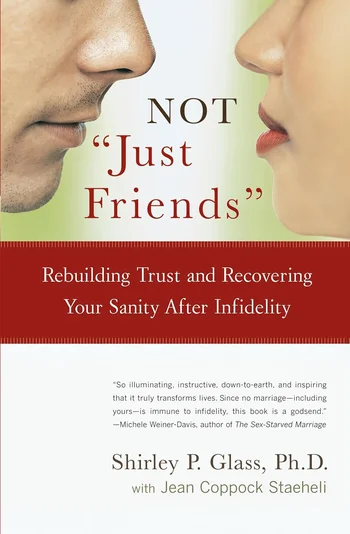
"We're just friends." Few sentences come up more often in my counselling room, and few do more damage when they turn out not to be true. Many of the affairs I help couples recover from did not start with a plan to cheat. They began with a colleague, an old flame on social media or a sympathetic confidant, and slid across a line neither person noticed until it was far behind them. Shirley P. Glass, the US psychologist and researcher the New York Times called "the godmother of infidelity research", built this book around that pattern. Drawing on decades of studies and her own clinical caseload, she shows how good people in good marriages drift into emotional and sexual betrayal, and how couples can recover. My quick verdict: this is the best book I know for understanding emotional affairs, and one of the most useful for couples who want a research-based path to rebuilding trust.
Its main benefits are clarity and evidence. Glass treats discovery as a genuine trauma for the betrayed partner, explains why the involved partner must become part of the healing, and gives both of them a shared language for what went wrong. In sessions I use her image of "walls and windows" all the time: in an affair, a wall goes up against the partner and a window opens to someone else, and recovery means putting the window back between the couple and building a solid wall against the affair partner. Couples grasp that picture quickly, and it turns a vague sense of betrayal into concrete changes they can make. I hold a traditional view that faithfulness matters, and Glass, who describes her own long marriage, writes from the same conviction.
Affiliate Disclosure: As an Amazon Associate, I earn from qualifying purchases. The links below are affiliate links, meaning if you click and make a purchase, I may receive a small commission at no extra cost to you. This helps keep my counselling session costs affordable for my clients.
Therapist's Quick Verdict: This is the best research-based book for understanding emotional affairs and how friendships at work or online cross into infidelity. It combines decades of infidelity research with a trauma-informed recovery plan, guiding betrayed and involved partners from discovery through telling the full story to rebuilding trust. The walls and windows model gives couples a clear map of emotional boundaries and relational dynamics. It solves a problem many affair books skip: explaining how an affair happens in a good marriage, and what boundaries protect the relationship from here on.
| Author | Shirley P. Glass, PhD (with Jean Coppock Staeheli) |
| Publication Year | 2004 (Atria paperback) |
| Key Themes | Emotional affairs, workplace and online infidelity, boundaries in friendships, walls and windows, betrayal trauma, telling the affair story, rebuilding trust, affair prevention |
| Who is this book best for | In my clinical experience, this book is best for couples confused by an emotional, workplace or online affair who want to understand how it happened and rebuild trust. If your partner insists "nothing physical happened", or you are the one who never meant a friendship to go so far, Glass explains exactly how that slide occurs. The research-led chapters and case stories suit readers who want facts as well as comfort, and the book is just as useful for couples who want to set safer boundaries before anything goes wrong. I rate it highly because it validates the betrayed partner's trauma while giving both partners a clear way forward. |
Key Features & Chapter Breakdown
The paperback runs to 448 pages (ISBN-13 978-0743225502, Atria, published February 2004). Glass wrote it with Jean Coppock Staeheli, credited by the publisher. It is organised in three parts, moving from how affairs begin, through the crisis of discovery, to repair, and closes with an Afterword that sums up strategies for protecting a relationship against future betrayal.
The early chapters tackle what Glass calls the new crisis of infidelity: affairs that grow out of genuine friendships at work, online or in social circles. She challenges common myths, such as the belief that affairs only happen in unhappy marriages or that being a loving partner is enough protection, and describes the warning signs of a friendship slipping into an emotional affair, especially secrecy and emotional intimacy that exceeds what is shared at home.
The middle section addresses discovery. Glass frames the betrayed partner's obsessive thinking, flashbacks and sleeplessness as normal trauma reactions, and explains the involved partner's divided loyalties. She sets out how to re-establish safety and goodwill in the first weeks, including ending contact with the affair partner. I find this framing calms many betrayed partners who fear they are "going crazy".
The final section is about healing. Glass argues that couples recover best when the full story is told in an atmosphere of empathy rather than interrogation, and that exploring the individual, relational and social vulnerabilities behind the affair is vital. She covers forgiveness, handling an affair partner who keeps making contact, what to tell children, and how to judge whether a marriage can be saved. The walls and windows model runs throughout.
Review & Analysis
This research-led classic stands out for explaining how affairs actually begin:
- Strengths: Glass's greatest strength is credibility. She grounds her guidance in her own studies and clinical work rather than opinion, and reader reviews repeatedly describe the book as informative, straight-talking and validating. Betrayed partners often say it finally explained why they feel the way they do. In my practice, the walls and windows model helps couples agree on concrete boundary changes instead of arguing about intentions.
- Weaknesses: The book dates from 2004, so it predates smartphones and social media as we know them, and some reader reviews note that it feels slightly dated and American in its examples. A few readers find the statistics heavy going, and some of the survey samples are small. Practical exercises exist but are spread through a long book, which is why the practicality score sits below the therapist rating.
- Practical Applications: Couples can draw their own walls and windows: each partner sketches where openness and secrecy sat during the affair and where they need to sit now. The involved partner can agree specific transparency steps, such as ending contact and sharing information freely, while the betrayed partner notes which questions still need answers. Reading a section each and then discussing it calmly, without interrogation, mirrors the empathic storytelling Glass recommends.
- Current Relevance: Relevance in 2026 is arguably greater than when it was written. Messaging apps, social media and remote working have multiplied the "just friends" connections Glass warned about. Her core insight, that secret emotional intimacy is the first warning sign, applies directly to the online and workplace affairs I now see most often in clinic.
Pros and Cons
| Pros | Cons |
|---|---|
| Explains clearly how innocent friendships slide into emotional affairs | Written before smartphones and social media became central |
| Research-based, trauma-informed guidance for both partners | Statistics and survey data can feel heavy or dated |
| Memorable walls and windows model for rebuilding boundaries | Long book with exercises spread throughout |
Comparisons & Alternatives
Choose Glass when you need to understand how an emotional, workplace or online affair developed and which boundaries will protect your relationship from now on. Choose Infidelity: A Survival Guide by Rhys Lewis (my own book) when discovery is recent and you need a practical crisis roadmap for the first days and weeks, whether you rebuild or part. Choose After the Affair by Janis Abrahms Spring when you have decided to try again and want a structured, stage-by-stage plan for earning back trust and intimacy. The Survival Guide steadies the crisis; Glass explains how it happened; Spring shows how to rebuild.
| Book | Focus | Best For |
|---|---|---|
| Not Just Friends by Shirley P. Glass Check price ❯❯ | How emotional affairs develop and how to recover | Couples confused by an emotional, workplace or online affair |
| Infidelity: A Survival Guide by Rhys Lewis Read my review ❯❯ Check price ❯❯ | Acute crisis roadmap for affair recovery | Couples in the first weeks after discovery needing practical steps |
| After the Affair by Janis Abrahms Spring Read my review ❯❯ Check price ❯❯ | Step-by-step trust and intimacy rebuilding | Couples deciding to recommit after an affair |
Therapist's Buying Guide
When choosing an infidelity book, start with what you most need right now. In the first raw weeks, a practical crisis guide on safety, emotional regulation and short-term decisions usually helps most. If you are struggling to understand how a friendship became an affair, look for an author who explains emotional infidelity with real research rather than moral judgement. Once you are rebuilding, favour clinician-written books with concrete steps for both partners. Glass fits the understanding and boundary-setting stage, and also suits couples focused on prevention.
FAQs
Does an emotional affair count as infidelity?
Glass argues that it can. She defines infidelity as emotional or sexual intimacy that violates trust, so secret emotional closeness can be as damaging as a physical affair.
What are walls and windows?
It is Glass's image for emotional boundaries. Healthy couples keep a window open between them and a wall against outsiders; an affair reverses this, and recovery puts them back in place.
Is it for the betrayed partner or the one who had the affair?
Both, and it also speaks to the affair partner. Many couples read it together, though betrayed partners often start first.
Is it out of date?
Some examples and statistics are dated, but its central message about how friendships slide into affairs fits today's online and workplace affairs very well.
Can it help prevent an affair?
Yes. Glass describes the warning signs of a friendship becoming unsafe and the boundaries that protect a relationship, which makes it useful for couples who have not experienced infidelity.
How long is it?
The paperback is 448 pages. Many readers dip into the sections most relevant to them rather than reading straight through.
Conclusion
From a therapeutic perspective Not Just Friends supports two essential pieces of affair recovery: understanding how the betrayal happened, and rebuilding the boundaries that keep a relationship safe. Glass's trauma-informed approach helps betrayed partners make sense of overwhelming reactions, while her emphasis on honest, empathic storytelling mirrors the middle phase of real-world couples therapy.
This book suits couples shaken by an emotional, workplace or online affair, especially when one partner insists it was "just a friendship". It speaks to the pain of feeling betrayed without clear proof of a physical affair, and to involved partners who never meant to cross a line. Its research-led style fits readers who want evidence alongside reassurance.
The core strength is Glass's clear, evidence-based account of how affairs begin. The main outcome is a shared understanding of where the walls and windows in your relationship went wrong, and a plan to put them right. If discovery is recent, start with Infidelity: A Survival Guide, read Glass to understand what happened, then turn to After the Affair to rebuild.
Affiliate Disclosure: As an Amazon Associate, I earn from qualifying purchases. The links above are affiliate links, meaning if you click and make a purchase, I may receive a small commission at no extra cost to you. This helps keep my counselling session costs affordable for my clients. View the full Amazon Affiliate Disclosure.
About the Book Reviewer
Rhys Lewis MSc PgDip, is the founder of The Relationship Clinic Wales and a professionally qualified couples therapist.
He is the author of 300 Ways To Improve Your Relationship and Infidelity: A Survival Guide.
Rhys provides these reviews to help clients and readers find the most effective, evidence-based tools for relationship health. View his list of best relationship advice books for couples in 2026 here.
Connect with Rhys: