
Should I Stay or Should I Go? by Ramani Durvasula: A Therapist's Review and Key Takeaways for Couples in 2026
Listen to this review on a podcast

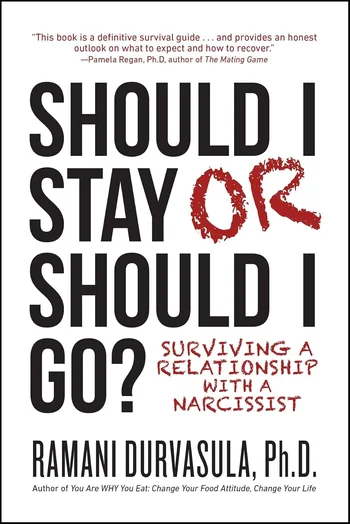
Few questions weigh more heavily than the one in this book's title. Dr Ramani Durvasula wrote Should I Stay or Should I Go? for people who suspect their partner is a narcissist and are stuck between two painful options: staying and hoping, or leaving and grieving. Durvasula is a licensed clinical psychologist, Professor Emerita of Psychology at California State University, Los Angeles, and a clinician in private practice, and she has since become one of the best-known voices on narcissism worldwide. What makes this book different from many on the subject is that it does not tell every reader to leave. It sets out what life with a narcissistic partner is realistically like, then gives a chapter to each choice. My quick verdict: this is the clearest, most honest decision guide I know for anyone asking whether a relationship with a narcissist can be survived, and what surviving it would really cost.
Its main benefits are clarity and realism. Durvasula's central message is that pathological narcissism is a stubborn pattern that rarely changes in any deep way, and that much of a partner's exhaustion comes from hoping it will. She calls this hope the rescue fantasy and asks readers to replace it with managed expectations. As a counsellor who believes commitment deserves real effort, I value that she does not dismiss staying. She treats it as a legitimate choice for people with children, finances, faith or love keeping them in place, while being frank that staying means changing what you expect rather than waiting for your partner to change.
Affiliate Disclosure: As an Amazon Associate, I earn from qualifying purchases. The links below are affiliate links, meaning if you click and make a purchase, I may receive a small commission at no extra cost to you. This helps keep my counselling session costs affordable for my clients.
Therapist's Quick Verdict: This is the most balanced survival guide for deciding whether to stay in or leave a relationship with a narcissist. Durvasula uses checklists, clinical insight and real stories to help readers recognise pathological narcissism, understand how they were drawn in and how the relationship makes them feel, and let go of the hope that love will transform their partner. She then offers practical strategies for staying, including managing expectations and a simple rule for what to share, and a frank guide to the practical and emotional work of leaving and recovering.
| Author | Ramani S. Durvasula, PhD |
| Publication Year | 2015 (first published in hardback by Post Hill Press); paperback reprint October 2017 |
| Key Themes | Pathological narcissism, red flags and checklists, why we are drawn to narcissists, the emotional toll on partners, letting go of the rescue fantasy, managing expectations, the decision to stay, preparing to leave, healing and recovery |
| Who is this book best for | From a counselling perspective, this book is best for partners who suspect they are with a narcissist and need an honest framework for deciding whether to stay or leave. If you keep hoping that one more conversation, one more sacrifice or one more year will change your partner, Durvasula explains why that hope keeps you stuck and what each path realistically involves. I rate it highly because it respects the reader's right to choose. |
Key Features & Chapter Breakdown
The current paperback is a reprint edition of 288 pages (ISBN-13 978-1682613337, Post Hill Press, published 24 October 2017), following the original 2015 hardback. It opens with one couple's story under the heading Is This You?, inviting readers to ask whether any of it sounds familiar.
The early chapters explain the difference between healthy self-regard and pathological narcissism, offer a checklist of traits and red flags, and look at how charm and unpredictable affection draw partners in and how the relationship can leave them feeling never good enough. The turning point is the chapter on letting go of the rescue fantasy. Durvasula then gives a chapter to staying, built around managing expectations, outside support, self-care and a simple Three-Part Rule for what to share, and a chapter to going, covering practical preparation, the barriers to leaving and the likelihood of no closure. A final chapter looks at recovery, whichever path the reader takes.
Review & Analysis
This clinician-written guide stands out for its honesty about both choices:
- Strengths: Durvasula's greatest strength is that she refuses to sell a fairy tale in either direction. She is clear that narcissism rarely changes, yet she does not shame readers who stay. That balance is rare in this genre.
- Author Credibility: Durvasula completed her doctorate in clinical psychology at UCLA, is Professor Emerita of Psychology at California State University, Los Angeles, and works in private practice. The book draws on her research on personality disorders and her clinical work.
- Weaknesses: Some readers and commentators feel the message that narcissists do not change is too absolute, and that it leaves little room for the partner who does genuine work in therapy. The book is written for a US audience, so its practical advice on leaving, including legal and financial steps, needs translating to the UK. Readers who have already left may want more on recovery than the final chapters provide.
- Practical Applications: Readers can work through the checklist privately and note which behaviours they see most often, then try the Three-Part Rule for a fortnight: share good news with a supportive friend first, keep bad news short and factual with their partner, and notice how conversations change.
- Current Relevance: Relevance in 2026 is high. Narcissism is now discussed constantly online, often loosely. Durvasula offers a grounded, clinician-led way to answer that question and, more importantly, to decide what to do next.
Pros and Cons
| Pros | Cons |
|---|---|
| Balanced guidance on both staying and leaving | Firm view that narcissists rarely change may feel too absolute |
| Checklists and plain language that cut through confusion | US-focused practical and legal advice |
| Practical tools such as the Three-Part Rule for staying | Less depth on long-term recovery after leaving |
Comparisons & Alternatives
Choose Durvasula when you are still deciding whether to stay or go and need an honest picture of what each choice involves. Choose Disarming the Narcissist by Wendy T. Behary when you want to stay, at least for now, and learn schema-therapy communication skills such as empathic confrontation and limit setting. Behary is more hopeful about improving the dynamic through how you respond, while Durvasula focuses on managing expectations because the partner is unlikely to change. Choose How to Divorce a Narcissist by Diana Jordan when you have decided to leave and need practical guidance on the UK family court.
| Book | Focus | Best For |
|---|---|---|
| Should I Stay or Should I Go? by Ramani Durvasula Check price ❯❯ | Deciding whether to stay or leave | Partners who are unsure what to do |
| Disarming the Narcissist by Wendy T. Behary Read my review ❯❯ Check price ❯❯ | Communicating with a narcissist | Partners who want to stay and be heard |
| How to Divorce a Narcissist by Diana Jordan Read my review ❯❯ Check price ❯❯ | Divorce and the family court | Partners who have decided to separate |
Therapist's Buying Guide
When choosing a book about narcissism in relationships, start with your safety and your goal. If there is violence, intimidation or coercive control, prioritise safety planning and professional support before any book; Durvasula herself urges readers in abusive situations to seek help straight away. If you are unsure whether to stay or go, choose a clinician-written guide that describes both paths honestly. If you want to stay, look for practical communication skills. If you have decided to leave, choose guidance on separation in your own legal system. Durvasula fits readers who need help with the decision itself.
FAQs
Does the book tell you to leave a narcissistic partner?
No. Durvasula sets out the realities of both choices and gives a chapter each to staying and going. She is clear that the partner is unlikely to change, but she accepts that many readers have good reasons to stay.
What is the rescue fantasy?
It is the belief that enough love, patience or sacrifice will transform a narcissistic partner. Durvasula argues that letting go of this hope is the first step to protecting yourself, whatever you decide.
What is the Three-Part Rule?
It is a guide to what to share if you stay: take good news to people who will celebrate it, keep bad news brief, and use neutral topics for everyday conversation, so you are less exposed to dismissal or blame.
Is it suitable if my relationship is abusive?
The book can help you understand what is happening, but Durvasula urges anyone facing physical abuse to seek help immediately. If you feel unsafe, contact professional and safety support first.
Is the advice relevant in the UK?
The psychological guidance applies anywhere. The practical steps for leaving are written for a US audience, so UK readers should take legal and financial advice locally.
Conclusion
From a therapeutic perspective Should I Stay or Should I Go? supports two key tasks: seeing a narcissistic relationship as it really is, and making a decision about it from a place of clarity rather than hope or guilt. Durvasula's emphasis on managed expectations, outside support and self-care helps readers stop pouring energy into changing their partner and start protecting their own wellbeing.
This book suits partners who feel confused, drained or not good enough and cannot decide what to do. Its checklists and plain language suit readers who want answers they can apply, not theory.
The core strength is Durvasula's honest, non-judgemental clinical voice. The main outcome is a realistic understanding of pathological narcissism and a clear framework for deciding whether to stay or go. If you choose to stay and want communication skills, read Wendy Behary next, and if you decide to separate, turn to Diana Jordan.
Affiliate Disclosure: As an Amazon Associate, I earn from qualifying purchases. The links above are affiliate links, meaning if you click and make a purchase, I may receive a small commission at no extra cost to you. This helps keep my counselling session costs affordable for my clients. View the full Amazon Affiliate Disclosure.
About the Book Reviewer
Rhys Lewis MSc PgDip, is the founder of The Relationship Clinic Wales and a professionally qualified couples therapist.
He is the author of 300 Ways To Improve Your Relationship and Infidelity: A Survival Guide.
Rhys provides these reviews to help clients and readers find the most effective, evidence-based tools for relationship health. View his list of best relationship advice books for couples in 2026 here.
Connect with Rhys: