
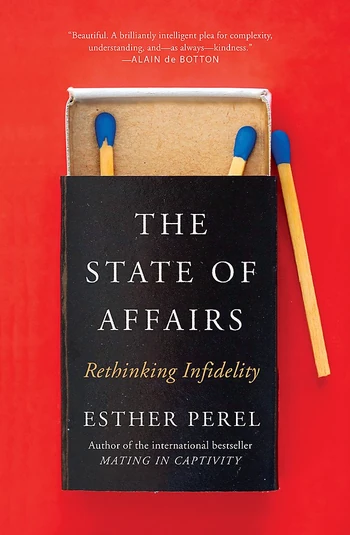
The State of Affairs: Rethinking Infidelity by Esther Perel: A Therapist's Review and Key Takeaways for Couples in 2026
Listen to this review on a podcast

Two people sit on my clinic sofa a week after discovery, and the questions they bring are almost always the same: who, how long, how could you? Esther Perel's The State of Affairs adds a harder and, in my experience, more healing question - what did the affair mean, to the person who strayed and to the relationship they share? Perel, the Belgian-born, New York-based psychotherapist behind Mating in Captivity and the podcast Where Should We Begin?, treats infidelity as both a real betrayal and a window into longing, loss and modern expectations of love. My quick verdict is that this is the most intelligent book on why affairs happen that I can hand to a couple, provided they also have a practical plan for the first raw weeks.
Its main benefits are depth, compassion and range. Perel listens to the betrayed partner, the partner who had the affair and, unusually, the lover, without collapsing any of them into villain or victim. In sessions I draw on her framing when a couple is stuck in an endless loop of forensic questions about dates and messages. Shifting gently from "what did you do?" toward "what were you looking for, and what has it cost us?" often lowers the temperature enough for real repair to begin. I hold a traditional view that commitment and honesty matter, and Perel does not argue otherwise; she simply refuses to let the conversation end at condemnation.
Affiliate Disclosure: As an Amazon Associate, I earn from qualifying purchases. The links below are affiliate links, meaning if you click and make a purchase, I may receive a small commission at no extra cost to you. This helps keep my counselling session costs affordable for my clients.
Therapist's Quick Verdict: This is the best book for understanding why affairs happen and what they mean for couples deciding whether to rebuild after betrayal. It works as a meaning-making companion rather than a crisis manual, helping both partners explore motives, desire, secrecy and jealousy without excusing the hurt. Perel offers a clinically rich lens on relational dynamics that complements, rather than replaces, a structured recovery roadmap. It fills the gap left by advice that stops at blame and never asks what the affair revealed about longing, deadness or unmet needs.
| Author | Esther Perel |
| Publication Year | 2017 (UK Yellow Kite paperback) |
| Key Themes | Meaning of affairs, betrayal and trust, jealousy and desire, secrecy and disclosure, emotional and digital infidelity, monogamy and modern marriage, life after an affair |
| Who is this book best for | In my clinical experience, this book is best for couples past the first shock of discovery who want to understand why the affair happened and what it means before deciding whether to rebuild. If you keep asking how someone who seemed happy could cheat, or whether an emotional or online affair "counts", Perel gives you language for both. The essay-style chapters suit reflective readers in the meaning-making stage of affair recovery, and they work well alongside counselling or a practical crisis guide. I rate it highly because it turns repetitive arguments into conversations that actually go somewhere. |
Key Features & Chapter Breakdown
The UK Yellow Kite paperback runs to around 336 pages (ISBN-13 978-1473673540, published October 2017) and is organised into four parts and fifteen chapters. Perel writes in short, story-led essays drawn from her clinical sessions and conversations with people touched by affairs, weaving anonymised experiences through each theme.
Part One, Setting the Stage, opens a new conversation about marriage and infidelity, asks how we define cheating in an age of texting and secret apps, and traces how affairs have changed as marriage has shifted from economic arrangement to the place we expect to find romance, friendship and identity. In clinic this section helps couples who disagree about whether a hidden online relationship "counts" to agree on a shared definition before they argue about anything else.
Part Two, The Fallout, is the most immediately relevant for betrayed partners. Perel explores why betrayal hurts so deeply when a partner is expected to be everything, whether some affairs wound more than others, jealousy as both pain and a strange spark of eros, the pull between self-blame and revenge, and the politics of telling or keeping secrets. I find her treatment of disclosure especially useful when an unfaithful partner is weighing whether to confess, though readers should know she does not offer a single rule.
Part Three, Meanings and Motives, holds the book's best-known idea: that even happy people cheat, and that an affair is often less a search for another person than for another version of oneself. Chapters look at the lure of the forbidden as an antidote to deadness, whether sex is ever just sex, how affairs compare with other marital betrayals such as neglect or contempt, and the dilemma of the lover. This is the section that most changes the tone in my sessions, because it lets the unfaithful partner explain without the explanation becoming an excuse.
Part Four, Ever After, questions monogamy and modern marriage and then turns to the legacy of an affair. Perel describes recovery as moving through crisis, meaning-making and a visioning stage where a couple decides what comes next, together or apart, and suggests some couples effectively build a second relationship with the same person.
Review & Analysis
This modern classic stands out for treating infidelity as a human story rather than a moral checklist:
- Strengths: Perel's greatest strength is range and nuance. She holds the pain of the betrayed partner with real care while still asking what the affair meant to the person who strayed, and she gives rare space to the lover's experience. Her writing is vivid and readable. In my practice it helps couples move from interrogation to understanding, which is usually the turning point between endless rumination and genuine repair.
- Weaknesses: Readers seeking a step-by-step protocol will not find one; there are few worksheets, timelines or day-by-day tasks, which is why I score practicality below the therapist rating. Perel can unsettle couples who want black-and-white condemnation of the unfaithful partner, and her open discussion of consensual non-monogamy may not suit every value system. It is not an "affair-proof your marriage" manual.
- Practical Applications: Used well, the book is a conversation engine. Couples can read a chapter separately, then each note one passage that moved them and one that angered them before discussing it within an agreed time limit. The chapters on secrecy, jealousy and meaning offer new questions to ask in place of repeated forensic detail - what was missing, what was found, and what each of you wants now. I often pair it with a structured recovery guide so the couple has both a plan for the crisis and a language for meaning.
- Current Relevance: Relevance in 2026 remains high. Smartphones, social media and private messaging have blurred the line between friendship, flirtation and betrayal, and Perel's chapter on defining infidelity speaks directly to emotional and online affairs. Her wider point - that modern couples ask one partner to meet needs a whole village once met - still explains much of the pressure I see in long-term relationships today.
Pros and Cons
| Pros | Cons |
|---|---|
| Rich meaning-making lens on why affairs happen, even in happy relationships | Few step-by-step exercises or recovery timelines |
| Compassionate voice for betrayed partners, unfaithful partners and lovers | Can unsettle readers seeking clear-cut condemnation |
| Readable, story-led essays from a highly experienced psychotherapist | Open discussion of non-monogamy may not suit every couple's values |
Comparisons & Alternatives
Choose Perel when you are past the first shock and want to understand what the affair meant and how desire, secrecy and betrayal interact. Choose Infidelity: A Survival Guide by Rhys Lewis (my own book) when you need an acute crisis roadmap with practical steps for the days and weeks after discovery, whether you rebuild or part. Choose Navigating Infidelity: Raw and Provocative Writings by M N Borromeo when you want a raw first-person emotional companion that validates the pain without forcing forgiveness. Perel is the cultural and meaning-making lens; the Survival Guide the crisis plan; Borromeo the emotional companion.
| Book | Focus | Best For |
|---|---|---|
| The State of Affairs: Rethinking Infidelity by Esther Perel Check price ❯❯ | Meaning of affairs, desire, betrayal and modern marriage | Couples seeking understanding beyond blame after discovery |
| Infidelity: A Survival Guide by Rhys Lewis Read my review ❯❯ Check price ❯❯ | Acute crisis roadmap for affair recovery | Couples in the first weeks after discovery needing practical steps |
| Navigating Infidelity: Raw and Provocative Writings by M N Borromeo Read my review ❯❯ Check price ❯❯ | Raw first-person reflections on betrayal and healing | Individuals needing emotional validation without forced forgiveness |
Therapist's Buying Guide
When choosing infidelity books for affair recovery, match the book to your stage. In the acute crisis phase, prioritise practical structure: guidance on emotional regulation, safety, disclosure and short-term decisions. Once the shock settles, look for books that explore meaning and motive without excusing the betrayal. Favour authors with real clinical experience, honest discussion of emotional and digital affairs, and an approach that leaves room for either rebuilding or separating well. Perel fits the meaning-making stage; pair her with a crisis guide if discovery is recent.
FAQs
Does Esther Perel excuse cheating?
No. She is clear that affairs cause real harm; her aim is to understand motives so couples can repair or part with insight, not to justify the betrayal.
Should I read it straight after discovering an affair?
Many betrayed partners find it more helpful a few weeks in, once the acute shock has eased. In the first raw days a practical crisis guide such as Infidelity: A Survival Guide is usually the better starting point.
Is it for the betrayed partner or the partner who had the affair?
Both. Perel writes for betrayed partners, unfaithful partners and even the lover, which makes it a useful shared read for couples in counselling.
Does it cover emotional and online affairs?
Yes. An early chapter asks how infidelity should be defined in the digital age, including secret messaging, sexting and emotional affairs.
Does Perel promote open relationships?
She discusses consensual non-monogamy as part of a wider rethink of monogamy, but she does not tell couples to adopt it. Readers can take or leave that section according to their values.
How does it compare with Infidelity: A Survival Guide?
Perel explores the meaning of affairs; the Survival Guide gives a step-by-step roadmap for the crisis. Many couples benefit from reading both, crisis guide first.
How long is it?
The UK paperback is around 336 pages across fifteen chapters. Most readers finish it in one to two weeks, and it rewards being discussed a chapter at a time.
Conclusion
From a therapeutic perspective The State of Affairs supports the meaning-making work that sits at the heart of affair recovery. Perel helps couples move from rumination and interrogation toward curiosity about motive, desire and unmet needs, which supports emotional regulation and more honest communication. It mirrors the middle phase of real-world couples therapy, once the crisis has steadied and both partners are ready to look at what the affair revealed.
This book suits couples who are past the first shock of discovery and keep circling the question of why. It speaks to the pain point of feeling that the story of your relationship no longer makes sense, and to unfaithful partners who struggle to explain themselves without sounding defensive. The essay format fits reflective readers who prefer insight and conversation to worksheets.
The core strength is Perel's compassionate, intelligent reframing of infidelity. The main outcome is a deeper shared understanding of what the affair meant, so you can decide with clarity whether and how to rebuild. If you are in the acute crisis phase, start with a practical roadmap such as Infidelity: A Survival Guide, keep Borromeo close for emotional companionship, and read Perel when you are ready to make sense of what happened.
Affiliate Disclosure: As an Amazon Associate, I earn from qualifying purchases. The links above are affiliate links, meaning if you click and make a purchase, I may receive a small commission at no extra cost to you. This helps keep my counselling session costs affordable for my clients. View the full Amazon Affiliate Disclosure.
About the Book Reviewer
Rhys Lewis MSc PgDip, is the founder of The Relationship Clinic Wales and a professionally qualified couples therapist.
He is the author of 300 Ways To Improve Your Relationship and Infidelity: A Survival Guide.
Rhys provides these reviews to help clients and readers find the most effective, evidence-based tools for relationship health. View his list of best relationship advice books for couples in 2026 here.
Connect with Rhys: