
What Makes Love Last? by John Gottman and Nan Silver: A Therapist's Review and Key Takeaways for Couples in 2026
Listen to this review on a podcast

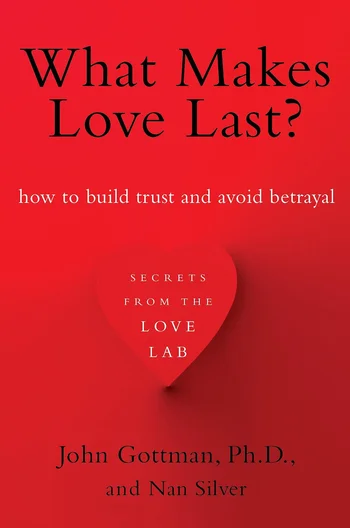
A chalk mark on a car tyre is one of the most telling images in What Makes Love Last? In the introduction, John Gottman describes a man who marked his wife's rear tyres to check whether she had gone out, then flew into a jealous rage over a forgotten trip to the post office. For Gottman, that is life without trust: exhausting detective work that drains both partners. He is the psychologist behind the University of Washington facility nicknamed the Love Lab, and wrote this book with Nan Silver, his co-author on The Seven Principles for Making Marriage Work. It was first published in 2012. My quick verdict: this is the most readable route into Gottman's research on trust and betrayal, and one I would like couples to read before a crisis rather than after one.
Its main benefit is a change of focus. Gottman argues that betrayal is the hidden killer of failing relationships, and that it reaches far wider than affairs: a partner who always puts work first, a repeatedly broken promise about starting a family, or persistent coldness, selfishness and unfairness can all erode a couple's faith in each other. Trust, in his account, is the antidote, built or lost in small, ordinary exchanges. As a counsellor, I find this framing useful because it gives couples who say "nobody cheated, so why do we feel so unsafe?" a language for what has gone wrong.
Affiliate Disclosure: As an Amazon Associate, I earn from qualifying purchases. The links below are affiliate links, meaning if you click and make a purchase, I may receive a small commission at no extra cost to you. This helps keep my counselling session costs affordable for my clients.
Therapist's Quick Verdict: This is the most accessible guide to the science of trust and betrayal for couples who want to protect their relationship before it reaches crisis. Drawing on decades of Love Lab research, Gottman and Silver explain how couples become stuck in negativity, the many non-sexual forms betrayal takes, and how small moments of turning toward a partner build security, then cover repair, recovering from infidelity, intimate sex and knowing when to leave.
| Author | John Gottman, PhD, with Nan Silver |
| Publication Year | 2012 (first published in hardback by Simon & Schuster); paperback reprint September 2013 |
| Key Themes | Trust and betrayal, assessing trust, the absorbing state of negativity, why people cheat, non-sexual betrayal, attunement, intimate conversation, turning toward bids for connection, working through arguments and past hurts, recovering from infidelity, sexual intimacy, knowing when it is time to go |
| Who is this book best for | From a counselling perspective, this book is best for couples who sense that trust is wearing thin and want to understand why before it turns into a crisis. If you keep telling yourself that nothing serious has happened yet still feel let down, unseen or on guard, Gottman explains how small betrayals add up and how small acts of turning toward each other rebuild safety. I rate it highly because it is grounded in research rather than opinion. |
Key Features & Chapter Breakdown
The current UK paperback is a reprint edition of 304 pages (ISBN-13 978-1451608489, Simon & Schuster, published 10 September 2013), following the original 2012 hardback. It opens with a newlywed couple, Angel and George, whose argument in the lab ends with one shouting "SHUT UP!", and explains how unhappy partners become trapped in an absorbing state of negativity, a "roach motel for lovers" that is easier to enter than to leave.
The early chapters help couples assess their level of trust, look at why people who never meant to cheat end up doing so, discuss pornography and differing sex drives, and set out other, less obvious ways partners betray each other. The middle of the book turns to building trust: the roots of attunement, the art of intimate conversation, and turning toward each other's bids for connection in what Gottman calls sliding door moments. Later chapters cover working through conflicts and past hurts, recovering from infidelity, connecting through intimate sex, how to know if it is time to go, and why some couples stop having sex. Questionnaires and exercises appear throughout.
Review & Analysis
This research-led guide stands out for widening what couples understand by betrayal:
- Strengths: Gottman's greatest strength is showing that trust is not a vague feeling but something built or worn away in everyday exchanges. Naming coldness, selfishness and broken promises as betrayal helps couples take small hurts seriously without catastrophising them.
- Author Credibility: John Gottman is professor emeritus of psychology at the University of Washington and the author or co-author of some forty books, and his research has earned four National Institute of Mental Health Research Scientist Awards. The book draws on nearly four decades of observational data from his lab.
- Weaknesses: In my view, the research narrative and game-theory analogies can be heavier going than Gottman's more workbook-style titles. The setting is American, and couples in an acute affair crisis may need more hands-on structure than a general guide gives.
- Practical Applications: Couples can spend a week noticing small bids for connection, such as a comment, a sigh or a question, and practise turning toward them rather than away, then talk about which moments felt like being met.
- Current Relevance: Relevance in 2026 is high. Phones, long working hours and juggled responsibilities, which Gottman already flagged as sources of stress, give couples endless chances to turn away from each other.
Pros and Cons
| Pros | Cons |
|---|---|
| Clear explanation of everyday, non-sexual betrayal | Research detail and game-theory analogies can feel dense |
| Grounded in decades of observational research | Broad scope means less depth on any single crisis |
| Practical focus on turning toward bids for connection | American research setting and examples |
Comparisons & Alternatives
Choose What Makes Love Last? when you want an accessible, research-based guide to how trust is built and lost in everyday life, and how to spot betrayal before it becomes a crisis. Choose The Science of Trust by John Gottman when you want the fuller, more academic treatment of the same research, including game theory and his detailed attunement process. Choose Rebuilding Trust by Morgan Johnson when a betrayal has already happened and you want a structured workbook of exercises to complete together.
| Book | Focus | Best For |
|---|---|---|
| What Makes Love Last? by John Gottman and Nan Silver Check price ❯❯ | Everyday trust and hidden betrayal | Couples who want to act before a crisis |
| The Science of Trust by John Gottman Read my review ❯❯ Check price ❯❯ | The science of trust and attunement | Readers who want the full research detail |
| Rebuilding Trust by Morgan Johnson Read my review ❯❯ Check price ❯❯ | Structured repair after betrayal | Couples healing after a breach of trust |
Therapist's Buying Guide
When choosing a book on trust, start with where you are now. If there is violence, intimidation or coercive control, put your safety and professional support before any book. If trust is fraying but nothing dramatic has happened, choose a research-based guide to everyday disconnection. If an affair or other major breach has come to light, look for structured recovery exercises and consider couples counselling alongside your reading. Gottman and Silver suit readers who want to understand trust and act early.
FAQs
Is this book only about affairs?
No. Gottman treats sexual infidelity as one form of betrayal among many. He argues that coldness, selfishness, unfairness, always putting work first or breaking important promises can do comparable damage over time.
What is a sliding door moment?
It is Gottman's term for a small everyday moment when one partner reaches out for attention or connection and the other can either turn toward them or turn away. He argues that trust is built, or worn down, through many of these moments.
What does Gottman mean by the roach motel for lovers?
It is his image for an absorbing state of negativity: a pattern that unhappy couples find easy to enter and hard to leave. In the book, betrayal is the poison that drives couples there and trust is the antidote.
How does it differ from The Science of Trust?
Both draw on the same research programme. The Science of Trust is the more technical book, while What Makes Love Last? presents the ideas for a general readership in plainer language.
Is it helpful if we have already separated?
Partly. Gottman notes that not every relationship can or should survive betrayal, and suggests the book can help readers recovering from a break-up understand what went wrong and look for a trustworthy partner in future.
Conclusion
From a therapeutic perspective What Makes Love Last? supports two key tasks: recognising the quiet forms of betrayal that wear a relationship down, and building trust deliberately through the way partners respond to each other every day. Gottman's emphasis on turning toward, attunement and repair gives couples practical places to start.
This book suits couples who feel distant, guarded or let down without being able to say why, as well as those who want to protect a relationship that is still good.
The core strength is Gottman's ability to turn laboratory findings into everyday choices. The main outcome is a clear understanding of how trust is built and lost, and practical ways to strengthen it before betrayal takes hold. If you want the full science, read The Science of Trust next, and if a betrayal has already happened, turn to Morgan Johnson.
Affiliate Disclosure: As an Amazon Associate, I earn from qualifying purchases. The links above are affiliate links, meaning if you click and make a purchase, I may receive a small commission at no extra cost to you. This helps keep my counselling session costs affordable for my clients. View the full Amazon Affiliate Disclosure.
About the Book Reviewer
Rhys Lewis MSc PgDip, is the founder of The Relationship Clinic Wales and a professionally qualified couples therapist.
He is the author of 300 Ways To Improve Your Relationship and Infidelity: A Survival Guide.
Rhys provides these reviews to help clients and readers find the most effective, evidence-based tools for relationship health. View his list of best relationship advice books for couples in 2026 here.
Connect with Rhys: